

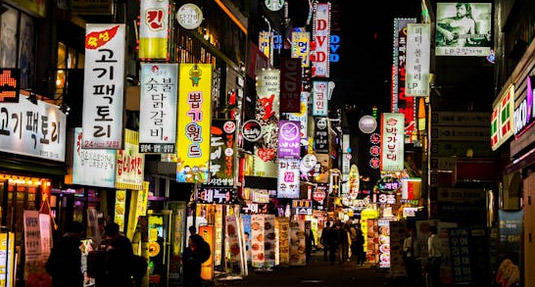
It has been over 20 years since I started living in Seattle, but when I lived in Korea, my home was in Jongno-gu, Seoul.
The Jongno area is now famous for Cheonggyecheon and many commercial and office districts, but what remains most vividly in my memory are the back alleys that extend behind it.
In the evening, small signs light up one by one, and I still cannot forget the scene of the food alley that adults enjoyed.
The savory and spicy smells from the stalls and small restaurants that stretch to the end of the alley filled the air.
Even in high school and college, I often wandered around these alleys with my friends.
If I had a little money in my pocket, I was perfectly happy with tteokbokki, sundae, and fish cake soup. If I had a bit more to spare, I would go to a chicken skewer or grilled fish place, exploring every corner of the alley. However, not only in Jongno-gu but all over Seoul, there were food alleys with different charms.
For example, the jukkumi alley in Seongnae-dong, Gangdong-gu, captivates visitors with the spicy smell of grilled baby octopus in spring. The oyster bossam alley on Supyo-ro in Jongno-gu is known for its delicious taste of oysters wrapped in kimchi. In the galchi-jorim alley on Namdaemun Market Street, the aroma of braised hairtail and radish fills the entire alley.
Also, the Dongdaemun grilled fish alley fills the air with smoke and savory smells during lunchtime, stopping passersby in their tracks, while the daegu-tang alley in Samgakji, Yongsan-gu, sees people lining up for the refreshing and spicy soup.
And the unforgettable Pyongyang cold noodles from the main branch of Ojang-dong Heungnamjip still make my mouth water whenever I think of them, even now that I have left my hometown.
Back then, the food alleys were not just places to buy food. The tightly packed shops in the narrow alleys, the warm greetings exchanged between regular customers and shop owners, and the scenes of sharing side dishes from neighboring stores... there was a blend of human warmth and food aromas.
However, it is difficult to feel this atmosphere in the United States where I live now.
Of course, there are many popular restaurants and large markets, but it is hard to find alleyways where shops stand shoulder to shoulder like in Korea. In the wide parking lots of shopping malls and the drive-thru culture, it is challenging to experience the smells and bustle of food that follow along the alleys.
Sometimes, when scenes of Korea's food alleys appear on YouTube or TV, it feels like I can even smell the aromas from the screen.
Fried pancakes sizzling, steaming stews, and people laughing while raising their soju glasses... Imagining myself in that scene makes me feel not just 'I want to eat that' but 'I want to go back.'
Perhaps the reason I miss the food alleys is that they were not just a collection of delicious places but a space that connected people.
The memories that began in the back alleys of Jongno have continued through Seoul's jukkumi alley, oyster bossam alley, galchi-jorim alley, grilled fish alley, daegu-tang alley, and Ojang-dong Heungnamjip, remaining in my heart as a long journey.
Although I cannot see this scenery again in the United States, if given the chance, I would like to walk through those alleys and feel the flavors of that time and the essence of Korea once more.



 Khan Film Blog Production |
 dermoon |
 hoosierdaddy |
 sun walker |
 Let's Be Like a Salt-like City Person |
 Seattle - Emerald City |
 gallery |
 station |
 monster |
 bluebird |
  Korean Mom |
  My NYC |
  moo moo |
  Mr Oh |
  forevergee |
  festival |
  manchester |
  constant |
  Leapfrog Move |
  vibranto |
  Tora Tora |
  yellowbutter |
  Dolly |
  US Embassy |
  NYC saladbar |
  Finding Superfoods |
  lightyear |
  song bang |
  vexomo |
  Indiana Jones |