

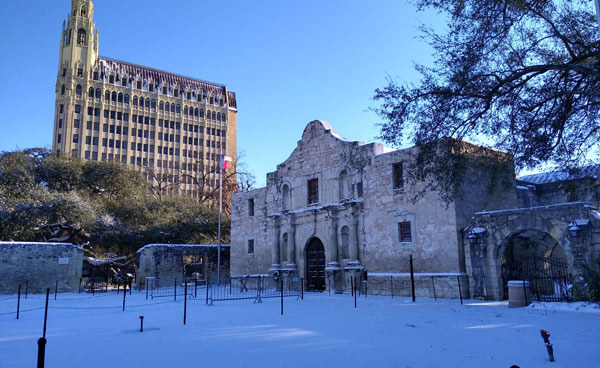
In February 2021, there is a scene that still vividly remains in the memories of those living in San Antonio.
It was the winter when snow piled up at the Alamo. Snow is rare in Texas, and to have it in the middle of San Antonio, especially at the Alamo, was astonishing.
Even those who had lived here their whole lives said it was their first time seeing it.
Normally bustling with tourists, the sight of The Alamo, standing like a symbol under the bright sun, covered in white snow was almost surreal.
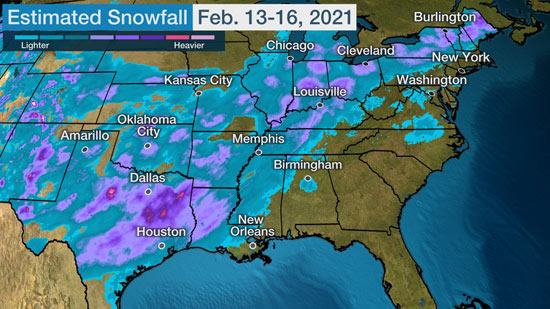
Thus, Winter Storm Uri, which hit Texas in February 2021, was an event that completely halted the daily lives of many people.
As a record cold wave hit Texas, which is not accustomed to snow and cold, the power grid collapsed first.
When the electricity went out, heating stopped, and soon after, pipes froze and burst, leading to homes without water.
People across Texas, including San Antonio, had to spend the night wearing coats and wrapped in blankets inside their homes.
The roads became icy, making it difficult for even ambulances to move, and grocery store shelves were emptied in an instant.
Many people experienced for the first time how vulnerable Texas's infrastructure was to extreme cold through this storm.
The snow-covered landscape was brief, but the memories of enduring power outages, water shortages, and anxiety remain vivid to this day.
So the first thing that was addressed was the power grid. The winter preparedness standards for power plants and transmission facilities were significantly strengthened, centered around ERCOT, which manages Texas's power operations.
What was previously a recommendation for installing freeze protection devices became mandatory, and insulation, heaters, and sensor reinforcements were implemented to ensure power plants would not stop due to the cold. Natural gas supply facilities were also inspected to ensure that fuel for power generation would not be interrupted.
Additionally, rules were changed to secure more power reserves in emergencies, and the criteria for rotating outages during power failures were adjusted.
While it may not be perfect, it is reassuring to know that the Texas power grid is moving in a direction to reduce "cold waves without any preparation."






 fortbliss |
 Folding Instructions |
 yentra |
 Cali M Law Group |
 quanta7 |
 Helpful Life Stories |
 Hajiwon Blog Hair Salon |
 American Man in a Mask |
 Texas Migration Story |
 Make My Day |
  Korean Mom |
  My NYC |
  moo moo |
  Mr Oh |
  forevergee |
  festival |
  manchester |
  constant |
  Leapfrog Move |
  vibranto |
  Tora Tora |
  yellowbutter |
  Dolly |
  US Embassy |
  NYC saladbar |
  Finding Superfoods |
  lightyear |
  song bang |
  vexomo |
  Indiana Jones |