
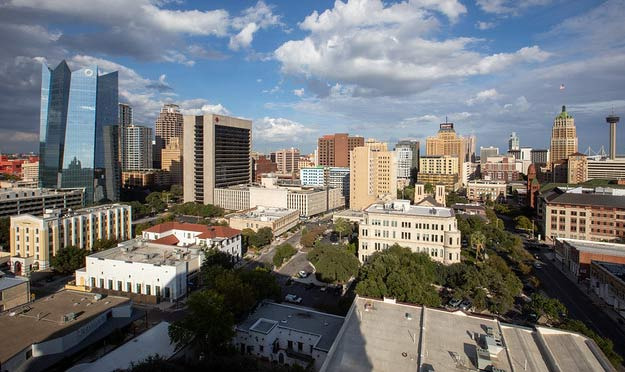
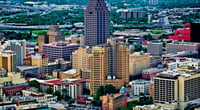
San Antonio is a city with a unique economic structure in Texas.
Various industries such as military, healthcare, tourism, manufacturing, IT, and data centers are evenly distributed, and this combination results in a broad and stable economic base. The city is expanding rapidly, and the steady influx of population often leads to discussions about its significant growth potential in the next 10 to 20 years.
The core industry is the military-related economy. San Antonio is one of the cities in the U.S. with the highest concentration of military infrastructure, hosting a total of four major bases. Notable examples include Lackland Air Force Base, Fort Sam Houston, and Randolph Air Force Base, along with military hospitals and medical research centers, which contribute significantly to the city's economy through military jobs, defense contracts, and spending by military families.
With numerous training facilities for military instructors, aviation training, medical training, and cybersecurity training, tens of thousands of personnel move in and out annually, driving the consumer economy in housing, food, transportation, education, and distribution. While the city revolves around the military, it is not just a base city; it has expanded into research and medical fields, which is a key point.
The second major industry is healthcare and biotechnology. A healthcare cluster centered around UT Health San Antonio, Methodist Healthcare, and University Hospital is well established, with strengths in cancer research, surgical robotics, and aging research. Texas as a whole is focusing on the healthcare industry, and San Antonio benefits from its advantageous location between Austin and Houston, providing good access to hospital infrastructure. As the demand for healthcare increases in an aging society, the healthcare industry is likely to continue growing.
The third industry is tourism and leisure. Attractions like the River Walk, the Alamo, SeaWorld, colonial-era sites, NBA Spurs games, and large convention centers draw tourists, leading to growth in accommodation, dining, tours, and shopping. There are many festivals based on Latin culture, and thanks to policies for preserving historic buildings, there is a unique charm of 'Old Texas.' The tourism economy in San Antonio caters not only to travelers but also encompasses business tourism, including year-round fairs and conferences in healthcare, technology, and gaming.
The fourth industry is manufacturing, aviation, and automotive. There is a Toyota pickup truck (Tacoma, Tundra) production plant, along with a network of suppliers that create many jobs. The aviation maintenance industry is also growing, and the logistics and distribution base is expanding, playing a role as a hub in the Mexico-U.S. supply chain since NAFTA. If the trend of relocating North American factories and reshoring continues, the manufacturing sector in San Antonio could grow even more.
Lastly, the IT and data center industry. While it may not have the explosive startup scene of Austin, it has strengths in data centers and cybersecurity. With low electricity and land costs, and a geographically favorable location covering the U.S. Midwest and South, server centers have been continuously established. The rise of remote work has also led to an increase in call centers and back-office setups, along with investments in cloud and AI infrastructure.
In summary, San Antonio is a city with multiple pillars, including military, healthcare, tourism, manufacturing, and IT.
Even if one industry falters, the entire city does not collapse, which is why it is often evaluated as a place with a stable growth curve. As healthcare, data centers, manufacturing reshoring, and military technology research converge, it could become an even larger city, and land prices are still less burdensome than in Houston and Austin, making it attractive for businesses to relocate.
Looking at San Antonio, one can understand the phrase 'a city with a brighter future than the present.'


 Helpful Life Stories |
 American Man in a Mask |
 USA Pharmacy Pharmacist |
 Texas Migration Story |
 Texas Migration Story |
  Tonky |
  viroma |
  cookie |
  Live and that's it |
  Alright Twain |
  eatontown blog |
  HAWAII Korean Church News |
  Amore |
  linex |
  Balancework |
  laro90 |
  MEDBIO American Doctor Blog |
  SWAT TEAM BLK |
  DREAM BIG |
  frostbite |
  330 Forever My Love |
  El Dorado |
  dralix58 |
  Gorama Round |
  Skydiving |