
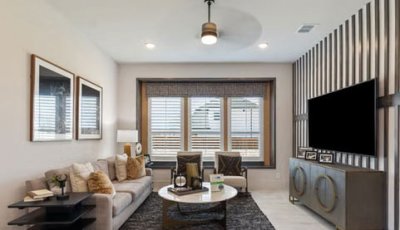
Following the case of a family debating whether to continue renting or buy a home clarifies the decision-making criteria. After receiving a rent renewal notice in Nashville, this family considers how much to set their down payment for purchasing a home.
According to Redfin, as of May 2026, the median home price in Nashville is $475,000. The family initially looked at down payment amounts based on this price.
An FHA down payment of 3.5% amounts to $16,625, while 10% is $47,500. A conventional loan with a 5% down payment is $23,750, and a 20% down payment of $95,000 allows them to avoid PMI. Considering their savings, the family weighed options between 5% and 10% down payments.
Choosing a lower down payment allows for an earlier move-in date, which is advantageous, but there is also the burden of monthly PMI. Conversely, increasing the down payment reduces monthly payments but extends the savings period.
The property tax rate in Tennessee also worked in the family's favor. The average effective tax rate in the state is around 0.55% (propertytaxrates.org, as of 2026). However, applying the tax rate from their previous residence could lead to discrepancies with the actual bill, so separate verification was necessary.
The family explored THDA's Great Choice Home Loan and Great Choice Plus second loan. They could choose between starting with an FHA-based loan with a 3.5% down payment plus $6,000 in interest-free assistance or receiving up to $15,000 to cover 5% of the purchase price.
This assistance helped resolve situations where approvals were delayed due to insufficient personal funds. They observed several cases where applications that were on hold due to unmet down payment requirements were approved with the assistance.
The most significant factor affecting approval rates was the credit score. As of July 2026, a score above 780 had a rate of 6.59%, 760s had 6.66%, 740s had 6.75%, and 700s had 6.91% (themortgagereports.com). Improving this score required time to pay down existing credit card debt.
DTI should be below 43% for backend, while conventional loans range from 36% to 45%, and a front-end ratio below 28% is ideal (Consumer Financial Protection Bureau). The family chose to get pre-approved first and avoided new loans or job changes during the review process.
The process the family went through to receive part of the down payment as a gift from their parents is also worth noting. They prepared a gift confirmation letter and timed the deposit to be two months before closing, allowing it to pass without additional documentation requests. Conversely, if they had transferred a large amount urgently, it would have taken longer to explain the source, as mentioned by the loan officer.
Income verification focused heavily on the work history of the past two years. For families relocating with job changes from other states, it's advisable to gather documents proving the employment type and income stability at the new job. The family benefited from comparing rates and terms from two or three lenders instead of just one. After pre-approval, they also locked in the interest rate to reduce the risk of rate fluctuations until closing. They kept some extra funds in mind, considering the possibility that the appraisal might come in lower than the offer price in a competitive market.
They also confirmed their capacity for reserve funds. The ability to cover several months of payments after closing was an important factor in the review. Areas with a high concentration of Korean families often have higher prices, so it's worth reflecting this in the down payment plan. However, school district boundaries change frequently, so it's advisable to verify the assigned school before purchasing. This article is not investment or legal advice, and consulting a professional before making any contracts is recommended.
 WashKevin
 JerryPayCard







 moo moo |
 ultron78 |
 garlic bread |

 urbanmint |
 dreamport |
 U.S. Weather Bureau News |

 coolriver |
  The Gelaton |
  Twist Kim |
  berlon93 |
  Physical Laws and Science |
  good thinking |
  Solo Yolo |
  Mr Oh |
  laro90 |
  San Diego TOP Idol |
  Round and Round Children's Song Kingdom |
  American Golf Course Travelogue |
  MEDBIO American Doctor Blog |
  Hot Seat Driver |
  bryvexi |
  koala organic farm |
  riverstone |
  My Antonio |
  California Information News |
  chilli chilli |
  Moon Su San |