

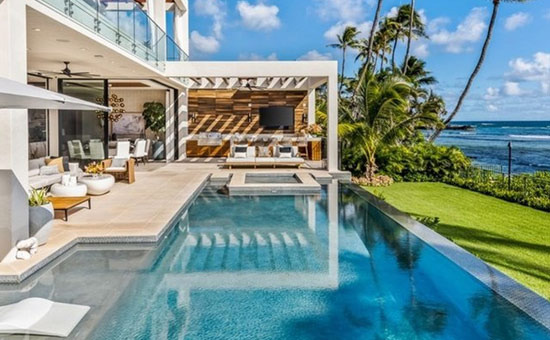
Visitors to Hawaii often dream while gazing at the blue ocean, thinking, "How wonderful would it be to live here forever?"
However, the daily lives of the residents here are far from that dream. They often sigh as they receive various bills every month.
At the center of this housing crisis is the short-term rental industry, such as Airbnb, which is popular among travelers.
At school parent meetings, a common topic is, "The house next door turned into an Airbnb, and now tourists with suitcases come and go every week."
"The landlord wanted to raise the rent, and in the end, they decided not to offer a long-term lease and go with short-term rentals instead."
These are the real issues that residents of Hawaii are currently facing.
There are currently over 34,500 short-term rental accommodations across Hawaii. That's an enormous number.
9% of housing in Hawaii County (Big Island) and a staggering 15% in Maui are tourist accommodations.
Oahu's 2.5% may seem low, but it means that thousands of apartments and homes in major cities like Honolulu have left the hands of residents to cater to tourists.
As homes that residents need are converted into tourist accommodations, available listings are drying up, and rental prices are skyrocketing.
The median rent in Honolulu is $2,083... this is not an average but the exact middle value.
To find a decent house with two or three bedrooms, you can easily expect to pay over $3,000 a month.
With supply limited and demand overflowing, landlords can charge whatever they want.
It's the local residents, who are struggling to commute to work and raise their children, who bear this enormous cost, not the tourists.
While rent is a problem, the truly bitter aspect is that the local community is completely falling apart.
In the past, during evening walks, there were familiar neighbors to greet with an "Aloha."
Children would naturally play with friends from the houses next door after school.
Now? The faces of neighbors change several times within a few months.
Every day and night, unfamiliar people come and go with their luggage, and the noise from tourist parties on weekends is a constant nuisance.
The unique 'Ohana' culture of Hawaii, where neighbors know each other's names, look after each other's children, and share food in times of need, is being dismantled due to the profit-driven lodging industry.
Fortunately, the state government of Hawaii and each county are taking action.
Honolulu is cracking down on illegal short-term rentals in residential areas (non-NUC areas), and Maui is drastically reducing the number of short-term rental permits altogether.
This is a result of residents protesting in front of the state government building, demanding, "Give us back our homes."
Tourism is indeed a key industry that sustains Hawaii.
But if that tourism is forcing local residents to be driven out of their hometowns and relocate to other states, isn't the situation reversed?
What matters more than the dollars tourists leave behind is the stability of the people who cultivate and live in this place.
The true residents of Hawaii are not the tourists on Waikiki Beach, but the people who live here.
 SGWasabi
 CroquetteYa
 KingCrabCamp


 Baguette Blog |
 novapixel |
 UNI Lover |
 NE Hodori Preik |
 parlon |
 Unknown Dog Walk blog |
 Hawaii Fox |
 Duke Ducks |

 HAWAII Korean Church News |
  Coco and Lulu |
  washington mom |
  yorvik12 |
  HVAC will prosper |
  mortrix |
  Panorama Kstar |
  MAX009 BLOG |
  K-POP TV News |
  My Beloved Hometown Hwagae Market |
  Tart Tart |
  Min's blog |
  Tora Tora |
  pixel77 |
  cuteasducks |
  Lemon Kim |
  What can make money? |
  An ant castle |
  Haha and Bomi Blog |
  glenview 89 |