
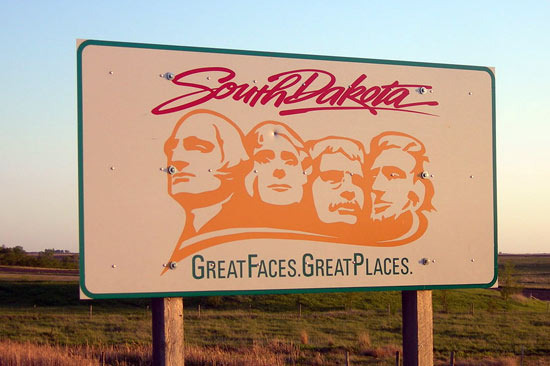
South Dakota is a state located in the Great Plains region of the United States, characterized by vast prairies, massive mountains, and significant events in American history. The history of this area is deep and complex, not merely a story of settlement. Originally, this land was inhabited for thousands of years by the Sioux tribes known as Lakota, Dakota, and Nakota.
They lived a nomadic lifestyle hunting bison and developed a culture that thrived in harmony with nature. The term 'Dakota' itself means 'alliance' or 'friend' in their language, reflecting their values of peace and solidarity. However, in the mid-19th century, the lives of these people changed drastically as white settlers expanded westward in search of gold and land.
In particular, in 1874, the expedition led by General George A. Custer discovered gold in the Black Hills, marking a turning point in South Dakota's history. The Black Hills were originally sacred land to the Sioux, but the gold rush attracted numerous white miners and merchants, and ultimately, the U.S. government broke treaties with the Native Americans and forcibly took the land.
This led to the Battle of Little Bighorn in 1876, where Sioux warriors Sitting Bull and Crazy Horse achieved victory against the U.S. military, becoming legendary figures. However, the Native Americans were eventually forcibly relocated to reservations by the government, and their culture and way of life were significantly disrupted.
In the early 1900s, the arrival of railroads began to develop South Dakota's economy around agriculture. Crops such as wheat, corn, and sunflowers were cultivated on a large scale, and cattle ranching became active. However, the Dust Bowl disaster of the 1930s brought great suffering to farmers. Many farms went bankrupt during this time, and many residents moved to cities. Nevertheless, people did not give up on this land and continued to sustain their livelihoods through agriculture and tourism.
Three famous representations of South Dakota include the first, Mount Rushmore. This massive presidential sculpture carved into the Black Hills is one of the symbols of America, featuring the faces of George Washington, Thomas Jefferson, Theodore Roosevelt, and Abraham Lincoln.
Completed over 14 years starting in 1927, this sculpture is known as a monument expressing the ideals of American democracy, but it is also criticized as a symbol of the desecration of a sacred mountain for Native Americans.
The second is Badlands National Park. This area boasts unique geological structures shaped by millions of years of erosion, often referred to as the Earth's history book. The red clay hills, with fossils and layers clearly exposed, stretch endlessly, giving the feeling of being on another planet. This region symbolizes the rugged yet beautiful nature of South Dakota.
The third is the Crazy Horse Memorial. This is the world's largest mountain sculpture created to honor the Native warrior Crazy Horse, which is still under construction. This monument serves as a symbol to restore the pride of Native Americans forgotten in the white-centric narrative of American history, leaving a deep impression on many visitors.








 Dreams Come True as Desired |

 Dakota Man Blog Thanks |
 Mr. Midwest America |
 Tonky |
  viroma |
  cookie |
  Live and that's it |
  Alright Twain |
  eatontown blog |
  HAWAII Korean Church News |
  Amore |
  linex |
  Balancework |
  laro90 |
  MEDBIO American Doctor Blog |
  SWAT TEAM BLK |
  DREAM BIG |
  frostbite |
  330 Forever My Love |
  El Dorado |
  dralix58 |
  Gorama Round |
  Skydiving |