
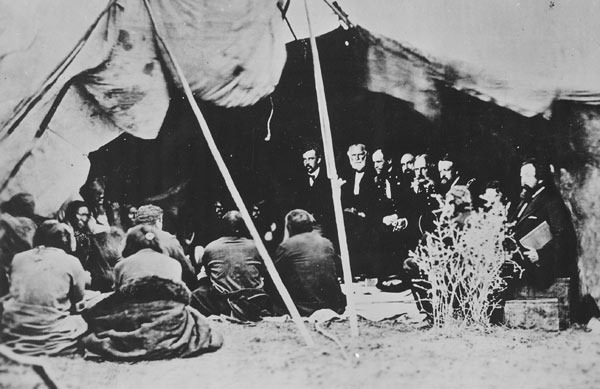
South Dakota was originally land inhabited by the Sioux tribes, including the Lakota, Dakota, and Nakota.
They lived nomadically for hundreds of years along the plains, mountains, and rivers of this region, maintaining an ecological life centered around the buffalo. In particular, the Black Hills were not just mountains to them but a sacred place. It was considered a holy site where the spirits of their ancestors resided, and it was the center of a worldview that believed in the unity of nature and humanity. However, in the mid-19th century, as the U.S. government expanded westward, their lives began to change dramatically.
In the 1868 Fort Laramie Treaty, the U.S. recognized the vast land including the Black Hills as the permanent residence of the Sioux. However, a few years later, when gold was discovered in the Black Hills, the situation changed rapidly. Thousands of white prospectors and soldiers flooded in, and the government effectively nullified the treaty.
The Sioux resisted this, but ultimately, after the 1876 Battle of the Little Bighorn, they were defeated and lost most of their land. Their heroes, such as Crazy Horse and Sitting Bull, remain symbols of Native American resistance today.
Afterward, the U.S. government forcibly divided the Sioux into several reservations.
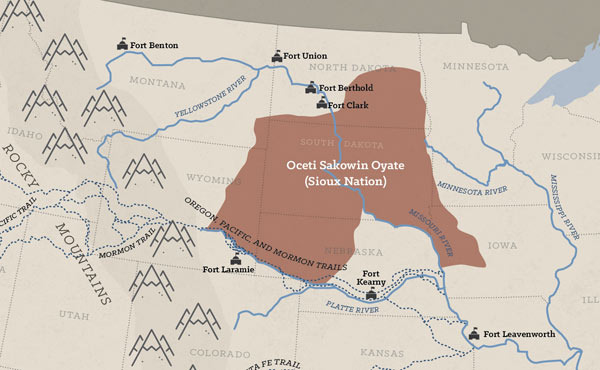
Notable reservations include Pine Ridge, Rosebud, Standing Rock, and Cheyenne River. These reservations are mostly located in western or northern South Dakota, and while they cover large areas, the economic conditions are very poor.
For many years, high poverty rates and serious unemployment issues among the youth have resulted from a lack of education, healthcare, and job opportunities. The descendants of tribes that once roamed the plains freely now live in limited areas with restricted resources.
Still, they have not completely disappeared. Rather, there is a vibrant movement to revive their culture and language. Recently, Lakota is being taught in schools, traditional dances and songs are being restored, and programs to pass on the history and identity of their ancestors to younger generations are increasing. The Pine Ridge Reservation holds the 'Sun Dance' ceremony every year, and in the Standing Rock area, where Sitting Bull was born, human rights and environmental movements continue together.
In particular, the 2016 Dakota Access Pipeline protests became an opportunity for the descendants of the Sioux to reassert their presence to the world. They are still people who strive to protect the land, nature, and the promises of their ancestors.
Today, about 9% of South Dakota's population is Native American, most of whom are descendants of the Sioux. They sometimes migrate to cities and attempt to achieve self-sufficiency by operating self-governments within the reservations.
The fields and hills of South Dakota still bear their footprints, and they continue to exist as part of this land.






 Dreams Come True as Desired |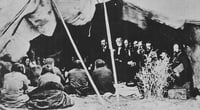
 Dakota Man Blog Thanks |
 DREAM BIG |
  frostbite |
  330 Forever My Love |
  El Dorado |
  dralix58 |
  Gorama Round |
  Skydiving |
  dreamport |
  Yellow Snowman |
  Toaster Pizza Magic Show |
  velvetnom |
  Anytime Journey |
  Mrs. Duluth |
  jaxter |
  Atlanta Mama |
  Baguette Blog |
  Tan Sol |
  US Embassy |
  Korean Mom |
  My NYC |