
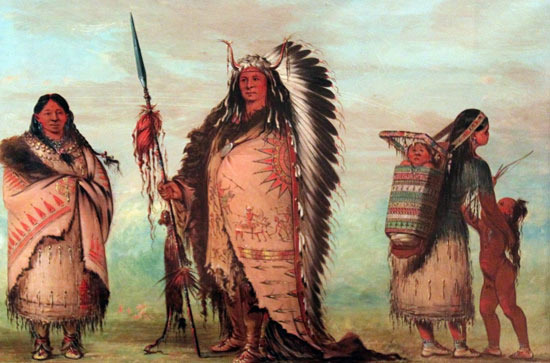
South Dakota is one of the regions in the United States where the traces of Indian culture remain abundant.
The land of present-day South Dakota was originally the territory of the Sioux tribes known as Lakota, Dakota, and Nakota, who have lived here for thousands of years. They moved with the bison, hunting and trading, living in harmony with nature.
Although they each have slightly different languages and customs, they are all part of a larger confederation known as the 'Sioux Nation.'
In the early 19th century, as the United States expanded westward, changes began to occur in this peaceful land. White settlers flocked in search of gold, and the situation worsened dramatically in 1874 when General George A. Custer discovered gold in the Black Hills region. The Black Hills were considered sacred by the Lakota people, referred to as 'the land of the gods,' but the gold rush led to an influx of miners and soldiers, and ultimately, the U.S. government violated the Treaty of Fort Laramie signed in 1868 and forcibly took the land.
This led the Lakota to armed resistance, culminating in the 'Battle of Little Bighorn' in 1876. In this battle, the Sioux warriors led by Crazy Horse and Sitting Bull dealt a significant defeat to the U.S. Army, marking one of the most famous victories of Native Americans in U.S. history. However, that victory did not last long. The U.S. government subsequently launched a massive military campaign, and the Native Americans were eventually forcibly relocated to reservations.
The most famous incident among these was the 'Wounded Knee Massacre' that occurred in 1890. Near the Pine Ridge Reservation in South Dakota, U.S. troops indiscriminately killed over 300 Lakota men, women, and children, marking a tragic end to the Indian Wars. After this, Native Americans lost their freedom and had to live within government-designated reservations.
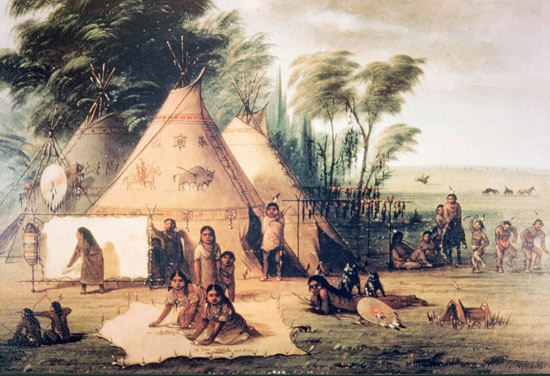
Today, South Dakota has nine Indian reservations, with about 10% of the total population being Native American. Notable tribes include the Oglala Lakota, Rosebud Sioux, and Yankton.
However, even amidst a fragmented history, the spirit of the Lakota people remains alive. They continue to teach their language and preserve their culture through dance, drumming, beadwork, and traditional clothing. The annual Sun Dance festival, in particular, symbolizes the connection between heaven, humanity, and nature, showcasing the essence of Lakota culture.
The Sioux tribe depicted in the movie "Dances with Wolves" is modeled after the Lakota Indians of the South Dakota region. In the film, the protagonist Lieutenant John Dunbar lives alone at a western outpost and initially meets the Lakota with caution, but gradually opens his heart and begins to interact with them. He learns their language and joins them in hunting, building true trust.
The tribe gives him the name "Dances with Wolves," and he increasingly finds greater peace and humanity within the Lakota community than in the white world. This film portrayed the Sioux not as savages, as was common in previous westerns, but as wise beings living in harmony with nature.
The fact that actual Lakota actors participated and that a significant portion of the dialogue was in the Lakota language provided a powerful and realistic expression of their culture and identity.
The story of Indians in South Dakota is not just a tragedy of the past but a living history that continues today. The pride that remains unbroken in the face of lost land and the strength of culture passed down through generations is the true beauty of this region.








 Dreams Come True as Desired |


 Dakota Man Blog Thanks |
  silverpath |
  Komet Park |
  reliable |
  vexo90 |
  As Always Today |
  veltar87 |
  United States National Administrative Organization Stories |
  springwaltz |
  dense |
  Tiger Milk Foam Research Institute |
  Oreore Mushroom |
  optimistic |
  Good Good |
  berion88 |
  bravo777 |
  skyblue |
  Project Tomorrow |
  apricotla |
  Soy Angelino |
  nati8 |