

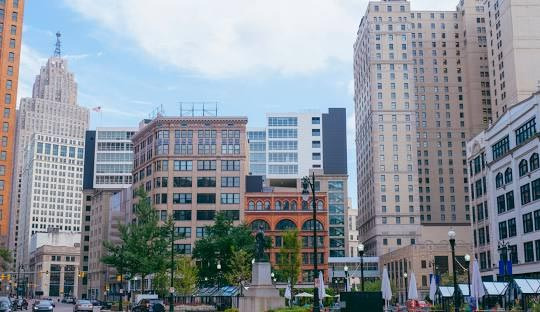
Once called the heart of the global automotive industry and nicknamed "Motor City," it faced a major crisis due to industrial decline and population outflow. In the 1950s, the population reached 1.8 million, but now it has decreased to about 630,000 (as of 2023).
Nevertheless, Detroit remains the center of the most populous metropolitan area in Michigan (approximately 4.3 million), and recently, with redevelopment, it has gained new vitality as young people, artists, and startup professionals have moved in.
The racial composition of Detroit is predominantly African American at about 78%, with whites making up about 10%, and the remaining population consisting of Hispanic and Asian minorities. This has allowed Black culture, music, and art to be deeply rooted throughout the city, with musical legacies like the Motown Sound being representative.
Once, the automotive industry represented by GM, Ford, and Chrysler sustained the city, but as the industrial structure collapsed, Detroit had to experience bankruptcy. Now, it is gradually changing with redevelopment and the influx of new industries. Young people are flocking to fields like startups, arts, and IT, changing the atmosphere. However, the median household income is still about $33,000, which is lower than the national average, and the poverty rate is relatively high. Still, job creation through urban regeneration is becoming visible, showing a slow recovery trend.
Detroit has a humid continental climate with distinct four seasons. Summers (June to August) are hot and humid, with average high temperatures of 27-29°C (80-85°F). Winters (December to February) see average high temperatures of 0°C (32°F) and lows dropping to -7°C (20°F), with frequent snowfall. The average annual snowfall is about 100 cm, and the annual precipitation is around 838 mm. Spring and fall are mild with significant temperature variations, making them the best seasons for outdoor activities.
As a car city, it is inconvenient without a vehicle. Public transportation includes SMART buses, the People Mover that circulates downtown, and the QLine streetcar, but a car is much more convenient for traveling to the suburbs. The city is well-connected by highways like I-75, I-94, and I-96, making it easy to travel by car, and parking spaces are relatively ample.
Air traffic is centered around Detroit Metropolitan Wayne County Airport (DTW), which is a Delta Airlines hub with a variety of flights and many international routes. Additionally, using Amtrak, you can travel by train to Chicago or Ontario, Canada, so transportation accessibility is not bad.
Detroit is transforming from a symbol of the past automotive industry into a new city of arts and entrepreneurship. Old buildings are being remodeled into cafes, galleries, and startup offices, and the community is regaining vitality centered around music and art. Therefore, today's Detroit is an interesting place that transcends the image of a "declining city" to become a reborn city.
Detroit is a city where the glory of the past coexists with the challenges of the present. If you experience the traditions of Motor City, its music culture, and the newly emerging creative energy, you will feel the true charm of this city.


 moo moo |
 ultron78 |
 garlic bread |
 Sugar Cream Door Bulletproof Noodles |
 urbanmint |
 tracker |
 juniper |
 amola |
 oflare |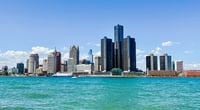
 aaoaa |
  Korean Mom |
  My NYC |
  Mr Oh |
  forevergee |
  festival |
  manchester |
  constant |
  Leapfrog Move |
  vibranto |
  Tora Tora |
  yellowbutter |
  Dolly |
  US Embassy |
  NYC saladbar |
  Finding Superfoods |
  lightyear |
  song bang |
  vexomo |
  Indiana Jones |