

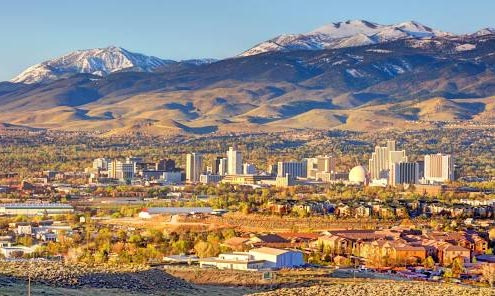
Reno is a city located in northwestern Nevada, known for its flashy casinos and outdoor recreational activities. However, Reno's history goes beyond tourism and entertainment, playing a significant role in the development of the American West. The history of this city encompasses a diverse range of stories from the time of Native American settlement to the present day.
1. Early History and Native American Era
The Reno area has been inhabited by Native Americans, including the Paiute tribe, for about 8,000 years. The area around the Truckee River was a vital survival spot for Native Americans due to its ease of hunting and fishing. This region was originally rich in natural resources, and the Paiute tribe lived self-sufficiently by utilizing the resources obtained from the river and mountains.
2. Westward Expansion and the Birth of the City (1840s-1860s)
Gold Rush and Early Exploration
In 1848, the discovery of gold in California led many immigrants to pass through this area on their way to California. Reno became an important stop for those traveling along the Truckee River.Truckee River Bridge and Rise as a Transportation Hub
In 1859, the discovery of the world-famous Comstock Lode silver mine in nearby Virginia City accelerated Reno's development. Reno evolved into a hub for transporting gold and silver from the mines, leading to the growth of railroads and commerce.
In 1868, the Central Pacific Railroad completed a bridge across the Truckee River, marking the official introduction of the name Reno. The city was named in honor of General Jesse Reno, a Union general during the Civil War.
3. City Expansion and Industrial Development (1870s-1930s)
Railroads and Economic Growth
Reno developed into a crucial hub for western railroad traffic, playing an important role in transporting resources produced from the silver mines. Railroad transportation revitalized Reno's economy, leading to significant growth in commerce and agriculture.Emergence of Tourism and Gambling Industry
In 1931, the legalization of gambling in Nevada marked a turning point for Reno. This was a measure to overcome the economic difficulties of the Great Depression, and subsequently, Reno began to gain a reputation as a casino and tourist city.Center of the Divorce Industry
In the 1930s, Reno was known as the "Divorce Capital" of the United States. At that time, Nevada had the shortest residency requirement for divorce at just six weeks. Many people stayed in Reno to go through the divorce process, which had a significant impact on the city's economy.
4. Golden Age and Competition (1940s-1970s)
Growth as a Casino City
The 1940s and 1950s were a period when Reno rapidly emerged as a center for gambling and entertainment. Numerous casinos and resorts were established, and tourism became a major driving force in the city's economy.Competition with Las Vegas
However, starting in the 1960s, Las Vegas began to threaten Reno's dominance by offering more glamorous casinos and entertainment. Reno emphasized its unique appeal with the slogan "The Biggest Little City in the World" and continued to grow steadily.
5. Modern Reno: Industrial Diversification and Urban Renewal (1980s-Present)
Industrial Diversification
Reno has made efforts to diversify its economy beyond tourism and gambling. The development of high-tech industries, logistics, and manufacturing has established a new economic foundation. In particular, the nearby Reno-Tahoe Airport and logistics hub have played a crucial role.Development as an Education and Research Center
Reno has established itself as an education and research center centered around the University of Nevada, Reno. This has greatly contributed to the city's economic and cultural development.Urban Renewal and Tourism Revitalization
Reno has redeveloped areas around the Truckee River and downtown through modern urban renewal projects. As a result, the city has emerged as an attractive place for young people and new businesses.
6. Key Historical Events
- 1868: The name Reno is officially adopted, and the city is established.
- 1931: Legalization of gambling in Nevada. Reno begins to grow as a casino city.
- 1930s-1950s: Becomes famous as the "Divorce Capital," attracting many divorcees to Reno.
- 1960s: Intensified competition with Las Vegas affects the tourism industry.
- 2000s: Attempts to diversify the economy through the development of high-tech industries and logistics hubs.
7. The Present and Future of Reno
Today, Reno is not just a city of gambling and tourism but has developed into a hub for high-tech and logistics industries. The establishment of a large Tesla factory nearby has marked a new turning point for economic growth, attracting attention from startups and innovative companies.
Additionally, Reno's excellent access to natural tourist destinations like Lake Tahoe makes it an attractive city for outdoor enthusiasts. With its cultural diversity and growth potential, Reno is poised to remain an important city in Nevada's future.
Nickname of Reno: "The Biggest Little City in the World"
This nickname reflects the city's friendly atmosphere, high quality of life, and international reputation.
Reno is a city where the past and present harmonize, offering a unique experience for both visitors and residents.


 moo moo |
 ultron78 |
 garlic bread |
 Sugar Cream Door Bulletproof Noodles |
 urbanmint |
 Nevada Teppanyaki |


 zoryan |
 Marisol |
  Tonky |
  viroma |
  cookie |
  Live and that's it |
  Alright Twain |
  eatontown blog |
  HAWAII Korean Church News |
  Amore |
  linex |
  Balancework |
  laro90 |
  MEDBIO American Doctor Blog |
  SWAT TEAM BLK |
  DREAM BIG |
  frostbite |
  330 Forever My Love |
  El Dorado |
  dralix58 |
  Gorama Round |
  Skydiving |