
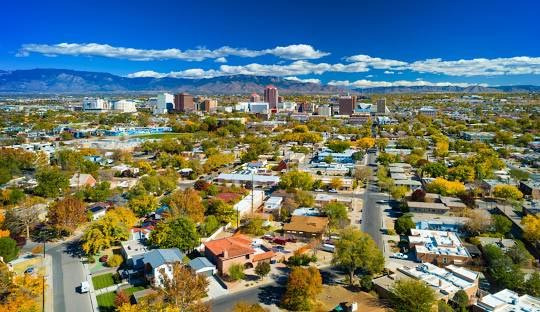
According to an old record, the 2010 census shows a population of about 545,000, nearly half of whom are Hispanic.
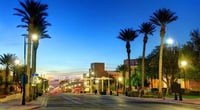
So the atmosphere is completely Latin. Just looking at the street names, they are filled with Spanish. Just a little way out, names like 'Santa Fe', 'Los Lunas', and 'Rio Rancho' come up one after another. Thanks to this, there are many places where Spanish signs stand out more than English.
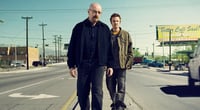
Although about 70% are white, the actual feeling on the streets is a bit different. There are only about 3% black people, and there is a mix of Native Americans and Asians. Perhaps that's why it makes sense that there are almost no black characters in the drama Breaking Bad.
This is not just a production choice but a reflection of reality. The Hispanic culture is naturally integrated into everyday life in this city. However, thinking of it as a Mexican city would be a big mistake. This is, after all, America, and English is the primary language. Whether you go to public institutions, supermarkets, or restaurants, English is sufficient for communication. Interestingly, most people here can speak both English and Spanish.
Some people start in English and finish in Spanish, while others might start in Spanish and wrap up in English. It's a city where mixing the two languages rhythmically is part of daily life.
So being in Albuquerque feels like being somewhere in between America and Mexico. The sunlight is intense, the colors of the streets are warm, and the accents of the people are slightly mixed with Spanish, making it heartwarming just to listen. This
is likely why the atmosphere of this city has been used as a backdrop for dramas like Breaking Bad. Perhaps Albuquerque can be described as another America within America, 'the America where Spanish breathes.'
The current Albuquerque area was inhabited by Pueblo Native Americans. From around the 12th century, they farmed the fertile land around the Rio Grande River and lived in houses made of adobe bricks.
The adobe architectural style commonly seen in the Southwest today is their legacy. Then, in the mid-1500s, Spanish explorer Francisco Vázquez de Coronado passed through this area and introduced it to the European world for the first time. Later, in 1706, Spanish Governor Francisco Cuervo y Valdés founded the city under the name 'Alburquerque,' which is derived from the Spanish noble 'Duke of Alva.' A church named San Francisco de Navarro was established in the center, and the current Old Town was created at that time.
In 1821, when Mexico gained independence from Spain, Albuquerque also became part of Mexican territory, but after the Mexican-American War in 1846, it became American land. After being officially incorporated by the Treaty of Guadalupe Hidalgo in 1848, it emerged as a major hub for westward expansion.
Especially with the arrival of the railroad in 1880, the city experienced explosive growth. The newly created railroad town developed into what is now downtown.
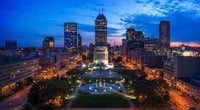
In 1912, when New Mexico was elevated to the 47th state of the United States, Albuquerque grew into a city of state capital level. After World War II, it became a center for military and aerospace industries. With the establishment of Sandia National Laboratories and Kirtland Air Force Base, it became a city of advanced technology. Another notable aspect is 'Route 66.'
As a road that travelers had to pass through when moving west, motels, diners, and gas stations sprang up throughout the city, and the tourism industry flourished. Even today, walking along Route 66, you can feel the atmosphere of America in the 1950s. Later, in 1972, the first 'Albuquerque International Balloon Fiesta' was held, completely changing the city's image.
The colorful hot air balloons that fill the sky every autumn have now become a symbol of this city. Today's Albuquerque is a modern city with developed technology, healthcare, and energy industries, while also not losing its history and tradition. Walking through the alleys of Old Town, you can still feel the atmosphere of the Spanish era from 300 years ago, and just a little further out, cutting-edge research facilities and modern buildings blend together.
The charm of this city lies in how the past and present are naturally connected.
So when you visit Albuquerque, it feels like you are not just sightseeing but taking a journey through time.



 ultron78 |
 garlic bread |
 Sugar Cream Door Bulletproof Noodles |
 urbanmint |
 |
| 
 rainyday |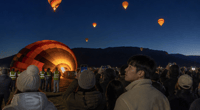
 New Mexico Friends MAX |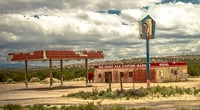
 Say Yes in English |
 Southwestern |
 Pointy |
  manchester |
  constant |
  Leapfrog Move |
  vibranto |
  Tora Tora |
  yellowbutter |
  Dolly |
  US Embassy |
  NYC saladbar |
  Finding Superfoods |
  lightyear |
  song bang |
  vexomo |
  Indiana Jones |
  meloncat |
  novapixel |
  mortrix |
  Esther 1983 |
  fortbliss |
  Moscow Kim |