

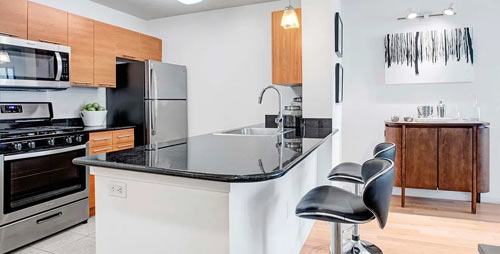
When I first heard that finding a one-bedroom apartment in Honolulu would cost over $2,500 a month, I thought it was an exaggeration.
In reality, it is often even higher. Honolulu's cost of living index is 188, which is nearly double the U.S. average of 100. It ranks among the cities with the highest cost of living in the nation, following San Francisco (200) and San Jose (195), and is on par with New York (188).
Housing costs are a key pressure point in Honolulu's cost of living. According to data from RentCafe and Zillow, the average rent for a one-bedroom apartment is estimated to be between $2,400 and $2,900 per month. Popular areas like Ala Moana, Waikiki, and Kakaako can exceed $3,000. The median price for single-family homes is over $800,000, making Hawaii one of the most expensive housing markets in the U.S. This is likely due to the physical limitations of land area combined with ongoing tourism and migration demand.
Grocery costs are significantly higher than the mainland due to Hawaii's geographical characteristics. Most food is transported from the mainland by ship or air, which directly reflects in logistics costs. For a family of four, monthly grocery expenses are estimated to be between $1,400 and $1,800, which is 40-60% higher than the national average. Fortunately, Honolulu has markets run by Koreans or that carry Korean products, such as Times Supermarket and Palama Supermarket, making access to Korean ingredients relatively easy.
Transportation costs are notable as Honolulu is the best-equipped city for public transport in Hawaii. TheBus system operates extensively, and there are areas where living without a car is possible. However, if you own a vehicle, costs for vehicle transport, high gas prices (about $0.50 to $1.00 higher than the mainland), and insurance can lead to monthly expenses of $600 to $800. Rental cars are also known to be very expensive, making transportation costs a burden even for short-term visitors.
Utilities in Hawaii have some of the highest electricity rates in the U.S. Due to a high reliance on fossil fuels and the need to import fuel, electricity costs can be 2-3 times higher than the mainland average. Combined electricity and water bills are estimated to be between $250 and $380 per month, which is among the highest in the nation. However, the burden of heating and cooling may be lower than in regions with extreme climates, thanks to the mild weather year-round.
The COL of 188 reflects not just a simple comparison but the real pressures of living expenses. Based on the BLS Consumer Expenditure Survey, a family of four in Honolulu would need an annual pre-tax income of $120,000 to $150,000 to maintain a middle-class lifestyle. Compared to New York (188), which has the same cost of living index, Honolulu may offer relatively fewer income opportunities, leading to a greater burden of living expenses relative to income.
For Korean households, Honolulu offers the allure of beautiful natural surroundings and a Korean community, but it is essential to recognize the very high cost of living. The Korean community in Hawaii has a long and solid history, with many Korean churches and businesses. However, a COL of 188 means that the same income could lead to a much tighter lifestyle compared to mainland cities. Careful budgeting focused on housing costs is essential before settling in, and according to the MIT Living Wage Calculator, the appropriate living wage for a two-adult household in this area is estimated to be around $30 to $36 per hour.
 BasementKing
 PuddingBuddy




 |
| 
 Premium Gas Camp |
 CA Real Estate |
 cheesepup |
 breezem |
 HAWAII Korean Church News |
 Hawaii Tourist Information |


 Public School Education System |
  Make My Day |
  Fros Pro |
  lioness |
  La Bean |
  American History This and That |
  Monte Sori |
  U donn |
  Sarah's Blog |
  Holy Cow |
  monster |
  houston mama |
  Reggae Party |
  Thou Thou |
  Tennessee Land |
  custardnew |
  Chimhanbang Korea ACU |
  See South Carolina |
  dorex |
  Taek Jun |
  Choi Cho |