
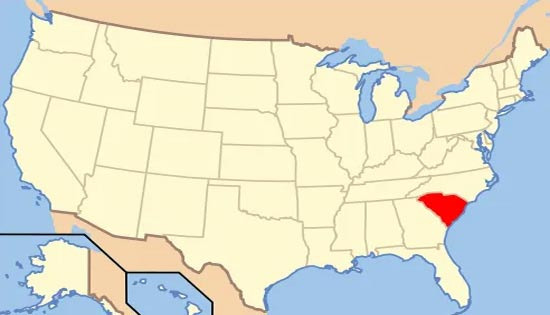
South Carolina has a high percentage of Black population among Southern states, with about 27% of the total population being African American, which is double the national average.
This ratio is not just a number; it is deeply related to the region's history. In the 18th and early 19th centuries, South Carolina prospered through large-scale plantation agriculture. Particularly, the cultivation of rice, cotton, and indigo was active, and the labor force responsible for this was made up of slaves brought from Africa.
The port of Charleston was one of the largest slave import ports in the United States at the time, which is why traditional practices, languages, and foods based on African culture still exist throughout the city. Notably, the 'Gullah' culture is a unique lifestyle that combines West African and Southern coastal cultures, and it continues to thrive in the coastal areas of South Carolina.
Economically, South Carolina has long been an agriculture-centered state. The cultivation of crops like cotton, tobacco, and corn was the main industry, but the industrial structure changed rapidly after the mid-20th century. The textile industry grew around the time of World War I and II, and since the 1990s, the automotive, aerospace, and energy industries have become the mainstay of the state's economy.

In particular, the Greenville and Spartanburg areas have emerged as centers of Southern manufacturing with factories of global companies like BMW and Michelin. Charleston has developed its port logistics and aviation industry, hosting a Boeing assembly plant, while the capital, Columbia, plays a central role in public institutions, education, and healthcare industries.
The population is about 5.4 million, making it a medium-sized state in the U.S. The population growth rate is relatively fast, as many retirees are moving in due to the warm climate and low cost of living. Coastal areas like Hilton Head Island and Myrtle Beach are particularly known as havens for retirees. Conversely, there is also a large student population. Prestigious universities such as the University of South Carolina, Clemson University, and the College of Charleston contribute to a significant proportion of young people. As a result, the state has a unique atmosphere where youth and leisure coexist.
Historically, it is important to note that South Carolina was a central stage during both the American Revolution and the Civil War. In 1776, Charleston was the site of major battles against the British during the American Revolutionary War, and in 1861, the spark of the Civil War began here. The war started when the Confederates fired the first shot at Fort Sumter. After the war, the abolition of slavery led to rapid social changes, and in the mid-20th century, it was also a region where the Civil Rights Movement was actively taking place. Thanks to these historical experiences, today South Carolina has developed into a region where discussions about racial issues and social justice are vibrant.
Culturally, the traditional Southern character is strong. Barbecue culture, jazz and blues music, and church-centered communities remain central to local life. The food, particularly the 'South Carolina BBQ,' known for its butter, sauces, and slowly smoked meats, varies in flavor across regions. Charleston is especially known for its food culture, often referred to as the 'City of Southern Gastronomy,' where Southern cuisine and modern restaurants blend.
In summary, South Carolina is a land where the traditions and changes of the American South coexist. It carries the scars and legacies of the past while actively moving towards the future. With its warm weather, the kindness of its people, and its rich history and culture, this state is like a living textbook where one can experience both the past and present of the South.





 urbanmint |
 See South Carolina |
 Information on All Regions of the United States |
  DREAM BIG |
  frostbite |
  330 Forever My Love |
  El Dorado |
  dralix58 |
  Gorama Round |
  Skydiving |
  dreamport |
  Yellow Snowman |
  Toaster Pizza Magic Show |
  velvetnom |
  Anytime Journey |
  Mrs. Duluth |
  jaxter |
  Atlanta Mama |
  Baguette Blog |
  Tan Sol |
  US Embassy |
  Korean Mom |
  My NYC |