
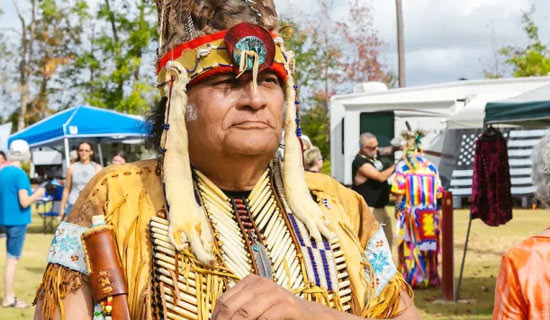
Looking into the history of South Carolina, various Indian tribes had established their homes long before Europeans arrived. Although most have now disappeared or assimilated, traces of their presence remain in place names, culture, and riverbank ruins. South Carolina has been a favorable land for Indian settlement due to its mild southeastern climate and abundant water resources, where agriculture, hunting, and trade have continued for thousands of years.
The famous tribe is the Cherokee. The Cherokee primarily lived in the northwestern region of South Carolina. They were one of the most powerful tribes in the Southeast, possessing agricultural skills and a complex social structure. They were self-sufficient, growing corn, beans, and squash, and had a meeting place at the center of their village used for making political decisions.
However, in the 18th century, the arrival of British settlers greatly disrupted the fate of the Cherokee. Initially, they exchanged firearms and textiles through trade, but gradually white settlers began to seize their land. Ultimately, in the 1830s, many Cherokee were forced to relocate to Oklahoma under a policy known as the 'Trail of Tears.' Even today, near the western border of South Carolina, remnants of their former residences and burial sites remain, and some descendants continue to uphold their language and traditions.
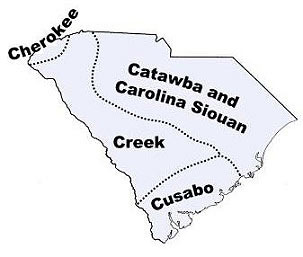
In addition to the Cherokee, the Catawba tribe also existed in South Carolina.
They primarily resided in the areas of Rock Hill and York. The Catawba are the only Southern Indians officially recognized by both the state and federal governments to this day. Their notable tradition is pottery craft. Catawba pottery, made by hand-shaping clay and firing it with patterns, still holds high value as a handmade product. Interestingly, the Catawba maintained a relatively peaceful relationship with the British since colonial times, allowing them to sustain their tribal community to this day. Their current residence is designated as the 'Catawba Indian Nation,' where tribal government and traditional events continue.
Another tribe includes the Yamasee and Siouan tribes. The Yamasee lived in the southern coastal region, particularly around the Savannah River, and were skilled in fishing and agriculture. However, they nearly disappeared after the 'Yamasee War' in 1715. They revolted against the unjust dealings and enslavement policies of the British colonial government but ultimately lost, with most fleeing to Florida or merging with other tribes. This war was a significant event in South Carolina's history, completely altering the alliance structure between the colonial government and the Indians.
Currently, there are more than eight Indian organizations officially recognized by the state of South Carolina.
Among them are descendants of the Cherokee, Catawba, and Yamasee, and each tribe honors their ancestors' culture through annual festivals and traditional ceremonies. Notably, the 'SC Indian Heritage Week,' held every year, is a major event featuring various exhibitions and performances across schools and museums throughout the state.
The Indian history of South Carolina is not merely a tale of the past but a crucial key to understanding the cultural roots of the region today. When we hear place names like 'Charleston' or 'Congaree,' recalling that these names originated from Indian languages evokes the long history of this land. The footprints of their journey, traced along the sea, mountains, and rivers, still blend into the leisurely and nature-connected lifestyle characteristic of the South. Behind the vibrant cities, the breath of the land's indigenous people continues to quietly live on.







 urbanmint |
 See South Carolina |
 Information on All Regions of the United States |
  laro90 |
  MEDBIO American Doctor Blog |
  SWAT TEAM BLK |
  DREAM BIG |
  frostbite |
  330 Forever My Love |
  El Dorado |
  dralix58 |
  Gorama Round |
  Skydiving |
  dreamport |
  Yellow Snowman |
  Toaster Pizza Magic Show |
  velvetnom |
  Anytime Journey |
  Mrs. Duluth |
  jaxter |
  Atlanta Mama |
  Baguette Blog |
  Tan Sol |