

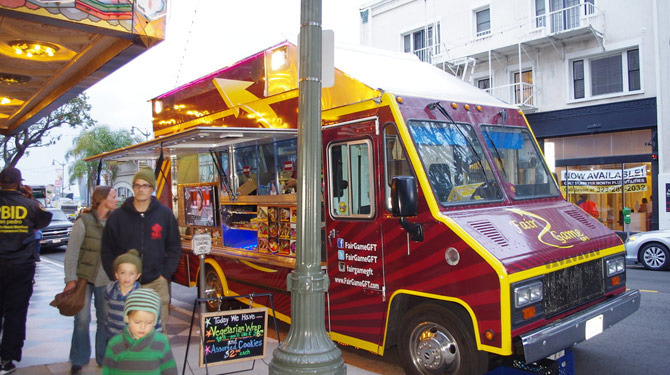
Food trucks in LA operate under a more systematic system than one might think.
Until the early 2010s, they had a strong image of being 'illegal street trucks', but now most must operate with a permit from the LA County Department of Public Health. To obtain a permit, they must pass various criteria such as food hygiene, refrigeration, cooking temperatures, and wastewater disposal. In fact, food trucks receive hygiene ratings (A, B, C) just like regular restaurants.
By looking at the blue sticker on the side of the truck, you can immediately check if it has an A rating or not. Many people pass by without knowing this, but the health department regularly inspects food trucks as well.
So how do they solve the water issue? Most food trucks have a water tank system. There are separate tanks for clean water for cooking ("fresh water") and for collecting wastewater ("waste water"). The amount of water varies depending on the size of the truck, but they usually carry about 30 to 50 gallons.
Sometimes this is not enough for a day's business, so they need to stop at a permitted service station to refill water or dispose of wastewater before or after business hours. Permitted food trucks must never discharge wastewater illegally, and the fines for getting caught can be quite large. The city of LA operates a management system called the 'Mobile Food Program' to crack down on such violations.
There are also regulations regarding restrooms. Food trucks of a certain size must have a restroom facility within 200 feet (about 60 meters) that has been permitted for use.
Therefore, most food trucks enter into agreements with coffee shops, gas stations, and markets to share their restroom facilities. This contract must be documented when obtaining a permit from the health department. In other words, it is illegal to just park on the street and operate anywhere.
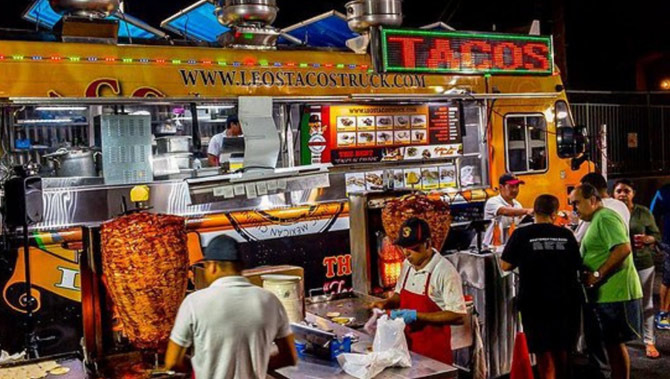
Of course, not all trucks perfectly adhere to hygiene standards in reality. Some older trucks or small family-run trucks still operate unofficially. However, generally, well-known trucks that can be found on Instagram or Yelp are mostly properly permitted.
These trucks are equipped with handwashing sinks, thermometers, refrigerators, and trash cans, and the food is cooked on-site, making it relatively safe. In fact, the food truck industry is highly competitive, and if they are not clean, their ratings drop quickly, and customers decrease.
Moreover, surprisingly many food truck operators are either traditional chefs or people preparing to start their own restaurants. For them, food trucks serve as "mobile laboratories". They test new menus, build a fan base, and later expand into fixed restaurants.
Ultimately, LA's food trucks may appear free and spontaneous on the surface, but they actually operate within a set of regulations and systems, functioning as small mobile restaurants. They use the facilities of agreed buildings for restrooms, have limited but replenished water daily, and undergo regular hygiene inspections. While it cannot be said to be perfect, they are generally operated safely.
So if you see a food truck with a delicious smell, it might be worth stopping by at least once.





 Weekend Movie Blog |
 Beauty, Health, Lifestyle Blog |
 coloradoman |
 Superman Cat Blog |
 novapixel |
  Tonky |
  viroma |
  cookie |
  Live and that's it |
  Alright Twain |
  eatontown blog |
  HAWAII Korean Church News |
  Amore |
  linex |
  Balancework |
  laro90 |
  MEDBIO American Doctor Blog |
  SWAT TEAM BLK |
  DREAM BIG |
  frostbite |
  330 Forever My Love |
  El Dorado |
  dralix58 |
  Gorama Round |
  Skydiving |