

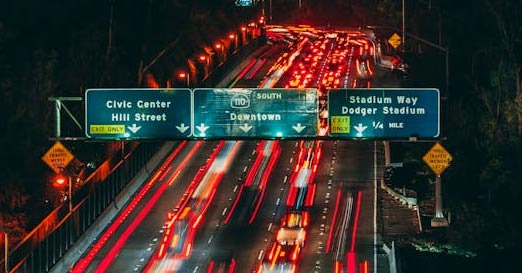
The numbers on U.S. freeways help identify which areas the road connects to and provide insight into the road's main characteristics. In the U.S., highways are typically numbered in two main ways: the Interstate System and the U.S. Highway System. By looking at the numbering rules of each system, you can get a sense of the road's nature.
Interstate Numbers:
Odd Numbers: Odd numbers are generally assigned to north-south highways. For example, I-5 runs from south to north, and I-95 runs from east to south.
Even Numbers: Even numbers are assigned to east-west highways. For example, I-10 runs from west to east, and I-40 runs from east to west.
U.S. Highway Numbers:
Odd Numbers: In U.S. Highways, odd numbers indicate north-south routes. For example, U.S. 1 connects north and south along the eastern coastline.
Even Numbers: Even numbers indicate east-west highways. For example, U.S. 40 runs from the eastern U.S. to the west.
These numbering rules can be useful for planning trips or understanding basic information about roads.
However, keep in mind that there are many road numbers in the U.S. that do not follow the above rules (e.g., Interstate 99 (I-99)), so it cannot be said to be 100% accurate!







 Khan Film Blog Production |
 dermoon |
 hoosierdaddy |
 sun walker |
 Let's Be Like a Salt-like City Person |
 Helpful Life Stories |
 Hajiwon Blog Hair Salon |
 American Man in a Mask |
 Texas Migration Story |
 Make My Day |
  Korean Mom |
  My NYC |
  moo moo |
  Mr Oh |
  forevergee |
  festival |
  manchester |
  constant |
  Leapfrog Move |
  vibranto |
  Tora Tora |
  yellowbutter |
  Dolly |
  US Embassy |
  NYC saladbar |
  Finding Superfoods |
  lightyear |
  song bang |
  vexomo |
  Indiana Jones |