

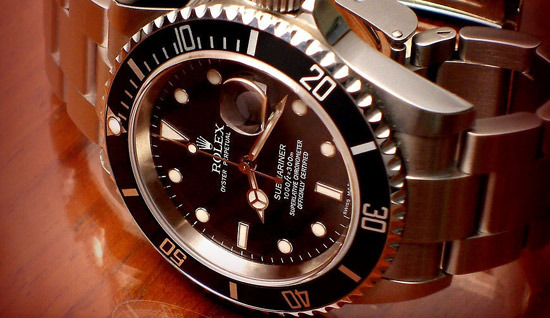
Once synonymous with wealth and success, luxury watches are now being overlooked by younger generations, leading to many concerns. However, amidst this trend, there is a brand that is actually increasing its presence: Rolex.
While many luxury watch brands worry about declining sales, Rolex continues to achieve record results. In 2023, Rolex's sales surpassed $10 billion, and it is reported that they will reach around $10.5 billion in 2024.
Looking at these figures, it seems that the love for Rolex is not easily fading. It is even more impressive that Rolex holds over 30% of the entire market, despite the slowdown in the global watch market.
Interestingly, Rolex's history did not begin with a glamorous royal or aristocratic background. In 1905, Hans Wilsdorf, a German, established a small watch company in London. At that time, wristwatches were perceived as inaccurate, and men trusted pocket watches more.
However, he believed that wristwatches would be the future. The challenge was the name. He needed a name that was easy to pronounce in various countries, suited the watch dial well, and was short and memorable. Thus, the name Rolex was born. While it has no special meaning, it is said that he hoped it would sound sophisticated.
The event that introduced Rolex to the world was an adventure. In 1927, British swimmer Mercedes Gleitze attempted to swim across the English Channel while wearing a Rolex watch. The watch functioned perfectly after enduring over 10 hours in the cold sea, and this incident established Rolex as a symbol of waterproof watches.
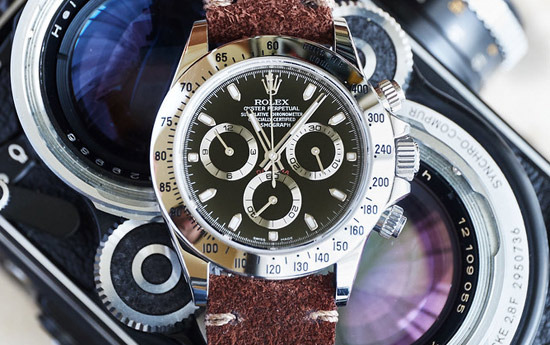
Afterward, climbers, explorers, and divers used Rolex in extreme environments, further solidifying the brand's image. Interestingly, Rolex has maintained a consistent design rather than chasing trends. While design changes have been minimal, this commitment has allowed Rolex to remain a watch whose value does not diminish over time. Ultimately, Rolex's history can be seen as a story built on trust and image rather than technology.
Given this trend, it is difficult to say that the luxury watch market is completely collapsing. However, it seems more accurate to express that the gap between brands is widening. Due to economic instability and rising prices, people have become much more cautious about high-end spending. The atmosphere for luxury consumption in China, the U.S., and Europe is not what it used to be.
Additionally, with smartwatches like the Apple Watch becoming commonplace, younger generations often find little appeal in traditional watches. As a result, many watch brands are experiencing declining sales, and even Tudor, Rolex's sister brand, has recently been evaluated as having slowed growth.
Nevertheless, the reason Rolex remains an exception is that it limits production, making it not easily accessible to everyone, and maintains an image of lasting value. As a result, Rolex has become more than just a watch; it is seen as an asset and a symbol of status. In the second-hand market, prices often hold steady or even increase, leading to consistent demand even during economic downturns.
In contrast, other luxury watch brands are at a crucial crossroads. They are contemplating whether to embrace smart features, pursue limited editions and customization strategies, or reach out to younger consumers through online and social media.
The future of the luxury watch market seems likely to trend toward a structure where only brands with strong brand power, like Rolex, survive, rather than a collective growth for all.
Many Korean men can recite model names like Rolex Explorer, Submariner, Sea-Dweller, Daytona, Yacht-Master, Sky-Dweller & Air-King, and GMT, and some even collect them. However, if the resale value of Rolex, which has remained stable, were to drop, I believe that would be the moment when the future of luxury watches is redefined.







 El Dorado |
 lightyear |
 Moscow Kim |
 coloradoman |
 Montgomery Mom |
 xylora |
 wendra |
 Texas Migration Story |
 ultron78 |
 Aura-Infused WACAM |
  Tonky |
  viroma |
  cookie |
  Live and that's it |
  Alright Twain |
  eatontown blog |
  HAWAII Korean Church News |
  Amore |
  linex |
  Balancework |
  laro90 |
  MEDBIO American Doctor Blog |
  SWAT TEAM BLK |
  DREAM BIG |
  frostbite |
  330 Forever My Love |
  dralix58 |
  Gorama Round |
  Skydiving |