
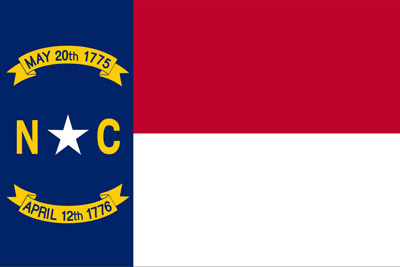
North Carolina is a state located in the southeastern United States, boasting a rich history, diverse culture, and economic development.
Early History and Indigenous Peoples
The North Carolina region was inhabited by various Native American tribes long before the arrival of Europeans. Notably, the Carolina Native Americans (especially the Iroquois Confederacy) lived here, relying on agriculture and hunting for their livelihood.
European Settlement and Colonial Era
- Late 16th century to early 17th century: In 1584, British explorer Alexander Hearsay arrived on the North Carolina coast attempting to establish the first European settlement, but he failed.
- 1653: The British John Whitehead and Charles Thistlethwaite officially established the Carolina colony. This period marked the beginning of the Carolina colony under direct royal governance from England.
- Indian Wars: In the early years of colonization, frequent conflicts occurred between the British colonists and Native Americans.
Independence and State Development
- 1776: North Carolina became the 12th state to sign the Declaration of Independence.
- Civil War: North Carolina participated in the Civil War as a member of the Confederacy and underwent significant changes during the Reconstruction period after the war.
Industrialization and Economic Development
- Late 19th century to early 20th century: The textile and lumber industries rapidly developed, leading to economic prosperity. North Carolina established itself as a major textile producer in the United States.
- Post-World War II: The aerospace and high-tech industries grew, diversifying the economic structure. Notably, aircraft engine manufacturers like Rolls-Royce gained prominence.
Modern History
- Education and Research: Major universities such as the University of North Carolina (UNC) and North Carolina State University (NCSU) play significant roles in research and education.
- Technology Hub: 'Research Triangle Park' is a major research complex in high technology and life sciences, housing many tech companies and research institutions.
- Social Change: In recent years, North Carolina has experienced various social issues, including racial conflicts, equality, and education reform.
Population Status of North Carolina
Total Population
- Population: As of 2023, North Carolina's population is approximately 10,700,000, making it the 9th most populous state in the United States.
Population Composition and Racial Proportions
- White: Approximately 65%
- African American: Approximately 21%
- Hispanic/Latino: Approximately 9%
- Asian: Approximately 4%
- Mixed Race: Approximately 1%
North Carolina is a state where various races and cultures coexist, with the African American community being a significant part. Additionally, the recent increase in Hispanic and Asian populations has contributed to its multicultural society.
Major Cities
- Charlotte: The largest city in the state, serving as a center for finance and business, notably housing large financial institutions like Bank of America.
- Raleigh: The capital city and the center of the Research Triangle, known for its high-tech and educational hubs.
- Greensboro: A center for manufacturing and education, home to several educational institutions including North Carolina A&T State University.
- Durham: Part of the Research Triangle, known for its development in biotechnology and healthcare industries.
- Winston-Salem: A city with a developed manufacturing and healthcare industry.
Population Trends
North Carolina shows a continuous trend of population growth. Economic opportunities, a high standard of living, and excellent educational facilities are driving population influx. Major cities like Charlotte and Raleigh are growing rapidly, leading to advancements in infrastructure such as transportation, housing, and education.
Median Household Income
- Median Income: The median household income in North Carolina is approximately $58,000 to $60,000, which is lower than the national average of about $70,000, but the cost of living is relatively affordable.
Key Economic Factors
Manufacturing and High Technology
- Diverse manufacturing sectors including automotive, aerospace, and electronics dominate the state.
- Many tech companies operate in high-tech complexes like Research Triangle Park, contributing to high-income job creation.
Healthcare and Life Sciences
- Major healthcare institutions like Cleveland Clinic are located here, with active biotechnology and medical research.
- High incomes are generated in medical services and research and development.
Financial and Business Services
- Charlotte is one of the major financial hubs in the United States, hosting many financial institutions and business service companies.
- This results in many high-income jobs in the financial and business services sector.
Education and Research
- Major universities like UNC and NCSU play crucial roles in research and education, providing stable incomes in education-related professions.
Agriculture and Agricultural Processing
- Agriculture remains an important part of the state economy, with tobacco, cotton, rice, soybeans, and corn being major crops.
- The agricultural processing industry also contributes to the economy and affects local income levels.
There are income disparities between regions within North Carolina. Urban areas like Charlotte, Raleigh, and Durham record relatively high median incomes, while some rural areas have lower income levels. This is attributed to differences in economic structure and industrial development.
North Carolina has a relatively low cost of living compared to other states in the U.S. Housing costs, groceries, and healthcare are cheaper than the national average, allowing households with median incomes to maintain a high standard of living. Particularly, housing prices are reasonable, contributing to residential stability.
North Carolina has a rich history, a diverse population, and an economic structure with developed industries such as manufacturing, healthcare, and finance. Through continuous population growth and economic development, it plays an important role in the United States, and with a high level of education and relatively low cost of living, many people choose it as their residence. North Carolina is an attractive state where historical heritage and modern economic activities harmonize, holding potential for further growth in the future.





 moo moo |
 ultron78 |
 garlic bread |
 Sugar Cream Door Bulletproof Noodles |
 urbanmint |
 NC Dreamer |

 Balan |
 Audio Mania World |

 North Carolina State University |
  US Embassy |
  Korean Mom |
  My NYC |
  Mr Oh |
  forevergee |
  festival |
  manchester |
  constant |
  Leapfrog Move |
  vibranto |
  Tora Tora |
  yellowbutter |
  Dolly |
  NYC saladbar |
  Finding Superfoods |
  lightyear |
  song bang |
  vexomo |
  Indiana Jones |