
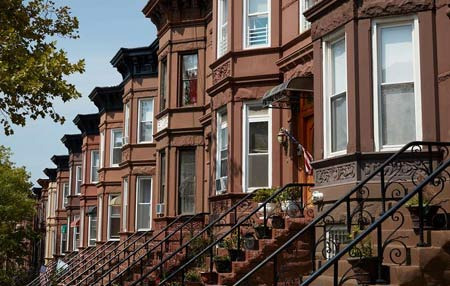
If you've decided to move to Brooklyn for the first time, there are many things to check off your list as you feel the excitement of the new adventure.
Settling in New York City goes smoother with adequate preparation, and especially in Brooklyn, where the living environment and atmosphere can vary greatly from neighborhood to neighborhood, doing your research before the move is crucial. Below, I've organized the essential things to check when moving to Brooklyn for the first time.
First and foremost, you should carefully choose your neighborhood. Brooklyn consists of dozens of neighborhoods with distinct characteristics, including Park Slope, Williamsburg, DUMBO, Bedford-Stuyvesant, Dyker Heights, Bensonhurst, Sunset Park, Borough Park, Crown Heights, and East New York. You need to consider commuting times to work or school, local safety, availability of amenities, rental prices, and school districts comprehensively.
You can find information about New York City school districts on websites like InsideSchools.org or niche.com, and the New York City Police Department (NYPD) provides neighborhood crime statistics through online tools like CompStat. Areas that are relatively popular among Korean families include Dyker Heights, Bensonhurst, Borough Park, and Park Slope.
There are also many things to check when signing a rental agreement. New York City rental apartments are broadly categorized into rent-stabilized (Rent-Stabilized or Rent-Controlled) and market-rate apartments. Rent-stabilized apartments have limits on rent increases, making them advantageous for long-term residents. Before signing, you should carefully check whether the rent is regulated, if heat is included, if parking is included, the level of building management, laundry facilities (whether there are in-unit washer/dryer or a communal laundry room), and any history of pests.
Additionally, adding roommates or short-term rentals like Airbnb is often prohibited in most rental agreements, so it's important to read the contract thoroughly. Taking detailed photos of the apartment's condition before moving in can help prevent disputes over the security deposit.
After moving, you also need to promptly handle administrative tasks. You will need to visit the DMV (Department of Motor Vehicles) to obtain a New York State driver's license or ID card, and residents of New York City can apply for the city ID card, IDNYC.
When opening a bank account, you will need proof of address, so prepare utility bills or your rental agreement. If you have children, school registration is done through the New York City Department of Education (NYC DOE), and school assignments are based on your residential address. You can enroll in health insurance through workplace benefits or New York State Medicaid, Essential Plan, or Qualified Health Plan, and compare options through the New York State of Health marketplace.
In terms of convenience, it's a good idea to familiarize yourself with nearby public transportation routes and stops, supermarket locations, 24-hour pharmacies, hospitals close to emergency rooms, and post offices. While you may often need to travel to Korean markets in Flushing to find Korean ingredients, you can also take advantage of delivery services like Amazon Fresh or Instacart.
Gaining information about your neighborhood, second-hand goods, and recommended Korean businesses through online community cafes or social media groups can also be practically helpful. Creating a checklist of all the necessary information related to your move and tackling them one by one can significantly reduce the chaos of settling in initially.
 HugeTiger
 skyroadtraveler1951
 RiverWave
 LikeGalaxy



 Folding Instructions |
 yentra |
 Cali M Law Group |
 quanta7 |
 Helpful Life Stories |
 Franco Family |
 Starbucks Reserve Roastery Closure |
 newyorker 101 |
 Softember |
 Encyclopedia of New York and Surrounding Areas |
  uplifted |
  same same life |
  USA Hyundai Kia |
  morvex37 |
  BOL SA RAM |
  TOUCHE NEWS |
  Small Business Information USA |
  draxen |
  gallery |
  milkyotter |
  Zoom Zoom Zoom |
  Minnesota Lakes and Clouds |
  noraro |
  tervox95 |
  vale vale |
  Golden life |
  andrew park |
  Peter Pan Pet |