

Honestly, when you read Korean media, you come across numerous health supplements (which are basically just selling drugs, haha).
After seeing ads for a long time, you often encounter the unfamiliar name "fucoidan."
The advertising phrases for "fucoidan" are always similar.
Boost immunity! Anti-cancer effects! Virus suppression!
To be honest, as a health-conscious man in my 40s, these phrases seem plausible yet a bit suspicious.
So I was curious whether fucoidan is really good for the body or just a fancy name for dietary fiber from kelp, so I decided to investigate.
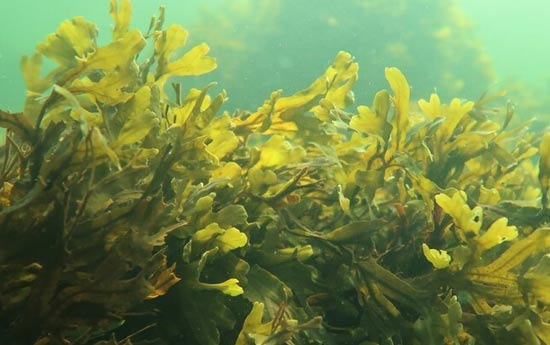
Fucoidan is said to be a sticky polysaccharide found in brown algae like kelp, seaweed, and mozuku.
It is mainly sold by health food companies in Japan, Korea, and nowadays, the United States as well.
The problem is that there are plenty of claims that it is "good for the body," but there is little discussion about the scientific evidence behind it.
First, immunity.
It is said that some reactions stimulating immune cells like NK cells (natural killer cells) have been observed in animal experiments or in vitro studies.
This means it could play a role in awakening the combat troops that eat up the bad guys (viruses or cancer cells, etc.) that enter our bodies.
However, this is laboratory talk, and there is still a lack of data showing that 'real immunity has been strengthened' in humans.
Anti-cancer effects.
There are quite a few studies suggesting that fucoidan induces apoptosis in cancer cells, and some papers have shown growth inhibition potential, especially in stomach, colon, and lung cancers.
However, this does not mean that consuming it will cure cancer. Most of the research has been conducted on mice or in experiments where cancer cells are cultured separately.
No one knows if it will work the same way in the human body. In other words, it may be a 'candidate for adjunct therapy,' but it is not something powerful enough to replace hospital treatment.
Virus suppression effect?
There are studies showing that it blocked the invasion of viruses like the cold virus or herpes in vitro.
However, claiming that "it can also block COVID" is almost at the level of fraud in the health supplement industry.
To put it politely, it is accurate to say that there is potential, but it has not been verified.
So let's summarize. Fucoidan, while the name sounds scientific and evokes a sense of the ocean, is still just a material that is 'showing potential in basic research stages.'
There are experimental results suggesting that it could boost immunity, have anti-cancer effects, and suppress viruses, but the effects when applied to the human body are unknown.
The only advantage is that it is a naturally derived ingredient, so it is said to have almost no side effects and very few gastrointestinal issues.
So I concluded this.
"A bowl of seaweed soup in the morning and some kelp in kimbap is enough fucoidan to keep my health in check."
Switching to powder or liquid form for money might be meaningful for those who need psychological comfort...
But for someone like me, who is sensitive to cost-effectiveness, it might be an excessive luxury.
Nevertheless, if someone were to gift it to me?
Hmm... "I should take good things~" and I would quietly pour it all in while being cautious.
Since when have we believed in scientific articles or laboratory reports?
If it makes you feel good, that's the efficacy!







 novapixel |
 Peter Pan Pet |
 horse |
 Sunset Oregon |
 daisypat |
 U.S. Supreme Court Judge Kim |
 Egg Steamed Pot |
 Learn English Accurately |
 Magic Cabbage School of Martial Arts |
 Korea News Economic News |
  manchester |
  constant |
  Leapfrog Move |
  vibranto |
  Tora Tora |
  yellowbutter |
  Dolly |
  US Embassy |
  NYC saladbar |
  Finding Superfoods |
  lightyear |
  song bang |
  vexomo |
  Indiana Jones |
  meloncat |
  mortrix |
  Esther 1983 |
  fortbliss |
  Moscow Kim |