
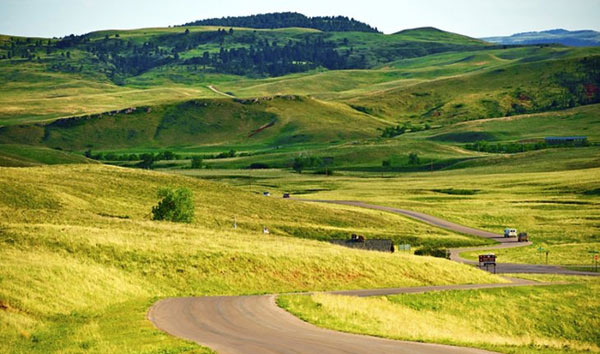
The grasslands of South Dakota are located in the heart of the Great Plains of the United States, characterized by endless stretches of grass and gentle hills. Situated in the vast Great Plains region that extends from North Dakota in the north to Nebraska in the south, South Dakota is known for its unceasing winds and particularly wide skies.
The grasslands here are not just simple land where grass grows; they are a treasure trove of ecosystems created over many years by nature and humans. The soil is primarily composed of fertile black soil mixed with clay and sand, and short grasses like buffalo grass and blue grama, which are resilient to drought, spread widely.
Thanks to this vegetation, the area has long been regarded as land suitable for both grazing and agriculture. As one moves westward, the land becomes drier, leading to a predominance of livestock farming, while the eastern region benefits from the abundant water of the Missouri River, allowing crops like corn, wheat, and soybeans to thrive. Thus, the grasslands of South Dakota are not merely natural spaces but are directly linked to the livelihoods of the residents. The colors of the grasslands change dramatically with the seasons.
In spring, new shoots emerge and wildflowers bloom; in summer, the landscape turns a deep green; and in autumn, golden winds cover the fields. In winter, snow blankets everything, bringing a sense of calm, yet the wind continues to flow over the snow. This scenery makes the area a popular destination for photographers and travelers in the United States. However, the grasslands are not just a beautiful place. Irregular rainfall leads to droughts every year, and strong winds frequently stir up dust.
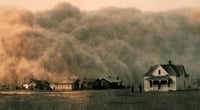
During the Great Depression in the 1930s, severe sandstorms swept through the region, known as the 'Dust Bowl,' and the damage remains an important lesson in history. Subsequently, the government worked on soil conservation and water resource management, successfully restoring the grassland ecosystem, and now advanced agricultural techniques and irrigation systems allow for much more stable production than in the past.
On another note, this area is also a habitat for wildlife. Animals such as bison, pronghorn antelope, and prairie dogs still inhabit some regions, and several National Grasslands have been designated to protect them. Notably, Buffalo Gap and Fort Pierre National Grasslands are among the largest protected grasslands in the United States, where visitors can experience the untouched grasslands through hiking or driving.
The grasslands of South Dakota are not just a natural environment; they are a space where the history of American pioneering, Native American history, and the development of modern agriculture intertwine. Even in a single blade of grass swaying in the wind, the past of this land and the lives of its people are embedded, and even now, the grasslands quietly maintain their place through the changing seasons.





 Dreams Come True as Desired |
 Dakota Man Blog Thanks |
 Mr. Midwest America |
  Tonky |
  viroma |
  cookie |
  Live and that's it |
  Alright Twain |
  eatontown blog |
  HAWAII Korean Church News |
  Amore |
  linex |
  Balancework |
  laro90 |
  MEDBIO American Doctor Blog |
  SWAT TEAM BLK |
  DREAM BIG |
  frostbite |
  330 Forever My Love |
  El Dorado |
  dralix58 |
  Gorama Round |
  Skydiving |