
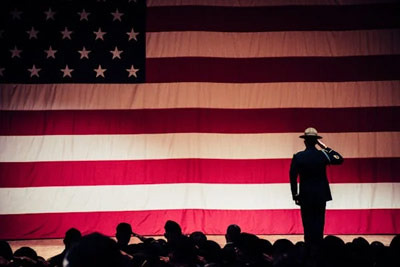
The reason the expression "thank you for your service" is commonly heard in America is due to various cultural, historical, and social backgrounds.
When Americans watch movies or TV dramas, public service announcements, pamphlets, schools, or local events, they casually say "thank you for your service" to active-duty and retired military personnel. For Koreans, the experience of writing letters of encouragement to Korean soldiers is limited to something like "Thank you, soldier uncle," making it feel like a unique American culture. Let me explain why.
Since the American Revolutionary War, the country has maintained military power to protect its freedom and democracy, and through participation in various wars and international conflicts, the sacrifices and efforts of soldiers have greatly contributed not only to national security but also to the safety of the citizens. Within this historical context, military service has taken on a meaning beyond just a job, and soldiers are recognized as guardians of the citizens' freedom and peace.
This historical experience and pride in national defense have deeply rooted the expression "thank you for your service" in American society as a way to express gratitude for the dedication of soldiers. Additionally, there is a strong value placed on 'dedication', 'sacrifice', and 'patriotism' throughout American society. These cultural factors lead to respect and gratitude towards soldiers, with influential elements across schools, media, and politics highlighting the contributions of soldiers and contributing to a positive image.
Moreover, as a country actively participating in numerous overseas military operations and international security activities, policies have been established to favor soldiers as a form of compensation for the pain and sacrifices they endure. Institutional support for soldiers and their families plays a crucial role in maintaining not only national security but also the stability of society as a whole. Such support policies boost soldiers' morale and trust in the nation, and further help convey positive values about military service to future generations.
The U.S. government, local governments, and private organizations provide various benefits for veterans—such as medical services, educational support, and employment assistance programs—to help them reintegrate into society and strengthen positive perceptions of military service. As mentioned, American culture regards individual courage and sacrifice as important virtues, so expressing encouragement and gratitude to those who have served in the military is seen as a natural social behavior.
The reason for the treatment of soldiers in America is also deeply related to national identity. The recognition that military service plays an important role in the value and safety of the entire community, beyond individual sacrifice, has led to the formation of social consensus and traditions to honor this. Ultimately, American society has developed a culture that respects the courage and dedication shown by soldiers, and this cultural and institutional background continues to influence the preferential treatment of soldiers today.
Finally, the uniquely American culture of "thank you for your service" is not limited to just soldiers; it is often applied to express positive impressions for those who play important roles in their fields or communities. As a culture of mutual respect and encouragement among citizens has taken root within the diversity of American society, "thank you for your service" has spread as a universal expression of sincere gratitude for someone's efforts and sacrifices.







 xylora |

 wendra |
 Aura-Infused WACAM |
 Texas Migration Story |
 There Are Such Things in the World |
  Tonky |
  viroma |
  cookie |
  Live and that's it |
  Alright Twain |
  eatontown blog |
  HAWAII Korean Church News |
  Amore |
  linex |
  Balancework |
  laro90 |
  MEDBIO American Doctor Blog |
  SWAT TEAM BLK |
  DREAM BIG |
  frostbite |
  330 Forever My Love |
  El Dorado |
  dralix58 |
  Gorama Round |
  Skydiving |