
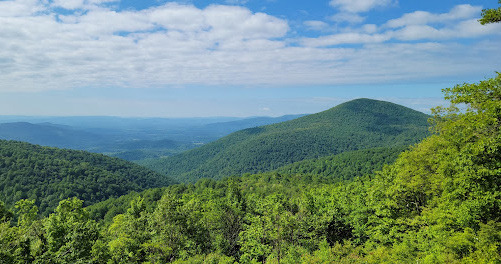
The Appalachian Mountains are one of the oldest mountain ranges in North America, famous for their rich natural scenery, historical significance, and unique culture. This mountain range is a special space where nature and history intertwine, so let's take a look together!
Overview of the Appalachian Mountains
Location and Size:
The Appalachian Mountains extend approximately 2,400 km from Newfoundland in eastern Canada to Alabama in the southern United States. They form a major geographical boundary in the eastern United States, acting as a natural barrier that separates the eastern coastal plains from the midwestern interior.Formation and Age:
Formed about 480 million years ago during the Paleozoic era, the Appalachian Mountains are among the oldest mountain ranges in North America. Over time, they have eroded, resulting in relatively low and gentle mountains, with an average elevation of about 900–1,200 m.Main Regions:
The range is divided into several smaller ranges and plateaus, including the Blue Ridge Mountains, the Great Smoky Mountains, and the Allegheny Mountains.
Natural Environment and Ecosystem
Diverse Ecosystems:
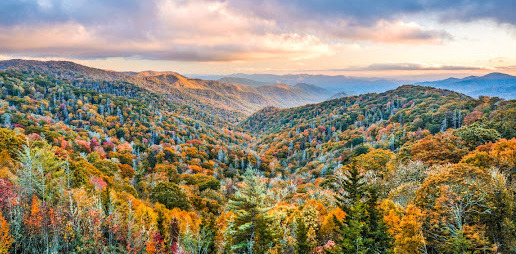
The Appalachian Mountains boast the richest biodiversity in North America.- Plants: Lush temperate deciduous and coniferous forests coexist, with the Blue Ridge Mountains region being famous for its habitat of rare species worldwide.
- Animals: Various wildlife, including black bears, white-tailed deer, and wolves, inhabit the area, and freshwater fish and amphibians can easily be found in valleys and streams.
National Parks:
There are several national parks and protected areas in the Appalachian Mountains. Notably, the Great Smoky Mountains National Park is designated as a UNESCO World Heritage site, attracting millions of visitors each year.
Historical and Cultural Significance
Indigenous Peoples and Early Settlers:
The Appalachian Mountains were originally used by Native Americans as hunting and living grounds. In the 18th century, European settlers moved westward, leading efforts to expand into new territories beyond the Appalachian Mountains.Appalachian Culture:
This region is known for its unique traditional culture, particularly in folk music, handicrafts, and traditional dance. In modern times, the culture here has significantly influenced American country and bluegrass music.
Appalachian Trail
Overview of the Trail:
The hiking trail, approximately 3,500 km long, runs along the Appalachian Mountains and is world-renowned. It stretches from Springer Mountain in Georgia to Mount Katahdin in Maine, crossing 14 states.Popularity of Hiking:
This trail is well-known as a place of challenge and healing for nature lovers. Completing the entire trail takes about 5 to 7 months, and thousands of hikers embark on this journey each year, creating unforgettable experiences.
Economy and Resources
Mining:
The Appalachian region is rich in natural resources like coal, which once played a crucial role in America's industrialization. However, in recent years, the decline in coal mining has led to changes in the local economy.Tourism:
Mountain tourism and recreational activities constitute a significant portion of the local economy. Outdoor activities such as hiking, camping, and skiing are particularly popular among visitors to the area.
The Appalachian Mountains are a special place where nature and human history are deeply intertwined. The ancient geological formations, biodiversity, and unique cultural traditions make this mountain range even more attractive. For nature lovers, history seekers, or those simply looking to enjoy some leisure time, the Appalachian Mountains are an unmissable travel destination.







 silver |
 Gomex Korea |

 Oz's Wow Company |
 diamondo |
  DREAM BIG |
  frostbite |
  330 Forever My Love |
  El Dorado |
  dralix58 |
  Gorama Round |
  Skydiving |
  dreamport |
  Yellow Snowman |
  Toaster Pizza Magic Show |
  velvetnom |
  Anytime Journey |
  Mrs. Duluth |
  jaxter |
  Atlanta Mama |
  Baguette Blog |
  Tan Sol |
  US Embassy |
  Korean Mom |
  My NYC |