

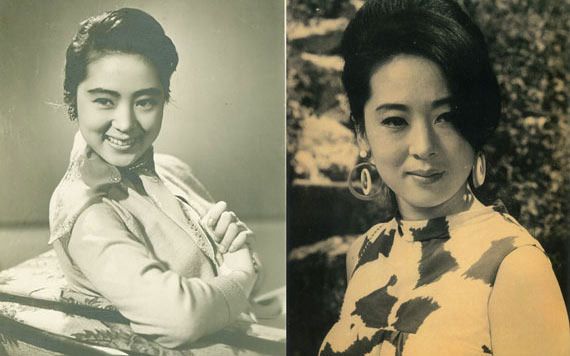
When the name Kim Ji-mi comes to mind, people have slightly different reactions.
Some bring up the term "male relationships" first, while others say, "a strong woman rare for that era."
These two perspectives overlap in explaining her life, and it was a life too valuable to simply be summed up with the word "fate."
First of all, Kim Ji-mi was not someone who lived by relying on others.
Rather, she was someone who chose a life where she was at the center.
Her famous words after her fourth marriage ended are well-known.
"I am not someone who needs a husband; I am someone who needs a wife."
This one sentence encapsulates much of her character. She was not someone who wanted to be protected by others; instead, she was someone who took charge of her situation and led her life. Considering the atmosphere of the time, this attitude was quite radical.
Her views on love and marriage were similar.
She did not idealize men or see them as objects of dependence. Instead, she looked at them realistically.
Statements like "men are like children and lacking" were not just emotional remarks; they reflected her determination not to lose control in relationships.
If she liked someone, she would live with them; if not, she would turn away. In that era, this was a significantly feminist choice.
However, viewing everything solely as a "heroine's life" is also a one-sided interpretation.
To people at the time, four marriages and divorces would not have seemed ordinary. The partners were not ordinary figures either. Film director Hong Seong-ki, actor Choi Mu-ryong, singer Na Hoon-a, and doctor Lee Jong-goo, to name a few. Just by their names, they were influential men of the time. They were glamorous, received much attention, and ultimately, all ended in separation. Thus, the phrase "born under a lucky star" naturally followed.
Another interesting point is the nickname she was given. The Elizabeth Taylor of Korea. This was because of her beauty, private life, and repeated marriages and divorces. However, she herself did not care much about such comparisons. She maintained the attitude of "I am just me." How others defined her was not very important to her. This aspect feels even stronger. She was someone whose standards were clearer than the gaze of others.
In the end, it is difficult to categorize Kim Ji-mi's life as one or the other. There were certainly ups and downs that seemed like a born fate, but there were also aspects that she clearly chose and pushed forward. However, one thing is certain. She was not someone who was dragged along by circumstances; she was someone who made choices at every moment. Those choices have repeated, leaving us with the story we see today.
People often ask this: Is it fate or personality? But this question itself might be a bit simplistic. Some people live by making stable choices, while others boldly change direction based on emotions and convictions. Kim Ji-mi was closer to the latter. That's why her life seemed more dramatic and why there were more stories to tell.
Until the end, she did not explain herself by others' standards.
Her simple yet clear principle was to live together if she loved someone, or to leave if not. To some, it may seem like a tumultuous life, while to others, it appears as a life lived freely.
In the end, Kim Ji-mi was not someone who lived in a common way.







 Helpful Life Stories |
 Heart Ticker |
 Shintongbangtong Shin Naerin James Park |
 korvix |
 My Town My Way Blog |
  ORAVEZIN Oppa |
 berrypup |


 Hawaiian Dooly Mom |
  Roman Pan |
  Key spots |
  Community Cross |
  Wenda |
  Nuchuhan Exploration BLOG |
  Who's watching? |
  Strawberry Pancake Warrior |
  What can make money? |
  Egg Steamed Pot |
  New Jersey News Local Stories |
  Study Abroad Life Know-How Tips |
  My Love DS |
  Leapfrog Move |
  US Regional Information Local News |
  Finding Superfoods |
  COLO COLO |