
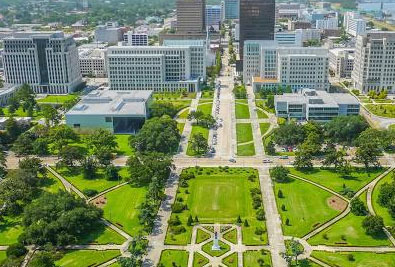
Baton Rouge is the capital of the state of Louisiana and the second largest city in the state, boasting a rich history, diverse culture, and a strong economic base. The city is located south of the Mississippi River and is known as a center for education, government, and the energy industry. Below, we will take a closer look at the history, population, and median income of Baton Rouge.
Early Settlement and Colonial Era
- Native American Era: Before the arrival of Europeans, various Native American tribes inhabited the Baton Rouge area. Primarily, tribes such as the Cherokee, Creek, and Seminole lived in this region, sustaining themselves through agriculture and fishing.
- French Colonization: In the mid-18th century, the French colonists began to settle in the Baton Rouge area. During this time, Baton Rouge grew as a center for agriculture and trade.
Incorporation into the United States
- Louisiana Purchase: In 1803, the United States purchased the Louisiana territory from France, and Baton Rouge developed as an important administrative center of this new American territory.
- City Development: In 1812, Baton Rouge was designated as the official capital of Louisiana, leading to the concentrated construction of government agencies and educational facilities. This resulted in rapid growth of the city's population and economy.
Civil War and Reconstruction Era
- Civil War: From 1861 to 1865, Baton Rouge served as an important military and logistics base for the Confederacy during the Civil War. After the war, the Reconstruction era brought significant changes to the economy and social structure.
- Reconstruction and Industrialization: After the war, Baton Rouge achieved industrialization and economic growth, particularly with the oil and chemical industries becoming major drivers of the city's economy.
Modern History
- Center of Education and Research: In the 20th century, Baton Rouge grew as a center for education and research with the establishment of major educational institutions such as Louisiana State University (LSU).
- Development of the Energy Industry: The oil and gas industry led the city's economy, and Baton Rouge developed as an important area where energy-related companies are headquartered.
- Culture and Arts: Baton Rouge is a city where various cultural and artistic activities are actively conducted, with many museums, performance venues, and art galleries located throughout.






 cherrydino |
  ORAVEZIN Oppa |


 berrypup |
  Tonky |
  viroma |
  cookie |
  Live and that's it |
  Alright Twain |
  eatontown blog |
  HAWAII Korean Church News |
  Amore |
  linex |
  Balancework |
  laro90 |
  MEDBIO American Doctor Blog |
  SWAT TEAM BLK |
  DREAM BIG |
  frostbite |
  330 Forever My Love |
  El Dorado |
  dralix58 |
  Gorama Round |
  Skydiving |