

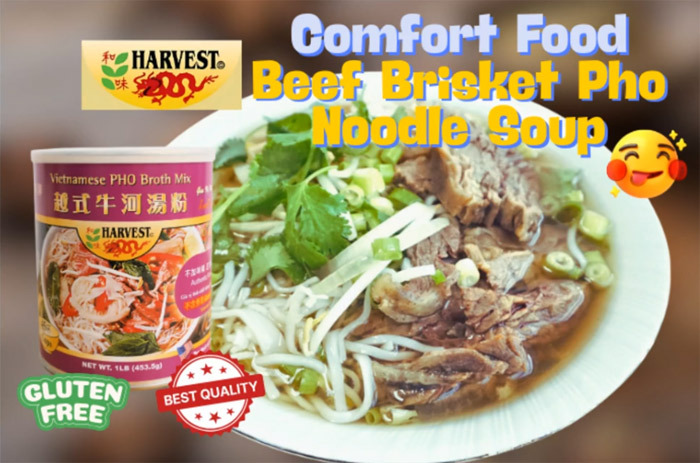
When I lived alone in LA, there was a Vietnamese noodle shop just a block away from my apartment that served my favorite Pho.
Whenever I felt like it, I could easily enjoy a bowl of my favorite rice noodles nearby.
On days when I needed to cure a hangover or just craved a warm broth, the rich and savory flavor of Pho would automatically come to mind.
However, when the damn coronavirus pandemic started in 2020, I moved to Yorba Linda where my parents live, and it became difficult to visit my favorite Pho spots like before. With the pandemic making it hard to go out, I started learning how to make Pho at home.
At first, it was overwhelming. I thought making Pho was just about boiling noodles and pouring broth over them, but replicating that broth flavor at home was the challenge. Fortunately, there was a Chinese market nearby, so it wasn't too hard to find the ingredients.
Basically, you need three things: rice noodles, bean sprouts, and cilantro (coriander) along with onions. The noodles are usually sold as fresh or dried, but to get the right texture, you need to cook them separately and then soak them in the broth. I prefer fresh noodles for their texture. Restaurants often use dried noodles.
Bean sprouts, which need to be cooked by pouring hot broth over them, add crunch, and cilantro is polarizing, but for me, I have to add a lot to bring out its unique aroma and flavor. The combination of Sriracha hot sauce and Hoisin sauce (the sweet black sauce) is what makes Pho so appealing. Haha
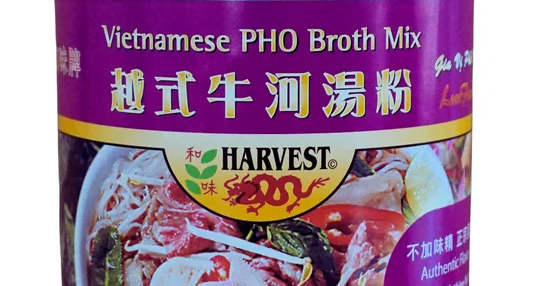
The secret ingredient for making the broth when simmering fatty beef is the Harvest 2000 Vietnamese Pho Broth Base Mix, also known as 'Pho broth seasoning.'
After deciding to try making Pho at home during the pandemic, the most searched item was this broth mix, and fortunately, I found it easily at the Chinese market, and it was also available on Amazon for online shopping.
It's incredibly convenient that I can achieve that deep flavor, which usually takes hours of simmering beef bones, with just this mix. Of course, you need to boil it with beef. If you just boil the broth mix, it will taste like MSG broth, not the flavorful broth you get at restaurants, resulting in a bland soup.
Once you prepare the ingredients and boil them in water, the aroma that fills the house creates an illusion of being in a restaurant in Little Saigon.
This is how I cook Pho at home.
First, I put water in a pot and add the Harvest 2000 broth mix.
When the water boils, I add the prepared fatty beef. You can use brisket, tenderloin, or short ribs. To get a good broth flavor, fatty beef is essential.
Then, I add about half an onion, chopped green onions, and large pieces of cilantro to boil together.
This way, the broth becomes much sweeter and more refreshing.
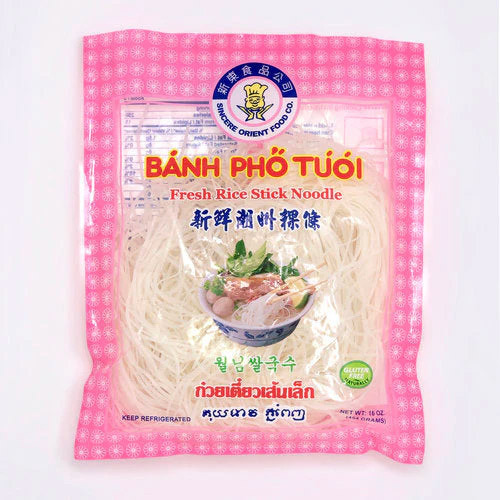
While the broth is boiling, I cook the rice noodles separately.
Fresh noodles dissolve quickly, so just putting them in boiling water for about 10 seconds is enough. Never cook them for more than 20 seconds. Fresh noodles are already cooked, and if you cook them too long, they will fall apart and lose their flavor. I messed up the first time by cooking them for 1-2 minutes.
If you are using dried noodles, you need to learn the right cooking time through experience. I tried this but found it too tricky and gave up. Haha
Also, I don't blanch the bean sprouts separately; I just add them directly to the hot broth. Finely chopped cilantro should be added just before eating with a squeeze of lemon juice to enhance its aroma.
At first, I was amazed, thinking, "Is this really something I made?" when I saw the finished bowl in front of me.
While restaurant Pho requires a lot of care in simmering meat and spices for a long time, the home version allows me to save time and effort thanks to this broth mix.
I usually buy thinly sliced beef and briefly blanch it in the broth. This way, the Pho I make at home is comparable to what you get at a decent restaurant.
Most importantly, making it at home has brought me peace of mind. Before the pandemic, I used to drive to LA's Koreatown or Little Saigon every weekend, waiting in line to eat, but now, as long as I have bean sprouts and cilantro in the fridge, I can make a bowl of Pho anytime.
Making rice noodles is initially challenging, but once you get the hang of it, it becomes less labor-intensive, and my family loves it, so I often make it.
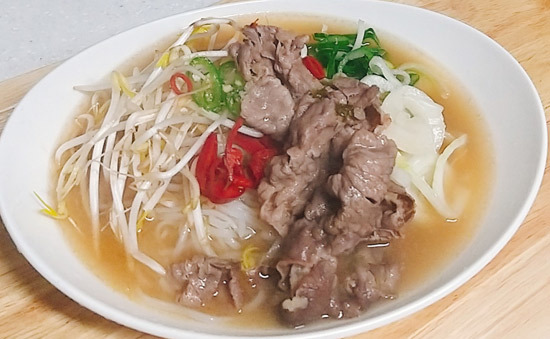
Now, I can confidently serve Pho to guests and enjoy experimenting with different toppings in my own way.
I squeeze lime for a refreshing taste, and on some days, I add chili oil for a spicy kick. The ability to adjust to my own taste is the charm of making Pho at home.
Looking back, the pandemic brought many inconveniences and changes, but for me, it also gifted me with a new joy in cooking.
I ended up making Pho, which I would never have attempted before, and now I have the small joy and leisure of being able to make it whenever I want in my quiet home.
Give it a try; you can easily make delicious Pho at home without spending a lot of money.






 Until the Day It Gets Better |
 Sunny Fullerton |
 Sunny Sunny with the Sun |
 Snack-like Blog Writing |
 Enjoying Samba at Home |
  dralix58 |
  Gorama Round |
  Skydiving |
  dreamport |
  Yellow Snowman |
  Toaster Pizza Magic Show |
  velvetnom |
  Anytime Journey |
  Mrs. Duluth |
  jaxter |
  Atlanta Mama |
  Baguette Blog |
  US Embassy |
  Korean Mom |
  My NYC |
  moo moo |
  Mr Oh |
  forevergee |
  festival |
  manchester |