


Chino is one of the cities that most symbolically represents the logistics industry's adjustments currently being experienced throughout the Inland Empire. This is due to its structure, which is directly affected by the industrial cycle, as it is an area densely populated with warehouse-type real estate.
The population is projected to be around 98,000 by 2026, showing an increase of over 7% since the 2020 census. The commercial ecosystem formed with nearby Chino Hills and Montclair can also be seen as a factor supporting local retail employment. The annual growth rate is around 1%, which is relatively stable compared to nearby cities in Orange County. The median household income is also a decent $104,000, and the continued supply of new housing is attracting young households.
However, looking at the industrial base, it appears that the logistics sector in the Inland Empire, once known as the world's warehouse, is currently undergoing adjustments. Prologis, a major logistics developer, announced that rental prices in the Southern California region fell by 7% in the fourth quarter of last year, and the amount of new construction has reportedly decreased to half compared to the end of 2022. There have also been cases of warehouse closures in nearby cities, including Chino, Rialto, Fontana, and Paris. The slowing growth of e-commerce volumes is cited as a background for these adjustments.
While the unemployment rate and income indicators do not yet suggest significant instability in the overall local economy, there is a growing call among local economic experts to diversify the industrial structure, which has been heavily reliant on logistics. Discussions are also underway to encourage transitions to sectors such as healthcare and advanced manufacturing, and some movements to attract aviation maintenance-related industries near Chino Airport have been observed. Overall, there are evaluations that the structural strengths of population base and port accessibility in the Inland Empire remain valid.
In terms of infrastructure, the expansion projects for the 60 and 71 freeways and the plans for the expansion of the Ontario International Airport cargo terminal are ongoing, indicating that logistics accessibility is not expected to worsen in the long term. However, it is clear that the pace of new development is not as fast as it used to be, which could impact rental demand in related industries in the short term.
Regarding long-term growth potential, there are perspectives pointing out the risks of logistics concentration, as well as views that the locational advantages adjacent to Southern California's largest consumer market remain valid. Monitoring the actual pace of industrial diversification will likely be key to future assessments.
For Korean households, Chino has a relatively high proportion of new housing and stable school districts, so the demand for actual residence remains strong. However, since the adjustments in the logistics sector may have some impact on the overall job market, it is safer to consider the industrial composition of tenants if the purpose is investment. For actual residence, focusing on new complexes, and for investment purposes, it is necessary to adopt a strategy that observes the trends in industrial diversification. Compared to nearby Montclair and Chino Hills, Chino is forming a relatively reasonable price range, which is an attractive factor for actual residents. At the same time, discussions are ongoing about the development of commercial districts linked to adjacent areas like Chino Hills, indicating that there are efforts at the local level to move away from a single-industry structure in logistics.
Looking ten years ahead, Chino may experience growing pains as it reduces its dependence on the logistics industry and broadens its industrial base. If the pace of industrial restructuring across the Inland Empire accelerates faster than expected, it is also possible that Chino will see a shortened adjustment period in line with that trend. However, the influx of population is steadily continuing, so how the adjustment period is navigated will likely determine the direction of long-term real estate values.
 MockAllDoll
 Twoxas







 garlic bread |
 Sugar Cream Door Bulletproof Noodles |
 urbanmint |
 |
| 
 Premium Gas Camp |
 Cap Com |
 Chino Min |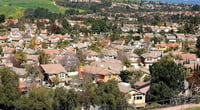
 Shoot Me |

 DREAM BIG |
  draxen |
  gallery |
  milkyotter |
  Zoom Zoom Zoom |
  Minnesota Lakes and Clouds |
  noraro |
  tervox95 |
  vale vale |
  yentra |
  Golden life |
  andrew park |
  Peter Pan Pet |
  Balan |
  Cali M Law Group |
  neroyo |
  Dreams Come True as Desired |
  Khan Film Blog Production |
  coloradoman |
  Living Economy Information Blog |
  rustley |