

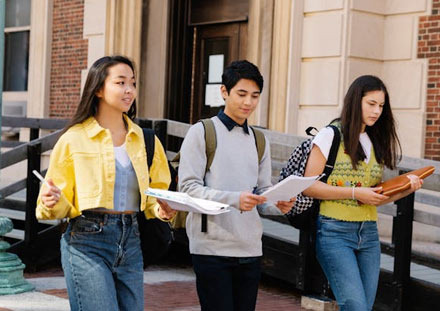
STEAM is an integrated educational approach that combines Science, Technology, Engineering, Arts, and Mathematics, helping students develop creative and critical thinking skills.
In the United States, STEAM education, which goes beyond simple rote learning to cultivate the skills necessary for solving real-world problems, is gaining attention. STEAM learning generally begins before kindergarten, allowing students to experience it integratively throughout the K-12 curriculum. Many schools include STEAM elements in their curriculum starting from the first grade, supporting the development of creativity and problem-solving skills from an early age.
For a long time, there has been a high interest in Science, Technology, Engineering, and Mathematics (STEM) in the American educational environment. Since the 1990s, the U.S. government, various educational institutions, and the industry have begun to strengthen STEM education to cultivate future talents. The goal at that time was to ensure that students could be competitive in rapidly advancing technological fields.
However, over time, the recognition spread that simple theory-based education alone could not sufficiently develop creative problem-solving skills. As a result, the American education sector began to focus on the role of the Arts. The arts were evaluated as an important element that stimulates students' creativity and critical thinking, leading to a movement to integrate it into STEM education.
Against this background, a new paradigm of STEAM (Science, Technology, Engineering, Arts, Mathematics) education emerged, which greatly helps in developing creativity and integrative thinking in the problem-solving process beyond mere technical acquisition. Initially, it was experimentally applied by a few leading schools and educational organizations, but gradually its effectiveness was proven, leading to its spread across the United States.
The history of STEAM education in the U.S. shows the development of a multidisciplinary approach that includes the arts, based on the foundation of STEM education, to cultivate the creativity and problem-solving skills needed in future society. Even now, STEAM education plays an important role in educational policy and field education, with various innovative programs and projects being carried out.
One of the significant advantages of STEAM education is that learning occurs through experiences that solve real-life problems. For example, students may work in teams in robotics classes to design and build robots that solve problems, and through projects that combine art and technology, they can learn design and programming simultaneously. In this process, students have the opportunity to learn not just theory but through direct experience.
Additionally, STEAM education emphasizes the importance of collaboration. Students from diverse majors and backgrounds come together to share their thoughts and solve problems together, naturally enhancing their social and communication skills. This can be a significant asset when they enter society in the future.
Finally, STEAM education fosters an attitude of not fearing failure and embracing challenges. By discovering errors through experiments and attempts and improving them through repetition, students can naturally enhance their problem-solving skills and develop creativity that generates new ideas.
In this way, STEAM education is an effective learning method that helps students acquire various skills required in future society.







 Magic Cabbage School of Martial Arts |
 Vacation on Hawaii |
 morvex37 |
 Ari Songhan American Immigration Life |
 Bearded Strawberry Smoothie |
 Virginia Butterfly Mom |
 victoria jung |

 Margarine Daebimama |
 Korean Mom |
  My NYC |
  moo moo |
  Mr Oh |
  forevergee |
  festival |
  manchester |
  constant |
  Leapfrog Move |
  vibranto |
  Tora Tora |
  yellowbutter |
  Dolly |
  US Embassy |
  NYC saladbar |
  Finding Superfoods |
  lightyear |
  song bang |
  vexomo |
  Indiana Jones |