
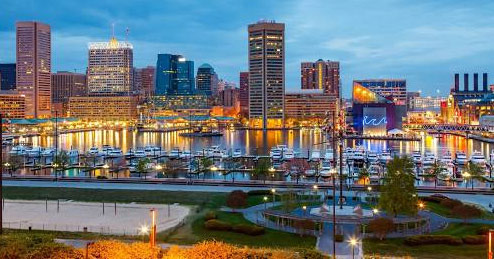
Baltimore is the largest city in Maryland, established in 1729. Starting as a port city, Baltimore prospered as a center for tobacco and agricultural trade, and in the 19th century, it grew into a major manufacturing city through industrialization and railroad development.
Baltimore has played an important role in American history. During the War of 1812, Fort McHenry, where the "Star-Spangled Banner" was written, is located here. This song is now used as the national anthem of the United States. Additionally, Baltimore was a center for the abolitionist movement, where figures like Frederick Douglass and Harriet Tubman were active.
Baltimore is situated at the mouth of the Patapsco River, which leads to Chesapeake Bay. The city's inland port has historically served as a significant commercial and logistics hub, and it continues to play a key role in tourism and the economy today.
As of 2023, Baltimore's population is approximately 570,000. The population is composed of diverse ethnicities and cultures, with African Americans making up about 60% of the total population. Recently, the Asian population, particularly those of Korean descent, has been gradually increasing.
While Baltimore was once a manufacturing center, today, the service industries such as healthcare, life sciences, education, and finance are the backbone of the economy.
- Johns Hopkins Hospital and Johns Hopkins University are world-renowned medical and research institutions, central to the local economy and employment.
- Port industry: The Port of Baltimore remains an important logistics hub, particularly strong in automobile and grain exports.
Baltimore is a center for education and research, home to major institutions such as:
- Johns Hopkins University: A world-class institution in medical and life sciences research.
- Morgan State University: A historically black university (HBCU) contributing to community development.
- University of Maryland, Baltimore County (UMBC): A public research university.
Baltimore boasts a rich history and cultural assets, featuring attractions such as:
- National Aquarium: One of the most popular aquariums in the United States.
- Fort McHenry National Monument and Historic Shrine: A site of great historical significance as the birthplace of the national anthem.
- Inner Harbor: A tourist destination filled with shops, restaurants, and museums.
- Oriole Park at Camden Yards: The home stadium of the Baltimore Orioles baseball team.
- Walters Art Museum and Baltimore Museum of Art: Major galleries for art enthusiasts.
Baltimore faces challenges such as economic disparities and safety issues among communities. However, active community engagement and urban renewal projects are underway, with many residents and organizations contributing to local development.
Baltimore is famous for its blue crab dishes and crab cakes. Seafood from Chesapeake Bay has become a representative part of the local culinary culture.
Baltimore is about an hour away from Washington D.C., allowing residents to enjoy both urban living and suburban environments. A variety of housing options and relatively affordable living costs make it an attractive choice for young professionals and families.
Baltimore is a city deeply rooted in history and culture, excelling in healthcare, education, and tourism industries. With a vibrant local culture and diverse communities, Baltimore embodies both challenges and opportunities.

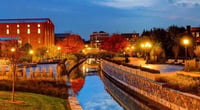


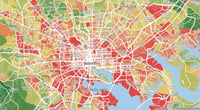
 maryland park |
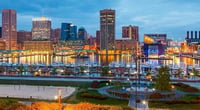
 mygoddess blog |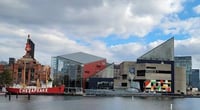
 Information on All Regions of the United States |
 frostpup |
  round1 |
  Way to easy |
  musicque |
  road98 |
  Churros Train Conductor |
  gleeful |
  Burbank Lee |
  Olivia's Blog |
  Bushing Around Life |
  Active |
  Cherokee Rose |
  Kor. Master |
  Holey Moley |
  Conflite Teacher |
  Hodong Prince Over Flex |
  Mist inn |
  citrus pop |
  Onion Ring |
  phoenixia |
  viewtop |