

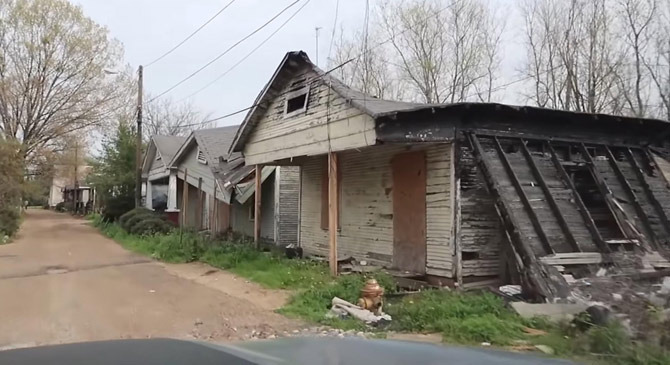
Mississippi is often jokingly referred to as the "Third World within America" due to its strong image as a "poor state."
However, this expression carries historical context and structural economic issues.
This region has developed primarily around agriculture for a long time. Plantation agriculture, especially cotton, was the backbone of the state's economy. However, this system was built on slavery, and after the Civil War, the infrastructure and labor structure completely collapsed. While other states quickly transitioned to industrialization, Mississippi continued to rely on agriculture. With a weak industrial base and few factories, it was difficult to create new jobs, and young people left for other states as soon as they finished their education.
Compounding this issue is the education problem. Mississippi has long been considered one of the states with the lowest public education levels in the U.S. Budget constraints and significant regional disparities have plagued the system. Schools in wealthy areas are relatively decent, but rural or predominantly Black schools still suffer from outdated facilities and staff shortages. Considering that education is directly linked to economic power, this creates a vicious cycle.
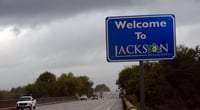
Another issue is infrastructure. Mississippi's roads, water supply, sewage, and public facilities are far more outdated than the national average. A notable example is the water crisis in Jackson. Aging pipes have caused leaks for years, and the filtration facilities have frequently malfunctioned. As a result, the entire city experienced a drinking water crisis during the summer. The reason these issues keep recurring goes beyond simple administrative failure; it is because the tax revenue itself is low. States with many wealthy individuals or businesses collect taxes well, but states like Mississippi, with a weak economic base, struggle to afford necessary public investments.
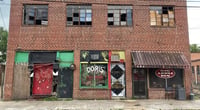
Racial inequality also plays a significant role. Mississippi has a high percentage of Black residents, leading to higher poverty rates alongside polarization issues. Social welfare systems are not adequately supported, resulting in low healthcare accessibility and poor living conditions. Therefore, outside the cities, it is still common to see abandoned houses lining the roads and derelict warehouses in the landscape.
Ultimately, the reason Mississippi is called the "Third World of America" is not simply due to a lack of money. It is the result of a fragile industrial structure, imbalances in education and infrastructure, and historical discrimination based on race and class that have accumulated over generations. Nevertheless, there are signs of change emerging. Policies aimed at revitalizing the local economy centered around small businesses, promoting the tourism industry, and supporting youth entrepreneurship are being developed, and within the Black community, there is a growing movement to "change things ourselves."
The people here continue to uphold the notion of being "poor but warm-hearted Southerners," believing that one day the stigma will disappear.




 frostingline |
 Certified Authentication Blog Page |
 Deep South Mississippi |

 manchester |
  constant |
  Leapfrog Move |
  vibranto |
  Tora Tora |
  yellowbutter |
  Dolly |
  US Embassy |
  NYC saladbar |
  Finding Superfoods |
  lightyear |
  song bang |
  vexomo |
  Indiana Jones |
  meloncat |
  novapixel |
  mortrix |
  Esther 1983 |
  fortbliss |
  Moscow Kim |