

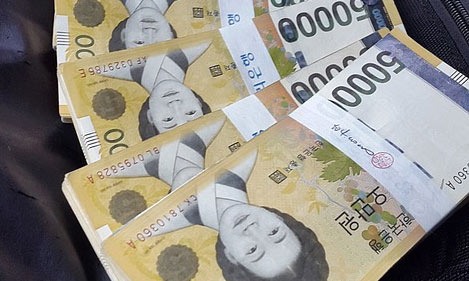
These days, when I watch the news, words like "tariff", "exchange rate", and "export slowdown" appear more frequently.
As I feel that the economy is closely connected to my life, I can't help but pay attention to the flow of the Korean economy.
In particular, Korea's export industry is the backbone of our economy, and at this point, where we cannot predict how U.S. tariff policy changes will impact Korean companies and where the exchange rate will swing, it seems necessary to summarize the situation.
The U.S. is imposing various import regulations on several countries to protect its domestic industries. A representative example is the imposition of tariffs, which is a strategy to maintain the competitiveness of domestic products by levying additional taxes on specific countries or industries.
The trade war centered around China during the Trump administration is a prime example, but under the Biden administration, there is a trend towards reviving domestic manufacturing, establishing non-tariff barriers through the IRA (Inflation Reduction Act), CHIPS Act, and other major industries like 'green technology', 'semiconductors', and 'batteries'. Ultimately, for Korean companies exporting to the U.S., costs are increasing, and market accessibility is inevitably decreasing.
For instance, in the electric vehicle battery sector, companies like LG Energy Solution, Samsung SDI, and SK On are building factories in the U.S., but many core components or materials are still sourced from Korea. However, due to the IRA, if the local production ratio is low, tax benefits decrease, and export competitiveness diminishes.
Additionally, areas like steel and aluminum can be subject to high tariffs under the pretext of 'national security' at any time. Despite being a signatory to the Korea-U.S. FTA, Korean steel products are subject to the U.S. safeguard measures, applying a quota system. When export volumes are restricted, companies naturally reduce production, which can lead to a contraction in employment and investment.
The Korean economy has a structure with a high proportion of exports compared to domestic consumption. About 40% of the total GDP comes from exports, indicating a significant dependence on the global market. Since the U.S. is the number one or two market for Korean exports, U.S. tariff policies or trade regulations can impact not just corporate performance but the overall flow of the Korean economy.
In particular, small and medium-sized enterprises suffer significant blows. While large corporations may have the capacity to build local factories in the U.S. or engage in lobbying, small export companies cannot bear such situations and must either give up exports or seek alternative markets. This, in turn, affects subcontractors, local economies, and the job market in a chain reaction.
Dollar Exchange Rate, A More Difficult Variable to Predict
Alongside tariffs, the exchange rate significantly impacts imports and exports. When the value of the won falls against the dollar (i.e., when the exchange rate rises), Korean products feel cheaper in the U.S., making exports favorable. Conversely, when the exchange rate falls, the price competitiveness of Korean products diminishes.
As of 2025, the exchange rate fluctuates around 1,400 won, indicating a high exchange rate situation. While a high exchange rate can be beneficial for export companies, the problem lies in instability and volatility. If the exchange rate fluctuates too much, companies find it difficult to devise long-term pricing strategies, and the risk of exchange rate losses increases.
Moreover, due to the characteristics of the Korean manufacturing structure, which relies on importing raw materials for processing, a high exchange rate creates a double whammy by increasing production costs and cutting into overall profit margins. Particularly for items with high import dependence, such as energy, food, and industrial goods, this can lead to rising domestic prices and economic contraction, indirectly burdening the lives of ordinary citizens.
The U.S. tariff policy is closely linked to politics. As the presidential election approaches, there is a possibility that 'America First' will be reinforced again, which could lead to stronger import regulations and protectionist trends. In this case, Korean export companies must find breakthroughs through diversifying markets outside the U.S., expanding local production, and strengthening technological capabilities.
Additionally, responding to exchange rates is crucial. While it is impossible to predict the flow of financial markets, both companies and individuals must develop strategies to mitigate or prepare for exchange rate risks. Examples include diversifying deposits, securing foreign currency assets, and expanding overseas sales channels.
As a Korean living in the U.S., it makes me uncomfortable to see the Korean export industry shaking.
I hope that the country we were born in continues to thrive in the global market, and that the industries where our families and friends work remain healthy.
The global economy is always changing. However, only those who find opportunities within those changes will survive. The current waves of tariffs and exchange rates can also become an opportunity for Korea to grow into a stronger exporting nation if well prepared.
So today, I quietly study the flow of the world by watching the news and exchange rate charts. My life, and the future of Korea, are ultimately within that flow.



 Victory 1988 |
 El Dorado |
 lightyear |
 Moscow Kim |
 coloradoman |
 Toaster Pizza Magic Show |
 Baguette Blog |
 Total Beauty |
 Pirate Ship Popcorn Maker |
 ROLDU WAY |
  phoenixia |
  viewtop |
  loverun |
  Kim Do Sun |
  SEVEN SEVEN |
  yentra |
  Make My Day |
  Tonky |
  viroma |
  cookie |
  Live and that's it |
  Alright Twain |
  eatontown blog |
  HAWAII Korean Church News |
  Amore |
  linex |
  Balancework |
  laro90 |
  MEDBIO American Doctor Blog |