

Maine is one of the states in the United States formed with a unique history and political background.
Originally a region where France and England competed for jurisdiction, it became part of the Massachusetts colony after England's victory.
After the United States gained independence, it naturally became part of Massachusetts, but due to geographical and political reasons, it was born as an independent state.
The Maine region was separated from the Massachusetts mainland, with New Hampshire blocking the two areas.
The residents of Maine, feeling neglected by the Massachusetts authorities, raised their voices for independence as a separate state.
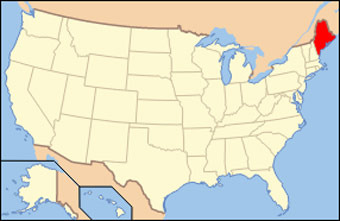
Eventually, in 1820, Maine separated from Massachusetts and joined the Union as the 23rd state.
The elevation of Maine to statehood was significantly influenced by the political situation in the United States at the time.
In 1818, when the Missouri Territory applied for statehood as a slave state, the balance of slave and free states, which was 11:11, was at risk of being disrupted.
To resolve this, Henry Clay proposed the "Missouri Compromise," under which Missouri became a slave state and Maine became a free state, maintaining the balance.
This decision contributed to temporarily easing tensions between the North and South but also became a precursor to significant divisions in American history.
After Maine gained independence, there were conflicts over border issues with British North America (now Canada).
This issue was resolved through the Webster-Ashburton Treaty in 1842, which established the current boundaries of Maine.
Maine serves as a representative case showing the political balance and conflicts of early American independence, a historical compromise to balance free and slave states, and a reflection of the independent voices of local residents.
Today, Maine has established itself as an important state in the New England region, along with its unique historical background.

For reference, the reason Maine has many lighthouses is due to the geographical features of the area and the historical importance of maritime traffic.
Maine has about over 65 lighthouses. Located on the Atlantic coast of the northeastern United States, Maine is famous for its long and complex coastline and numerous reefs that require lighthouses. Most of the lighthouses here were built between the 18th and 19th centuries and are now beloved as historical landmarks and tourist attractions.
The coastline of Maine stretches approximately 3,500 miles, making it one of the most complex coastlines in the United States. Due to the many bays and reefs, navigation was dangerous, necessitating many lighthouses.
Lighthouses supported Maine's fishing and maritime trade and were essential for the local economy and survival. Most of Maine's lighthouses were constructed from the late 18th century to the 19th century.
Today, many of Maine's lighthouses are historically preserved and open to tourists. This area is considered a perfect place for photography and enjoying nature.








 Weekend Movie Blog |
 Beauty, Health, Lifestyle Blog |
 coloradoman |
 Superman Cat Blog |
 Noodle Noodle |
  Tonky |
  viroma |
  cookie |
  Live and that's it |
  Alright Twain |
  eatontown blog |
  HAWAII Korean Church News |
  Amore |
  linex |
  Balancework |
  laro90 |
  MEDBIO American Doctor Blog |
  SWAT TEAM BLK |
  DREAM BIG |
  frostbite |
  330 Forever My Love |
  El Dorado |
  dralix58 |
  Gorama Round |
  Skydiving |