
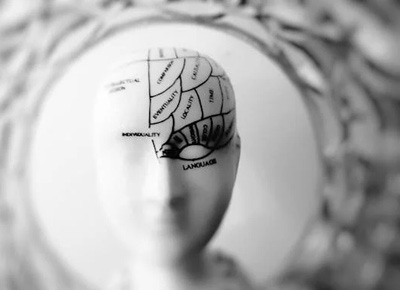
Since dopamine affects the pleasure and reward centers, there are many speculations about its relation to addiction issues.
However, to clarify the relationship between addiction and dopamine, it needs to be experimentally proven, which is not as easy as it sounds.
The reason it is difficult is that scientific experiments require strict control of variables, right? But when it comes to human subjects, controlling these variables is nearly impossible.
For example, to create several groups that control dopamine levels and intentionally expose them to addiction, ethical issues arise first.
Like the famous Stanford marshmallow experiment, obtaining results requires long-term observation.
Most of what we currently know about dopamine and addiction is close to inference.
If dopamine levels become excessively high, the brain becomes increasingly desensitized, causing the system responsible for pleasure and reward to malfunction.
Ultimately, this suggests a possibility of leading to addiction, but the specific principles or mechanisms have not yet been clearly established.
So for now, we can only give the general advice that "it's better not to get caught up in overly stimulating and pleasurable things."
Just as we have a standard for alcohol addiction, saying "drinking this much is dangerous," there may be dopamine-related guidelines in the future.
However, currently, the term "dopamine addiction" is often used too casually, and many unverified dopamine detox methods are being claimed.
As of 2024, there are many attempts to address the issues of dopamine and addiction, but research or experiments sufficient to completely resolve this are still lacking.
In conclusion, it is wise to maintain a proper boundary with stimulating things!







 xylora |
 wendra |
 Aura-Infused WACAM |
 Texas Migration Story |
 There Are Such Things in the World |
  DREAM BIG |
  frostbite |
  330 Forever My Love |
  El Dorado |
  dralix58 |
  Gorama Round |
  Skydiving |
  dreamport |
  Yellow Snowman |
  Toaster Pizza Magic Show |
  velvetnom |
  Anytime Journey |
  Mrs. Duluth |
  jaxter |
  Atlanta Mama |
  Baguette Blog |
  Tan Sol |
  US Embassy |
  Korean Mom |
  My NYC |