

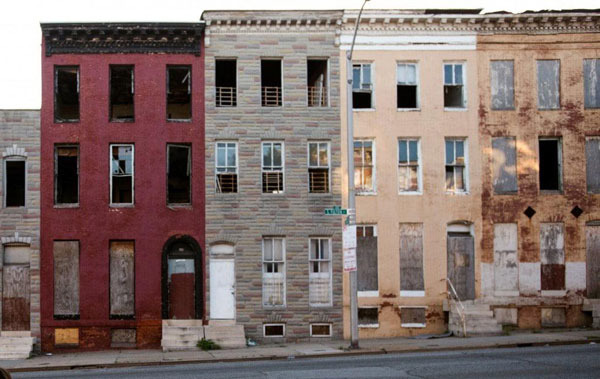
The decline in Baltimore's security has been a gradual result of decades of social change and economic structural collapse.
Until the 1970s, Baltimore was a city where steel and shipbuilding industries thrived.
As a port city, it had many jobs, and the blue-collar middle class formed the city's core, creating a vibrant atmosphere.
However, entering the 1980s, the industrial restructuring that swept across the United States hit this area hard.
Large steel mills like Sparrows Point closed, and as port logistics became automated, tens of thousands lost their jobs.
The collapse of manufacturing led to population outflow, reduced tax revenue, and the city gradually transformed into a landscape of vacant homes and ruins.
Then, in the late 1980s, the new drug 'crack' exploded in Baltimore, and as street gangs expanded their influence, the city's balance completely collapsed.
By the early 1990s, Baltimore was already considered 'one of the most dangerous cities in America,' and that reputation continues to this day.
The city structure centered around the Black community is often mentioned as one of the backgrounds for the decline in security.
After the assassination of Martin Luther King Jr. in 1968, riots engulfed the city, and since then, the phenomenon of 'White Flight' accelerated as the white population moved to the suburbs.
The remaining Black areas saw skyrocketing unemployment and poverty rates, and the education and welfare infrastructure collapsed.
Trust between the police and local residents nearly vanished. This prolonged situation created a vicious cycle of ongoing crime.
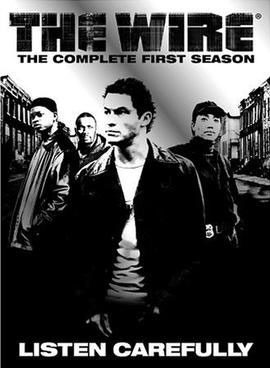
In the memories of Americans, the image of "the city of The Wire" remains strong.
The HBO drama 'The Wire' vividly depicted the realities of Baltimore in the early 2000s, and the social issues from that time have not completely disappeared into the 2020s.
Especially after the 'Freddie Gray incident' in 2015, the decline in security became a critical turning point.
At that time, the Black youth Freddie Gray died after being arrested by the police, leading to large-scale protests and riots, and police morale and responsiveness plummeted.
Since that year, Baltimore's murder rate reached its highest level in 30 years, and residents stated that "the city had become uncontrollable."
The nature of crime has also shifted; while previously it was mostly conflicts between drug organizations, there has been a recent increase in indiscriminate shootings, carjackings, and youth crimes. After the COVID-19 pandemic, economic instability and mental stress have led to a surge in youth gun incidents.
Even the downtown and Inner Harbor areas, once revitalized by redevelopment, have become places people avoid at night, with tourists being advised to "return to their accommodations before dark."
However, not everything is bleak. In recent years, the city government has been implementing police reforms and community programs to improve security.
It is said that Baltimore's murder rate has recently improved significantly, with a total of 201 murders recorded in 2024, a decrease of about 12% compared to the previous year, marking the lowest figure in about 15 years.
Thus, there is a noticeable trend of violent crime, especially murders, decreasing compared to the past.
Efforts to increase local jobs through youth gun buyback programs and vacant home remodeling projects are also ongoing.
As explained so far, the decline in Baltimore's security can be seen as a wound of the city created by the intertwining of job loss, educational collapse, racial conflict, and institutional distrust over many years.
I have done a lot of research, but the content is somewhat lacking. Still, this was an explanation of why Baltimore became a dangerous city.


 mygoddess blog |
 Information on All Regions of the United States |
 maryland park |

 frostpup |
  US Embassy |
  Korean Mom |
  My NYC |
  moo moo |
  Mr Oh |
  forevergee |
  festival |
  manchester |
  constant |
  Leapfrog Move |
  vibranto |
  Tora Tora |
  yellowbutter |
  Dolly |
  NYC saladbar |
  Finding Superfoods |
  lightyear |
  song bang |
  vexomo |
  Indiana Jones |