

Having lived in Las Vegas for a long time, I've come to realize that Vegas is truly a one-of-a-kind city in America.
With 24-hour casinos, bright lights that make it feel like daytime even at midnight, and artificial fountains dancing in the middle of the desert.
So, for those visiting Vegas for the first time, having a basic sense of direction is essential.
You need to know where to go, where to save money, and what to do to truly enjoy your experience. Today, I'll share those insights.
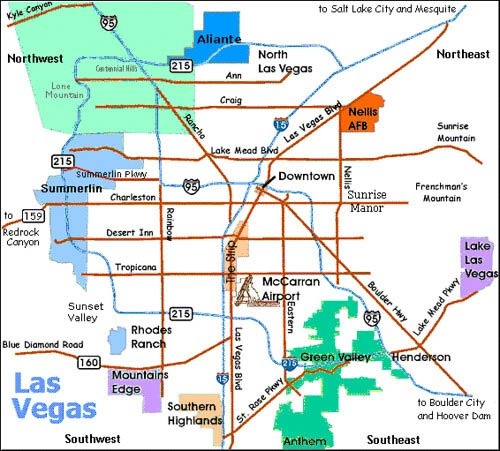
Harry Reid International Airport (formerly McCarran Airport... I wonder why they changed the name) is located just south of the Strip.When the plane lands, you can see the neon signs of the casinos from the window.
It takes about 10 minutes by car from the airport to the hotels south of the Strip. If you take an Uber or Lyft, it will cost around $20 to $25.
Here's the first tip: If you're just going to be around the Strip, you don't need a rental car. The casinos are criticized for their paid parking fees, which can range from $20 to $40 a day, and walking is key on the Strip. There are well-connected walkways between hotels, and there's also a monorail. However, if you plan to go downtown or to the outskirts, having a rental car might be convenient, or you can just keep using Uber.
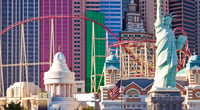
The southern section (Mandalay Bay to Bellagio) is the essence of classic Vegas. The Bellagio fountain show is free and of incredible quality, while the Cosmopolitan is currently the hottest hotel among the younger crowd. The middle section (Caesars Palace to The Venetian) is the center for shopping and dining. The northern section has completely transformed in recent years. Resorts World opened in 2021, bringing new life to the northern Strip, and Fontainebleau opened as a massive 67-story resort, becoming a game changer.
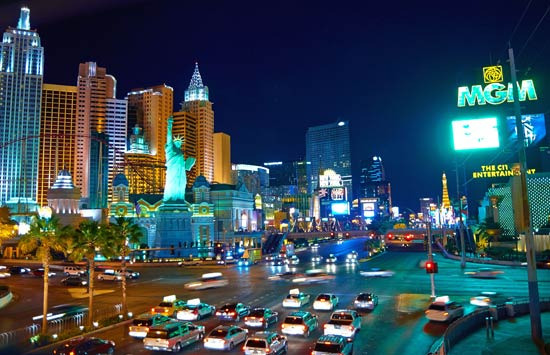
And right now, the most noteworthy attraction is the Sphere. Just looking at the exterior LED is jaw-dropping, and it gets even better inside. In 2026, legendary artists like the Backstreet Boys, Eagles, and No Doubt will have residency shows lined up. Visiting Vegas without seeing the Sphere is like going to Seoul and not seeing the Han River.
The Fremont Street is a 15-minute drive north from the Strip. This is the original Las Vegas. It has had casinos since the early 1900s and was the center of Vegas before the Strip was developed.The Fremont Street Experience features a massive LED canopy covering 5 blocks, and every night there's a light show. The atmosphere here is much more local and raw compared to the Strip. The minimum bet on slot machines is lower, and table games are also cheaper than on the Strip. For budget-conscious travelers, downtown is actually the best value.
Recently, downtown has changed a lot. Circa Resort opened as the first 21-and-over resort in downtown, and the rooftop pool called Stadium Swim has been a huge hit. With trendy cocktail bars like Dark Sister and Nocturno opening up, the vibe of downtown is completely changing. In the past, there was a perception that "downtown is cheap," but now more people are saying, "downtown is cooler."
Most Korean tourists only visit the Strip and downtown. However, to truly experience Vegas, you need to know the outskirts.In the southwest, the Durango Casino & Resort has opened, and it has become a sensation among locals. With a sleek mid-century modern design that contrasts with the Strip's glitz, the interior showcases the desert landscape. It has 40 electric vehicle charging stations and plans to add a bowling alley and luxury cinema by 2026. It's highly recommended for those tired of the Strip crowds.
To the south, the M Resort is undergoing renovations with a new hotel tower, and a new restaurant/bar hub called The Bend has opened in the southwest of the Strip. A steakhouse called Butcher and Thief has already become a hot spot among locals. These outer spots have local prices rather than tourist prices, allowing you to enjoy the same quality meals at 30-40% less than on the Strip. That's the real ROI.
Five practical tips:1. Don't forget about the resort fee. The price you see when booking a hotel is subject to an additional resort fee of $30 to $50 per day. Many Korean tourists are caught off guard by this when checking out.
2. Carry water with you. It's a desert. There are days when humidity drops below 10%. If you get dehydrated, your trip is over. Hotels charge $5 for a bottle of water at their convenience stores. It's wise to buy some in advance at CVS or Walgreens.
3. Familiarize yourself with the tipping culture. For restaurants, tip 18-20% of the pre-tax amount, $1-2 per drink for bartenders, and $2 per bag for hotel bellhops. This can feel awkward for those coming from Korea, but it's the system in the U.S.
4. Casinos offer free drinks. Whether you're at a slot machine or a table, if you're gambling, cocktail waitresses will come by with drinks. They're free, but it's polite to tip $1-2. And if you drink too much, your judgment can get clouded, leading to more losses. The free drinks in Vegas aren't really free.
5. Book shows in advance. Whether it's Cirque du Soleil or Sphere, buying tickets on-site is expensive and often sold out. It's standard to book online at least 2 weeks in advance. Trying to score last-minute deals is a gamble, and in Vegas, the house always wins.
So, in my opinion, Las Vegas is a city where you see and save as much as you know. Just going back and forth on the Strip, eating at buffets, and playing slots is only seeing 10% of Vegas. To truly enjoy Vegas, you need to know the raw energy of downtown, the value of the outer resorts, and the new hot spots that are emerging.This city is designed to make you spend money, but once you understand that system, it becomes the best value travel destination. Set a budget, plan your route, and strategize where to splurge and where to save. I believe that's the only way to win in Vegas.



 candytip |
 Gold Bar |
 Pirate Ship Popcorn Maker |
 Montgomery Mom |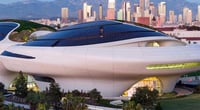
 Anjollinya Blog |
 neroyo |
 Say IT Now |
 celion78 |
 US Legal Consultation on Trials |
 zanero |
  Korean Mom |
  My NYC |
  moo moo |
  Mr Oh |
  forevergee |
  festival |
  manchester |
  constant |
  Leapfrog Move |
  vibranto |
  Tora Tora |
  yellowbutter |
  Dolly |
  US Embassy |
  NYC saladbar |
  Finding Superfoods |
  lightyear |
  song bang |
  vexomo |
  Indiana Jones |