

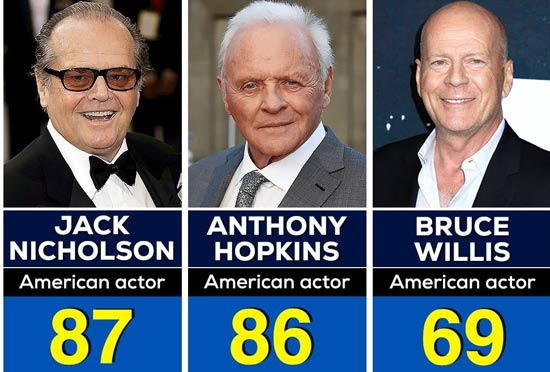
Whether in Korea or the U.S., the difficulty in seeing active actors over 100 years old is a story told by data and reality.
The acting performed by actors is much harsher physical labor than one might think. Filming typically lasts 10 hours a day, and can extend beyond 14 hours, with constant movement, waiting, repeated takes, and emotional exhaustion with staff and other actors.
What actors need are four things: stamina, concentration, memory, and emotional control, all of which directly conflict with aging.
In their late 90s and around 100 years old, declines in vision, hearing, strength, and cognitive abilities are inevitable. Memorizing lines, controlling emotions, and repeating the same scene dozens of times in front of the camera cannot be managed with just ordinary health care. The existence of a healthy 100-year-old is one thing, but the existence of a 100-year-old actor who can endure a filming set is a completely different issue.
The second reason is that even if acting is possible, there are no suitable roles. The central narratives of dramas and films mostly feature characters in their 20s to 50s. By the time actors reach their 70s and 80s, leading roles almost disappear, relegating them to supporting or minor roles. Roles for those in their 90s and 100s are mostly non-existent. It is only natural for production companies to prefer actors who can stand reliably in front of the camera and manage filming schedules. This structure is the same in both Korea and the U.S.
The third reason is a generational issue. Those who are over 100 years old today were born before 1925. The time when they were active was one where the profession of acting was unstable, and there was no industrial structure that allowed for long-term career maintenance. Many actors transitioned to other professions to make a living, naturally thinning the pool of actors. The system of actors continuing their careers for decades only really established itself after the 1960s and 70s. This is also why we are starting to see actors in their late 90s still active.
The fourth reason is personal choice. Actors who have lived under the public's gaze for decades naturally step down from their active roles at some point. The desire to quietly spend time with family as long as health permits is a very normal choice. Especially in the profession of acting, the mental toll is greater than the physical. Once the passion fades, there is no reason to stand in front of the camera. This is the reason many well-known star actors have sparse activity in their projects.
The absence of active actors over 100 years old is not a coincidence but a necessity created by systems and human limits. However, as medical technology and health management levels continue to rise, and the actor system becomes more long-term, there is certainly a possibility that actors close to 100 years old will emerge in the future. But I think it is very natural that there are no such cases in this era.





 Egg Steamed Pot |
 novapixel |
 xylora |
 vegas mom |
 Coco and Lulu |
 Weekend Movie Blog |
 Beauty, Health, Lifestyle Blog |
 coloradoman |
 Superman Cat Blog |
 Victory 1988 |
  Korean Mom |
  My NYC |
  moo moo |
  Mr Oh |
  forevergee |
  festival |
  manchester |
  constant |
  Leapfrog Move |
  vibranto |
  Tora Tora |
  yellowbutter |
  Dolly |
  US Embassy |
  NYC saladbar |
  Finding Superfoods |
  lightyear |
  song bang |
  vexomo |
  Indiana Jones |