

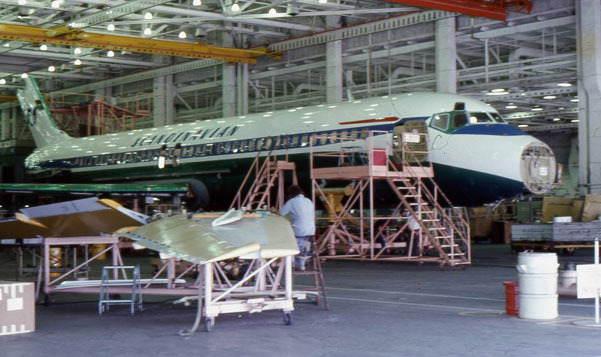
Long Beach was once home to the world-renowned aerospace manufacturer, McDonnell Douglas, which produced aircraft here for decades.
Although it has now merged with Boeing and its name has disappeared, records remain of the countless military aircraft, fighter jets, and planes produced in Long Beach.
In the early 1940s, as the demand for military aircraft surged with the outbreak of World War II, Douglas Aircraft Company decided to establish a large-scale production facility in the Long Beach area. The Douglas Long Beach Plant, built at that time, marked the beginning of the aerospace complex near the current Long Beach Airport. Thousands of workers were mobilized to produce military aircraft such as the C-47, A-20, and the legendary DC series passenger planes.
Even after the war, Long Beach continued to grow as a city reaching for the skies. In the 1950s and 60s, amid the arms race of the Cold War, production of military transport planes and bombers continued, and Douglas became a symbol of the American aerospace industry.
Among them, the DC-8 and DC-9 jetliners are considered representative works that ushered in the era of commercial aviation. The DC series aircraft produced at the Long Beach plant flew across the skies of the world, spreading the reputation of 'Made in Long Beach'.
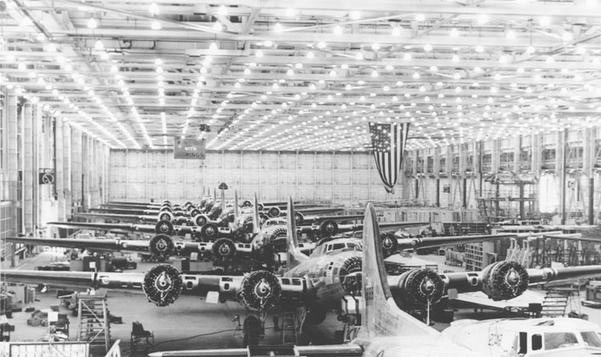
In 1967, Douglas merged with McDonnell Aircraft, headquartered in St. Louis, Missouri, to form McDonnell Douglas. After the merger, the Long Beach plant remained the center of commercial aircraft production, while the St. Louis plant primarily handled military aircraft.
During this period, Long Beach became a 'dream city' where aerospace technicians, engineers, assembly workers, and pilots gathered. A significant portion of the local economy relied on the production capacity of McDonnell Douglas, and the entire city began its day to the sound of factory sirens.
In the 1980s and 90s, production of medium to large jets such as the DC-10, MD-80, MD-90, and MD-11 continued. The MD-80 series, produced at the Long Beach plant, was nicknamed 'the quietest jet' and was delivered to airlines worldwide, while the MD-11 served as a large aircraft for long-haul routes for Korean Air, Delta Air Lines, and Lufthansa. At that time, the Long Beach aircraft assembly line was a symbol of California industry and the pride of American technology.
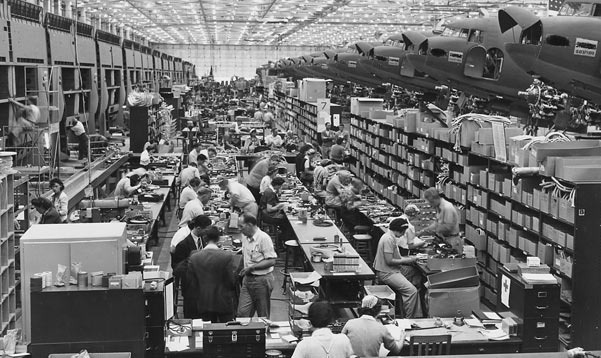
However, after the mid-1990s, due to restructuring in the aviation industry and intensified competition, McDonnell Douglas's independent position gradually diminished. In 1997, Boeing acquired McDonnell Douglas, and its name faded into history. However, even after the acquisition, Boeing maintained the Long Beach plant and continued the production of the Boeing 717, which succeeded the MD-95. This model was essentially the last 'Douglas family aircraft', assembled at the Long Beach plant until 2006.
Even after the factory closed, Long Beach retains its legacy as a city of aviation. Part of the old McDonnell Douglas factory site was used for the production of military transport aircraft like the Boeing C-17 Globemaster III, which also ceased production after the last aircraft was delivered in 2015. However, many technicians and engineers have not left the area since then. Today, Long Beach still has Boeing's research facilities, aerospace-related startups, and the aerospace engineering program at California State University, Long Beach, continuing that DNA.
If you walk near Long Beach Airport today, you can faintly see the Douglas logo remaining on the rusty hangar walls.
Even in the absence of McDonnell Douglas, their spirit remains. Every time I see an airplane crossing the Long Beach sky, I am reminded that this is where it all began.




 candytip |
 Gold Bar |
 Pirate Ship Popcorn Maker |
 Montgomery Mom |
 Anjollinya Blog |
 Coastal city |
  Korean Blog |
 Sammy Beach |
 Key spots |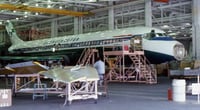
 Korean Mom |
  My NYC |
  moo moo |
  Mr Oh |
  forevergee |
  festival |
  manchester |
  constant |
  Leapfrog Move |
  vibranto |
  Tora Tora |
  yellowbutter |
  Dolly |
  US Embassy |
  NYC saladbar |
  Finding Superfoods |
  lightyear |
  song bang |
  vexomo |
  Indiana Jones |