
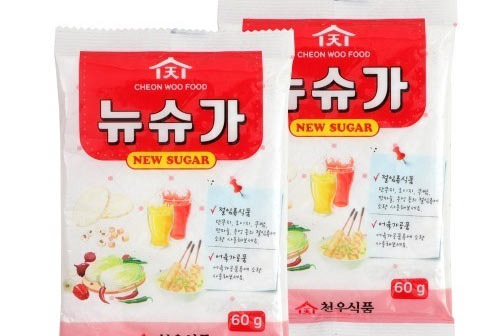
Saccharin, known as New Sugar, is an artificial sweetener with both a long history and controversy.
It is over 300 times sweeter than sugar but has almost no calories, making it popular among those who want to avoid sugar intake.
In our parents' generation, it was often referred to as 'artificial sweetener = saccharin.' Even now, saccharin is still used in some beverages, diet foods, and in the preparation of traditional Korean dishes. After much debate about its health effects, both the US FDA and WHO have recognized its safety, leading to its renewed use.
However, this is based on the premise of using it in 'appropriate amounts.' For adults, the acceptable daily intake (ADI) is set at about 5mg per kg of body weight. For example, for a 70kg adult, it means that consuming about 350mg or less per day is considered safe. At this level, it might be so sweet that it could impair taste perception, haha.In Korea, during the 1960s to 1980s when sugar was expensive, 'saccharin pickled radish' and 'saccharin cubed radish' were common. Especially when making kimchi or pickles, adding a very small amount of saccharin would help maintain sweetness during fermentation, and it was convenient because it did not become sticky like sugar. It was also occasionally used in cold noodle broth or seasoning for steamed dishes, as its strong sweetness meant that only a small amount was sufficient for flavor. Nowadays, many people use alternative sweeteners like oligosaccharides or stevia for health reasons, but some traditional restaurants still use a tiny amount of saccharin to preserve its unique 'aftertaste.'
The advantage of saccharin is that it is considered a useful sweetener that can replace sugar for people with diabetes. Saccharin is not metabolized in the body and is excreted unchanged in urine, so it does not affect insulin secretion or blood sugar levels. However, it is important to note that it is a 'substitute' and not a 'free pass.' In other words, just because saccharin is used does not mean it automatically becomes a healthy food.
Sweetened coffee mixes, zero-calorie drinks, etc., may still contain other additives or caffeine, and excessive long-term consumption can lead to a subtle sweet taste addiction, making one crave sweeter foods even more.
When people with diabetes use saccharin, controlling the amount and habitual use is key. For example, when adding saccharin to coffee or tea, about 1 tablet (approximately 30-40mg) is sufficient, and it is better to avoid more than 2-3 tablets a day. Additionally, when using it for cooking, the sugar replacement ratio must be calculated carefully. Since only about 1/300 of the amount of sugar is needed to achieve the same sweetness, the mindset of "a little more" can actually ruin the taste.
Recent studies have reported that saccharin may affect the balance of gut microbiota, so for those sensitive to gut health, it is recommended to use it in conjunction with natural sweeteners like stevia or erythritol. However, many experts still view saccharin as a 'conditionally safe' sweetener, especially for those who need to manage blood sugar, and it is considered a much better choice than sugar.
Ultimately, saccharin is a 'useful tool if used appropriately.' Its presence subtly remains in Korean food, and for people with diabetes or those on a diet, it offers a small option to maintain sweetness while taking care of their health.








 Korean Blog |
 Coastal city |
 Sammy Beach |
 Key spots |
  dralix58 |
  Gorama Round |
  Skydiving |
  dreamport |
  Yellow Snowman |
  Toaster Pizza Magic Show |
  velvetnom |
  Anytime Journey |
  Mrs. Duluth |
  jaxter |
  Atlanta Mama |
  Baguette Blog |
  US Embassy |
  Korean Mom |
  My NYC |
  moo moo |
  Mr Oh |
  forevergee |
  festival |
  manchester |