

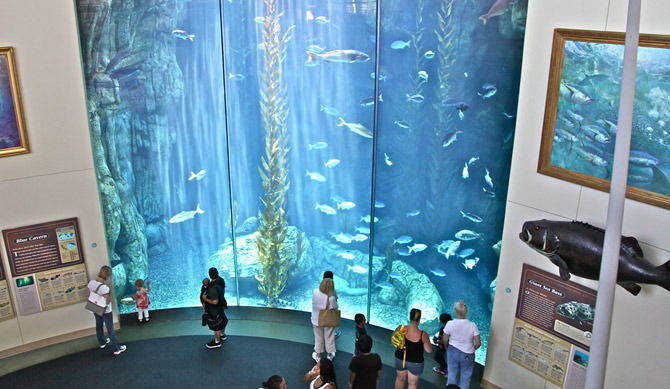
I visited the Aquarium of the Pacific in Long Beach, California.
As the largest aquarium on the West Coast, it is not just a place to see fish but an educational site to learn about marine ecosystems and coexistence with humans. I visited on a weekend, and it was bustling with families and tourists. The blue tanks visible beyond the glass building and the scent of the sea already made my heart flutter.
The Aquarium of the Pacific opened in 1998. Located right next to the Long Beach harbor, the sight of the aquarium blending with the harbor scenery is truly impressive. The first area that catches your eye upon entering is the 'Southern California & Baja Gallery.'
This area replicates the marine ecosystem around Southern California and the Baja Peninsula, home to various marine creatures such as sea lions, seahorses, jellyfish, sharks, and rays. Watching the sharks and rays gracefully swimming in the massive circular tank makes you feel as if you've briefly entered the underwater world.
If you go a little further in, you'll find the 'Tropical Pacific Gallery.' As the name suggests, this area replicates the warm waters of the South Pacific. It is filled with colorful coral reefs and tropical fish, making it a favorite spot for children.
Watching the colorful fish swimming in schools makes you lose track of time. This area is also popular as a photo spot, with many visitors lining up to take pictures.
Another impressive area was the 'Northern Pacific Gallery.' This space, themed around the cold waters of the North Pacific, features adorable sea otters playfully swimming. Additionally, there are various exhibits of marine birds, octopuses, and deep-sea fish, making you feel like you've taken a trip around the world's oceans.
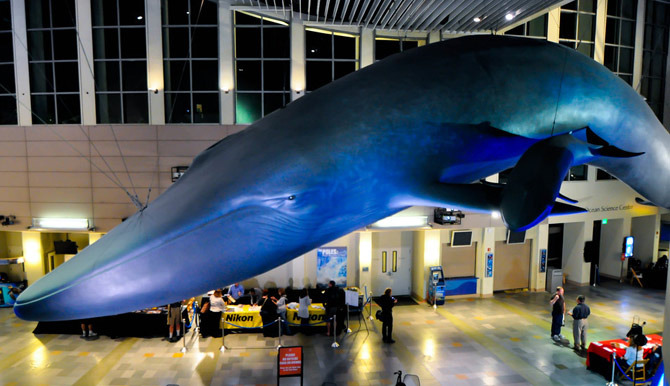
Inside the aquarium, there are many hands-on programs in addition to simple exhibits. There is a 'Touch Pool' where you can touch rays, a sea lion feeding experience, and an 'Ocean Science Center' focused on climate change and marine conservation. I touched the soft skin of a ray in the Touch Pool, and at first, I was a bit scared, but then it was fascinating and fun.
The Aquarium of the Pacific is also making significant efforts in environmental conservation. Information panels about 'reducing plastic,' 'responding to climate change,' and 'reducing marine debris' are installed throughout the exhibition halls, and there are actual marine animal rescue and rehabilitation programs in operation. Because of this, it is regarded as a space where you can feel both education and environmental awareness, rather than just a simple tourist destination.
After finishing the tour and stepping out onto the deck, you can see the Long Beach sea and the Queen Mary at a glance. The gentle breeze and families leaving the aquarium sitting on benches eating sandwiches create a peaceful scene. Nearby, there are restaurants and souvenir shops, making it a great place to grab lunch or a coffee after visiting the aquarium. The admission fee is about $40 for adults, and parking can be done in the dedicated parking lot right next to it.
The Aquarium of the Pacific is not just a place to see beautiful fish, but a space that tells the story of how the sea and humans coexist. If you go to Long Beach, be sure not to miss this place.





 candytip |
 Gold Bar |
 Pirate Ship Popcorn Maker |
 Montgomery Mom |
 Anjollinya Blog |
 Piano Teacher Blog |
 Coco and Lulu |
 U.S. Weather Bureau News |
 Kkikki Ppappa Shout Out Loud |
 American Airlines Mileage |
  Korean Mom |
  My NYC |
  moo moo |
  Mr Oh |
  forevergee |
  festival |
  manchester |
  constant |
  Leapfrog Move |
  vibranto |
  Tora Tora |
  yellowbutter |
  Dolly |
  US Embassy |
  NYC saladbar |
  Finding Superfoods |
  lightyear |
  song bang |
  vexomo |
  Indiana Jones |