


The name Louisiana is derived from the name of the French King Louis XIV.
In the late 17th century, French explorers discovered the Mississippi River basin and declared this vast area as a French territory, naming it 'Louisiane' after the king. At that time, this region was called 'Nouvelle-France,' a massive colony that included most of present-day Quebec in Canada and the American Midwest.
However, only a small portion of that vast territory was actually developed. The harsh climate, natural disasters, and conflicts with Native Americans made settlement difficult. Nevertheless, as French Canadians gradually migrated south, French culture began to take root in Louisiana. Today, Louisiana is considered one of the states in the U.S. where French culture is most prominently preserved.
The capital of Louisiana, Baton Rouge, means 'red stick' in French. It is said that the French explorers, while exploring the Mississippi River, named it after seeing red sticks marking the boundaries between tribes. New Orleans also derives its name from the French city of Orléans, originally called 'la Nouvelle-Orléans.' This is similar to how New York got its name from York in England.
Throughout Louisiana, there are strong traces of French culture in place names, architecture, language, and food. In particular, the French Quarter of New Orleans is filled with French-style balconies, narrow alleys, and café culture, giving the feeling of walking through a European city.
The French explorer Robert de La Salle attempted to establish the first French colony near present-day Victoria, Texas, in 1685, but failed due to a lack of supplies and disease. Subsequently, in 1699, Pierre Le Moyne established a settlement about 150 km east of present-day New Orleans, marking the beginning of the Louisiana colonial era. However, most areas were made up of wetlands and swamps, making them unsuitable for agriculture, and settlers primarily stayed along the coast.
The population of Louisiana was diverse. After losing the colonial wars against England, French residents expelled from Acadia in Canada migrated here. They mixed with local Native Americans and African slaves to form a new cultural community, which is known today as 'Cajun.'
'Cajun' is a name that solidified as the pronunciation of 'Acadian' changed. Cajun people used their own language, 'Louisiana French,' which is quite different from the standard French spoken in France. For example, they commonly use expressions like nous autres (we) and vous autres (you) for personal pronouns. This language is still used in some areas and remains the most unique French dialect in the United States.
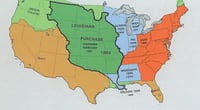
In the early 18th century, changes in European politics also altered the fate of Louisiana. In the early 1700s, during the War of Spanish Succession, when French King Louis XIV placed his grandson Felipe V on the Spanish throne, France ceded part of Louisiana to Spain. After France's defeat by Britain in the Seven Years' War, the remaining areas also passed to Spain. However, in the early 19th century, Napoleon regained control of Louisiana from Spain, and ultimately, in 1803, U.S. President Thomas Jefferson purchased the land through the 'Louisiana Purchase.' At that time, the U.S. paid $15 million, and this transaction doubled the size of the country overnight.
Thus, Louisiana has developed a complex and unique identity through multiple influences from European powers. A multicultural land born from the elegance of France, the splendor of Spain, and the vibrancy of Africa and Native Americans. Today, Louisiana's special charm within the United States is precisely due to this historical background.





 Certified Authentication Blog Page |
 ORAVEZIN Oppa |
 melon90 |
 White bunny |
 Atlanta Mama |
  Baguette Blog |
  US Embassy |
  Korean Mom |
  My NYC |
  moo moo |
  Mr Oh |
  forevergee |
  festival |
  manchester |
  constant |
  Leapfrog Move |
  vibranto |
  Tora Tora |
  yellowbutter |
  Dolly |
  NYC saladbar |
  Finding Superfoods |
  lightyear |
  song bang |