
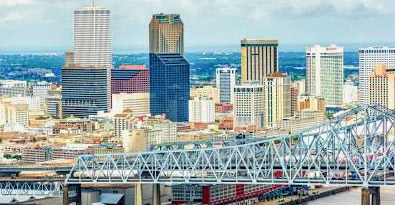
New Orleans is the largest city in the state of Louisiana, famous for its rich history and diverse culture.
Early History and Colonial Era
- Native American Era: The New Orleans area was inhabited by various Native American tribes in the Mississippi River basin long before Europeans arrived, primarily the Cherokee, Creek, and Seminole tribes.
- French Colony: In 1718, French explorer Jean-Baptiste Le Moyne de Bienville established what is now New Orleans, making it the center of French colonial activity. The city was named after King Louis XIV of France.
- Spanish Colony: In 1763, following the French and Indian War, Louisiana came under Spanish rule as per the Treaty of Paris. During this time, Spanish culture and architectural styles greatly influenced the city.
- Louisiana Purchase: In 1803, the United States acquired a vast territory from France through the Louisiana Purchase, and New Orleans developed into an important port city for the U.S.
Civil War and Reconstruction Era
- Civil War: From 1861 to 1865, New Orleans was a significant strategic stronghold for the Confederacy, with many battles taking place. The Reconstruction era that followed saw major changes in the economy and social structure.
- Reconstruction and Industrialization: After the war, New Orleans underwent rapid industrialization centered around the port and oil industries. At the same time, racial discrimination and social conflicts intensified.
Modern History
- Cultural Development: In the early 20th century, New Orleans became known as the birthplace of jazz, and traditional festivals like Mardi Gras gained worldwide fame. A unique blend of ethnicities and cultures fostered the development of distinctive art and music.
- Natural Disasters: In 2005, Hurricane Katrina struck New Orleans, devastating large parts of the city. Recovery and rebuilding efforts have continued, significantly improving the city's infrastructure and living conditions.
- Economic Diversification: In modern times, New Orleans has diversified its economy across various sectors, including tourism, petrochemicals, port logistics, and the music and arts industries.
Population of New Orleans
Total Population
- Total Population: As of 2023, the population of New Orleans is approximately 400,000, making it the largest city in Louisiana, accounting for about 10% of the state's total population.
Population Composition
- Race and Ethnicity:
- Black or African American: About 60%
- White: About 33%
- Hispanic or Latino: About 5%
- Asian: About 2%
- Other Races: About 1%
- Age Distribution:
- 0-17 years: About 20%
- 18-64 years: About 60%
- 65 years and older: About 20%
- Gender Ratio: The ratio of males to females is generally balanced.
Main Areas
- French Quarter: A historic area that attracts many tourists.
- Garden District: An area with beautiful residential homes and gardens.
- Apper Drivin: A modern commercial district with a concentration of various restaurants and shops.
- Pendragon Street: Known as a vibrant center for music and arts.
Population Changes and Trends
- Declining Birth Rate: Like the rest of the U.S., New Orleans is experiencing a decline in birth rates.
- Migration Patterns: Due to changes in economic opportunities and living conditions, some residents are migrating to other states, particularly among the younger population.
- Aging Population: As the retirement population increases, there is a growing demand for healthcare services and welfare facilities.
Median Income in New Orleans
Household Median Income
- Household Median Income: As of 2023, the median household income in New Orleans is approximately $48,000, which is somewhat lower than the national median household income of about $70,000.
Individual Median Income
- Individual Median Income: The individual median income is about $28,000, lower than the national average of approximately $40,000.
Income Distribution
- High-Income Households: High-income households are concentrated in the downtown area and some upscale residential neighborhoods. Areas like the Garden District report relatively high incomes.
- Low-Income Households: There is a high proportion of low-income households in the outskirts and some suburban areas, associated with a lack of education and employment opportunities.
- Income Disparity: New Orleans is a city with significant income disparity, where economic imbalance is a serious issue, closely related to differences in economic development between regions.
Economic Background
- Main Industries:
- Tourism: New Orleans has a highly developed tourism industry, with hotels, restaurants, and entertainment driving the economy.
- Petrochemicals and Port Logistics: Large petrochemical plants like Northfield Refinery exist, and Louisiana's ports play a crucial role as logistics hubs.
- Music and Arts: The music industry, including jazz and blues, and various artistic activities positively impact the economy.
- Unemployment Rate: The unemployment rate in New Orleans is somewhat higher than the national average, attributed to changes in the economic structure and instability in some industries.
- Cost of Living: While housing costs in New Orleans are relatively lower than in other major U.S. cities, healthcare and education costs remain at a moderate level.
Income Disparity
- Income Disparity Between City and Suburbs: There is a significant income gap between urban and suburban areas. The city has a coexistence of high and low incomes, while the suburbs maintain a relatively stable income level.
- Education Level and Income: Areas with higher education levels tend to show higher income levels, reflecting the close relationship between education and employment opportunities.
New Orleans is an attractive city with a unique history, rich culture, diverse population, and various economic characteristics. However, challenges such as low median income, high income disparity, and economic imbalance also exist. Depending on individual lifestyles and needs, New Orleans can offer cultural richness and economic opportunities, but careful consideration of economic stability and living conditions is necessary.
If you are considering visiting or residing in New Orleans, it is advisable to refer to the information above for a deeper understanding and preparation. Additional information can be found on the official website of the City of New Orleans (New Orleans Official Site) or local economic reports.








 Certified Authentication Blog Page |
 ORAVEZIN Oppa |
 melon90 |

 AUTO OK |
  Tonky |
  viroma |
  cookie |
  Live and that's it |
  Alright Twain |
  eatontown blog |
  HAWAII Korean Church News |
  Amore |
  linex |
  Balancework |
  laro90 |
  MEDBIO American Doctor Blog |
  SWAT TEAM BLK |
  DREAM BIG |
  frostbite |
  330 Forever My Love |
  El Dorado |
  dralix58 |
  Gorama Round |
  Skydiving |