

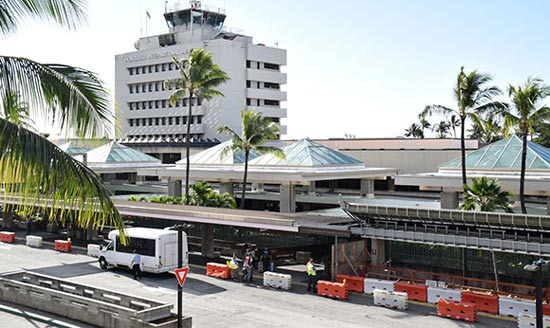
The name of Honolulu Airport is Daniel K. Inouye International Airport, with the code HNL.
It can be seen as the gateway for almost everyone entering Hawaii. It was renamed in 2017 after a senator from Hawaii, and while the name is long, people just call it HNL.
It is located about 5 miles west of downtown Honolulu on the island of Oahu. Although it seems close in distance, once you exit the airport, you really feel, "Ah, this is Hawaii." The airport has palm trees, a different breeze, and the air itself feels different.
Honolulu Airport is actually a joint-use airport, right next to Hickam Air Force Base, allowing military operations and civilian aviation to occur simultaneously.
Because it is a joint-use airport, fighter jets like the F-22 Raptor use the same runway. Since it operates next to Hickam Air Force Base, if the timing is right, you might see a fighter jet taking off while waiting for a commercial flight.
In fact, this airport is a very important strategic point for the U.S. military in the middle of the Pacific. It is a crucial military location connecting the U.S. mainland and Asia.
Therefore, it is not just a place for travelers; military transport aircraft and related movements also take place here. This is why the runway is large, and the airport operations are much more systematic than those of a typical tourist airport.
Ultimately, Honolulu Airport is not just an "airport for vacationing"; it is a unique airport where leisure and strategy are intertwined.
The operation of the civilian airport in Honolulu is managed by the Hawaii Department of Transportation. The airport has three terminals.
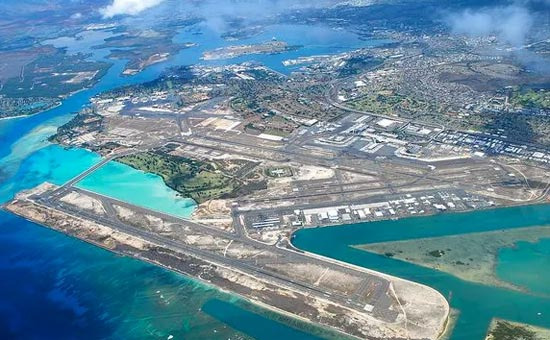
Terminal 1 is exclusively for Hawaiian Airlines. Many routes to and from the islands and the U.S. mainland operate from here. You will almost certainly use this terminal at least once while traveling in Hawaii.
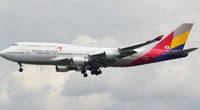
Terminal 2 is essentially the main terminal. Both international and U.S. mainland flights operate from here. Korean routes like Korean Air and Asiana also operate from this terminal. Most duty-free shops, restaurants, and shopping options are concentrated here, making it feel like a real airport.
Terminal 3 is smaller. It serves regional airlines and charter flights. Most general travelers will not have a reason to go there.
There is quite a variety of airlines. Hawaiian Airlines is the main one, and U.S. carriers include American, United, and Delta. Major international airlines like Korean Air, Asiana, ANA, and JAL also operate here. Therefore, the connections are broader than expected. Flights to LA, San Francisco, and Seattle are standard, and there are direct flights to Seoul, Tokyo, and Osaka. It even goes directly to Sydney and Auckland.
The facilities are what you would expect from a "vacation airport." There are many souvenir shops selling Hawaiian specialties, and plenty of local food options. There are lounges, and rental cars are easily accessible. Uber and Lyft are also readily available, so getting around is not too inconvenient.
Interestingly, this airport tends to run on time better than expected. Among U.S. airports, it has a decent on-time performance. Operations are quite efficient for its size, which reduces stress when traveling.
It also sees a significant number of annual passengers, with over 20 million using it. It serves as the hub for all air travel in Hawaii. There are many direct flights, with over 50 airports worldwide connecting directly here. The number of airlines is not just around 10 but nearly 20.
From Korea, there are several airlines offering direct flights from Incheon. Choices include Korean Air, Asiana, and Hawaiian Airlines. Thus, accessibility is better than expected.
When you first arrive, you feel like "the vacation vibe starts at the airport," and when you leave, you think, "I'm returning to reality from here."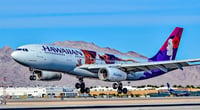

 Montgomery Mom |
 Anjollinya Blog |
 Taco Seattle |
 Mr Song Song |
 Living Economy Information Blog |
 HAWAII Korean Church News |
 Hawaii Tourist Information |
 Hawaii Fox |
  newyorker 101 |
  coffeee |
  |
|  Christopher |
  sylven |
  Sammy Beach |
  Bliss O |
  blue ocean |
  greenlight |
  Watanaka Karametibaksa |
  castle |
  xelton52 |
  carefree |
  vrixen73 |
  AZ Road Master |
  Victory 1988 |
  summita |
  business lim |
  Colorado Lee |
  Make My Day |