
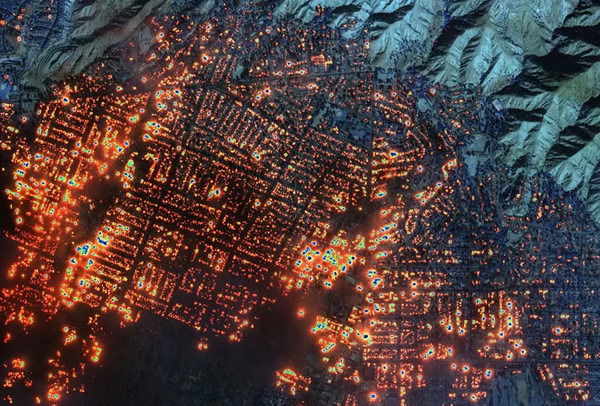
As of the 8th, the number of wildfire areas in the LA region has increased to 7, with at least 5 dead and 150,000 under evacuation orders.
The wildfire that started in the Pacific Palisades area of Los Angeles is spreading rapidly under the worst-case scenario of dry air, low rainfall, and strong Santa Ana winds. This fire has already burned approximately 1,000 buildings and homes and continues to spread. In addition to the Pacific Palisades fire, there are 6 other active fires in the LA area, resulting in at least 150,000 people being under evacuation orders. Bloomberg News has analyzed this as an "unprecedented challenge for California's last-resort insurance system, Fair Plan," reporting that significant disruption in the insurance market is expected after the fire is extinguished.
Fire Outbreak and Spread
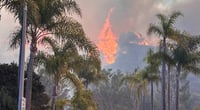
The Palisades fire was first reported around 10:30 AM on Tuesday on the 1100 block of North Piedra Morada Drive. Within just one day, by Wednesday evening, the fire had spread to 15,832 acres, with little progress made in firefighting efforts, causing homes along the Malibu coast and Santa Monica Mountains to continue burning. The fire has rapidly spread due to localized gusts known as 'Santa Ana,' and evacuation orders have been issued for the entire Pacific Palisades area and parts of Malibu. Evacuations, which also include warnings for the Santa Monica and Calabasas areas, are significantly impacting thousands of homes and businesses. The PCH 1 freeway and many local roads in the area have been closed to traffic.
Government Response
Los Angeles Mayor Karen Bass, who was in West Africa for diplomatic events when the Palisades and Eaton fires broke out, returned on Wednesday for an emergency meeting with California Governor Gavin Newsom, city and county leaders, and incident commanders. Mayor Bass praised the efforts of emergency responders and urged Los Angeles residents to remain resilient. Alberto Carvalho, superintendent of the Los Angeles Unified School District, announced on Thursday that all LAUSD schools would be closed, and schools in the Malibu, Santa Monica, and Pasadena districts also decided to suspend classes. The Palisades fire has become the most destructive fire in Los Angeles history, destroying 1,000 buildings and homes within 24 hours of its outbreak. The previous record was the Sayre Fire in Sylmar in November 2008, which destroyed 604 structures.
Impact on the Insurance Market
Bloomberg News stated, "This fire will pose an unprecedented challenge to California's last-resort insurance system, Fair Plan," and analyzed that the insurance market could be thrown into chaos after the fire is extinguished. As of September last year, the total risk exposure of Fair Plan was $458 billion, a 61% increase from the previous year, with exposure in the wildfire-prone Pacific Palisades area reaching $5.89 billion. The number of insurance contracts under Fair Plan in that area increased by 85% compared to the previous year.
The massive insurance claims paid out due to large-scale wildfires in California in recent years have placed a significant burden on private insurers. In the last two years, 7 out of 12 major homeowners' insurance companies have restricted insurance offerings in California, leading residents unable to obtain insurance to rely on Fair Plan. However, questions have also been raised about Fair Plan's own ability to pay claims. Michael Wara, a climate and energy researcher at Stanford University, pointed out, "The biggest issue is whether the state can handle the claims," adding that there is also a lack of assessors and personnel to process claims for Fair Plan.
Amy Bach, representative of the consumer group United Policyholders, stated, "Fair Plan currently seems to have enough funds to cover claims, but there are concerns about a surge in claims." Fair Plan reported having approximately $2.5 billion in reinsurance and about $200 million in surplus cash last year, but analyses suggest that if the fire continues to spread, the losses could exceed these amounts.
Expert Opinions and Future Outlook
Daniel Swain, a climate scientist at UCLA, assessed, "This wildfire is likely to be recorded as the most costly wildfire in U.S. history." The Pacific Palisades area has been a concern for insurers even before this wildfire occurred, as it is densely populated with high-value homes, making it easy for the fire to spread from one building to another. The steep valley location also poses accessibility issues for firefighters.
A homeowners' insurance expert predicted, "This wildfire will be a catalyst for insurance premium increases in California," stating that if reinsurers are burdened with massive claims from this disaster, there is a high likelihood that reinsurance costs will rise significantly next year. Some have mentioned that the compensation issues arising from this LA area fire will serve as a test of insurers' payment capabilities, and this fire could potentially place California's homeowners' insurance market in a significant crisis.
Authorities' Efforts and Resident Safety
Authorities are urging residents to evacuate quickly to safe areas and are mobilizing additional support and resources to combat the fire. The Los Angeles Fire Department and local government are doing their utmost to prevent further spread of the fire, prioritizing the safety of residents. The situation is continuously evolving, and authorities are working to quickly relay the latest information to residents.
This Pacific Palisades fire is expected to have a significant impact on California's insurance system and the economy as a whole, marking a critical point for future responses and policy development.




 Weekend Movie Blog |
 Beauty, Health, Lifestyle Blog |

 coloradoman |
 Superman Cat Blog |
 novapixel |
  dralix58 |
  Gorama Round |
  Skydiving |
  dreamport |
  Yellow Snowman |
  Toaster Pizza Magic Show |
  velvetnom |
  Anytime Journey |
  Mrs. Duluth |
  jaxter |
  Atlanta Mama |
  Baguette Blog |
  US Embassy |
  Korean Mom |
  My NYC |
  moo moo |
  Mr Oh |
  forevergee |
  festival |
  manchester |