

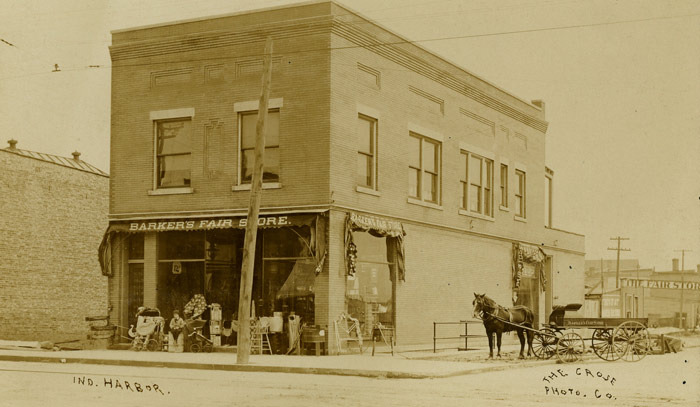
In the early 1900s, Indiana was a typical agricultural center in the American Midwest, where life was still closely connected to nature. The landscape of Indiana at that time was completely different from today's industrial areas or suburban cities. Vast cornfields and wheat fields stretched endlessly, interspersed with small towns, farms, and shop streets formed around railway stations that served as the heart of the local community.
Indiana's economy was heavily reliant on agriculture, but it was also a time when the wave of industrialization that began in the late 19th century was gradually making its way in. Steam locomotives crossed Indiana, transforming the movement of goods and people, and particularly, Indianapolis emerged as a transportation hub, developing into a new commercial center. During this period, the lives of Indiana residents were characterized by hard work and community spirit. Most farmed as families, and townspeople helped each other with harvests or gathered at church events to share local news.
In winter, they would gather by the fireplace to share stories, and in summer, church bazaars or county fairs provided enjoyable times for both children and adults. Daily life was simple, but there was a warm sense of reliance on one another. As the winds of industrialization began to blow, factories started to be established throughout Indiana.
With the active production of steel, auto parts, and agricultural machinery, young people began to leave farms for the cities. Notably, in 1906, the first gasoline automobile was produced in the small town of Kokomo, Indiana, marking it as one of the early birthplaces of the automotive industry. This change began to alter the way people lived. Those who had stayed in rural areas flocked to cities in search of factory jobs, and by the 1910s, Indianapolis had grown into a vibrant industrial city.
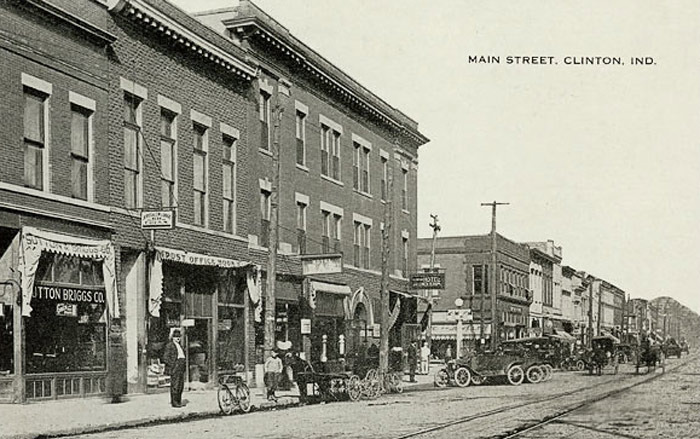
During this time, Indiana was a place dominated by simplicity rather than glamour.
Most households had no electricity, and water had to be drawn from wells. Children often helped with family farming instead of attending school, and in winter, they endured the cold by using coal stoves. Women were the center of homes and communities, actively participating in church and local events to support the town. The characteristics of Indiana residents can be summarized as 'self-reliance and diligence.'
They took pride in saving and working hard even in difficult circumstances, and they considered cooperation with neighbors a natural part of life. Additionally, during this period, social movements such as the Temperance Movement were actively developed in Indiana. Especially, temperance groups led by women emerged everywhere, fostering a strong atmosphere that valued community ethics and family order.
At the same time, during the 'Great Migration' when the Black population moved from the South to the North, some Black families also migrated to Indiana, leading to signs of racial tension and social change. The early 1900s in Indiana was a time on the brink of change.
Standing at the crossroads of transitioning from an agricultural society to an industrial society, people still tried to cultivate the land while maintaining traditional community spirit. Even as the world changed with the sounds of machinery, the people of Indiana upheld a life philosophy centered on family, faith, and diligence, which they believe has become the root of Indiana's warm and realistic sentiment today.





 bada2002 |
 Now or Never |
 flingstone |
 OMG Indiana YO |
 Yellow Snowman |
  manchester |
  constant |
  Leapfrog Move |
  vibranto |
  Tora Tora |
  yellowbutter |
  Dolly |
  US Embassy |
  NYC saladbar |
  Finding Superfoods |
  lightyear |
  song bang |
  vexomo |
  Indiana Jones |
  meloncat |
  novapixel |
  mortrix |
  Esther 1983 |
  fortbliss |
  Moscow Kim |