
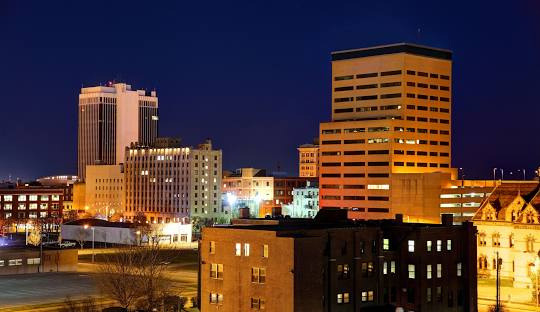
Indiana is a state that appears ordinary in the Midwest of the United States, but upon closer inspection, it holds a quite dramatic history. This land was home to Native Americans long before Europeans arrived, and it has experienced both the pioneer era and industrialization, serving as a living history textbook. Looking back to a long time ago, Indiana was the homeland of several Native American tribes such as the Miami, Shawnee, and Potawatomi. They lived by farming along the rivers and hunting deer and turkeys. Near present-day Evansville, there are remnants of the ancient Mississippian culture at a site called Angel Mounds, which shows how organized the society was at that time. Then, in the late 1600s, French explorer René-Robert Cavelier, Sieur de La Salle, began to explore the area, marking the start of European presence. In the 1700s, the French established trade routes and built forts like Fort Miami and Fort Ouiatenon to trade with the Native Americans. However, after the French and Indian War, the land changed hands to the British, drastically altering the atmosphere.
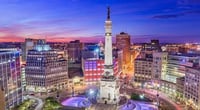
In 1776, the United States declared independence, and in 1787, the Northwest Ordinance was enacted, incorporating Indiana into the United States. At that time, the forests were still dense, and Native American resistance was strong, but settlers steadily pushed westward. In 1800, the Indiana Territory was officially established, and at that time, a Native American confederation led by Shawnee leader Tecumseh fought against American expansion. In 1811, General William Henry Harrison defeated this confederation at the Battle of Tippecanoe, effectively bringing Indiana under American control. Then, in 1816, Indiana became the 19th state of the United States. The original capital was Corydon, but it later moved to Indianapolis, establishing the current center.
In the mid-19th century, the winds of industrialization began to blow. The completion of the Wabash and Erie Canal improved transportation, and railroads were built, allowing people and goods to move quickly. The economy, which had been primarily agricultural, gradually shifted to manufacturing, leading to the growth of cities like Indianapolis, Gary, and South Bend. During the Civil War, Indiana was a state that actively supported the Union, with many young people heading to the battlefield. After the war, factories and the steel industry flourished, and Indiana established itself as an economic hub in the Midwest.
As we entered the early 20th century, the automotive era began. In particular, the Studebaker company in South Bend became an iconic automobile manufacturer in Indiana, playing a significant role in the development of American industry. At the same time, Indiana's sports culture blossomed during this period. The Indianapolis 500 race began, establishing the state as a global racing destination, and basketball became so beloved that it was almost considered a 'religion' among residents. The scene of entire towns gathering for high school games in gymnasiums continues to this day.
Today, Indiana is a state where agriculture, manufacturing, healthcare, and logistics industries have developed in a balanced manner. While vast cornfields stretch across the land, cities like Indianapolis coexist with cutting-edge healthcare and technology industries. Thus, the state motto is "Crossroads of America," reflecting its role as a logistics hub with railroads and highways concentrated in the area.
Another nickname for Indiana is the "Hoosier State," but the exact origin of the term 'Hoosier' has not been clarified. However, it is a name that is naturally used to refer to the people of Indiana, giving a somewhat friendly and warm feeling.






 bada2002 |
 Now or Never |
 Yellow Snowman |

 Indiana Jones |
  DREAM BIG |
  frostbite |
  330 Forever My Love |
  El Dorado |
  dralix58 |
  Gorama Round |
  Skydiving |
  dreamport |
  Toaster Pizza Magic Show |
  velvetnom |
  Anytime Journey |
  Mrs. Duluth |
  jaxter |
  Atlanta Mama |
  Baguette Blog |
  Tan Sol |
  US Embassy |
  Korean Mom |
  My NYC |