
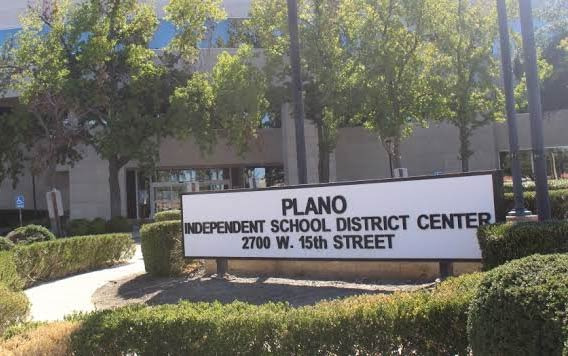
When calculating property taxes while buying a home in Plano, the numbers can be a bit surprising at first.
It becomes even more so when you realize how significant the portion going to the Plano ISD (Plano Independent School District) is.
I took a closer look at where the education budget comes from and where it goes.
For the 2024-25 fiscal year, the property tax rate for Plano ISD is $1.04245 per $100 of assessed value. This is a decrease of 3 cents from the previous year, which was passed unanimously by the board.
The tax rate is divided into two parts: one for Maintenance and Operations (M&O) and the other for Interest and Sinking (I&S). M&O is used for everyday operating expenses like teacher salaries, textbooks, and facility operations, while I&S is used for repaying bonds for school building construction or renovations. Although they appear to have the same tax rate, their purposes are completely different.
The total budget for the 2024-25 fiscal year is $699.8M (about $700 million), which was approved by the board on June 25. However, this budget includes a deficit of $35M. While it may seem that a large school district would have a large budget, wealthy districts like Plano are subject to a 'recapture' system in Texas's education finance structure, where some of their tax revenue is returned to the state government.
For the 2024-25 year, the recapture amount that Plano ISD must pay is $193.4M, which accounts for 34% of the property tax revenue of $576.5M. This is one of the highest amounts paid among all school districts in Texas. In other words, more than one-third of the taxes paid by Plano residents are redistributed to other districts.
This recapture system is also known by the nickname Robin Hood Plan. It is a method of transferring money from wealthy districts with high property tax revenues to those with insufficient tax revenues. This policy has clear supporters and opponents, but from Plano's perspective, there is a structural dissatisfaction that the taxes paid by residents are not fully utilized for local schools.
On the other hand, there is also an argument that it contributes to expanding educational opportunities for children in low-income areas from an equity standpoint.
As the value of a home increases, the taxes owed also rise, and a significant portion of that goes to the ISD. This is a factor that must be considered in real estate decision-making. Choosing the Plano ISD means enjoying a solid educational infrastructure, but it is important to understand how that cost is structured.
While the news of a lower tax rate is welcome, the recapture amount of $193.4M indicates that one should not judge solely based on the tax rate.
 CleoPartner
 MagicSummit78







 Magic Cabbage School of Martial Arts |
 Vacation on Hawaii |
 morvex37 |
 Ari Songhan American Immigration Life |
 Bearded Strawberry Smoothie |
 vrixen73 |
 Hajiwon Blog Hair Salon |
 Dala Dala |

 sunny flower |
  UCLA Captain |
  lattecu |
  dynamite |
  frostingline |
  Hakuna Matata |
  Your Curiosity Resolved |
  Way to easy |
  Chino Min |
  nexabyte |
  moonshine 7 |
  Sunset Oregon |
  victoria 68 |
  golfmaster |
  Montgomery Mom |
  squidogame |
  Noodle Noodle |
  Rhode Island Good People |
  Big North |
  Famous Attractions in the United States |
  Jin Soo V |