

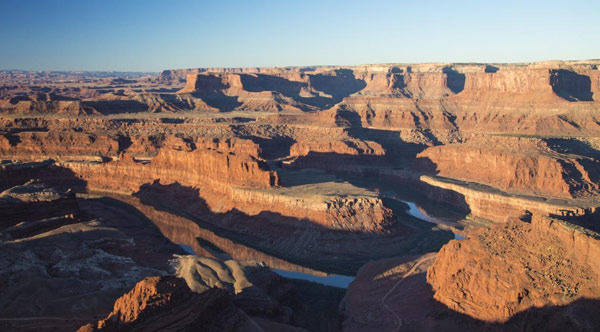
If you love traveling or the outdoors, you might have thought at least once, "I want to visit a place completely devoid of human footprints."
You may have heard of national parks, but when you actually look them up, they seem to exist only on maps.
Let me talk about three of the most remote areas in the continental U.S. that are almost the pinnacle of accessibility.
After visiting these places, you won't be saying, "There are too many people in the city" for a while.
First is the Maze District in Canyonlands National Park in Utah.
The name itself means maze, and it really looks like a maze. Even starting from Moab, it takes at least 3 to 4 hours on a 4×4 off-road vehicle.
And here, it's often confusing whether the path is a road or a riverbed.
With canyons stacked on top of each other, there are many areas where GPS fails, and water is extremely scarce, so the advice to carry at least 5 liters a day is not without reason.
However, once you enter, you can encounter rock formations that look like chocolate drops, naturally formed stone arches, and thousands of years old Native American petroglyphs all at once.
In summer, the perceived temperature easily exceeds 40 degrees, so spring and fall are the best seasons to visit, and a backcountry permit from the ranger office is essential.
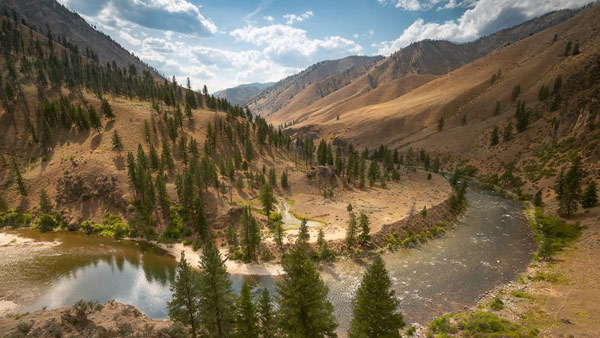
Next is the Frank Church–River of No Return Wilderness in Idaho. The name itself means a river you cannot return from, and its scale is incredible.
It's about the size of combining South Chungcheong and North Jeolla provinces, and it is the largest contiguous roadless area in the continental U.S.
Literally, there are no regular roads. You can only enter by walking, horseback riding, rafting, or taking a small plane. The canyons are deep, the currents are fast, and you can actually encounter grizzly bears and wolves.
Rafting along the Salmon River gives you a full experience of the American wilderness, but during the summer peak season, permit competition is quite fierce. You can reduce travel time by taking a small plane to Chain Saw or Indian Creek and combining it with trekking.
Finally, the most remote area within Yellowstone National Park in Wyoming is the Solitude area. It's not an exaggeration to say that this is the point farthest from the road in the continental U.S. No matter which direction you go, you have to walk at least over 30 kilometers to reach a road. The bear density is top-notch, and the weather changes several times a day. Bear spray alone does not guarantee safety, so please be well-prepared before you go.
A round trip backpacking trip typically takes 6 to 8 days, and seeing bison and wolves is an everyday occurrence, not a special event. Even in midsummer, temperatures can drop below freezing at night, so if you pack your gear carelessly, you will suffer immediately. Bear cans and bear spray are not optional but essential, and since there are many water routes, waterproof shoes or river crossing sandals are a must.
The common point of these three places is just one: there is no cell phone signal, and requesting rescue is not easy. However, the stress accumulated in the city will truly disappear. Just remember that you shouldn't recklessly rush in because it looks cool; only those who are properly prepared with permits, satellite SOS, and survival gear should enter.
Remember that preparing for a true wilderness experience in the U.S. is half the journey, and make sure to visit accordingly.







 Khan Film Blog Production |
 dermoon |
 hoosierdaddy |
 sun walker |
 Let's Be Like a Salt-like City Person |
 Enjoyable American Life Diary |
 morvex37 |
 Utah, the Most Livable State |

 US Embassy |
  Korean Mom |
  My NYC |
  moo moo |
  Mr Oh |
  forevergee |
  festival |
  manchester |
  constant |
  Leapfrog Move |
  vibranto |
  Tora Tora |
  yellowbutter |
  Dolly |
  NYC saladbar |
  Finding Superfoods |
  lightyear |
  song bang |
  vexomo |
  Indiana Jones |