
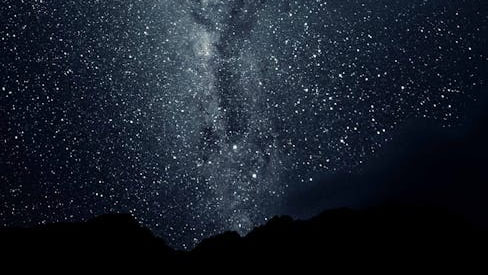
The United States has many ideal places for stargazing thanks to its vast territory and diverse terrain.
Places that allow you to escape the light pollution of big cities and see a clear, dark night sky are particularly attractive. Here are areas favorable for star observation:
1. Death Valley National Park (California & Nevada)
- Features: Death Valley is designated as an International Dark Sky Park, boasting a clear night sky with almost no urban light pollution.
- Highlights: The Milky Way and meteor showers can be clearly observed with the naked eye.
- Recommended Time: Clear skies are often seen in the fall and winter.
2. Big Bend National Park (Texas)
- Features: Located in West Texas, this national park is one of the areas with the least light pollution in the U.S., offering a star-filled night sky.
- Highlights: The Milky Way and planets can be seen without a telescope.
- Recommended Locations: Around the Rio Grande River or near Chisos Mountain.
3. Cherry Springs State Park (Pennsylvania)
- Features: This place is considered one of the best locations for stargazing in the East, with special management to preserve the dark sky.
- Highlights: An International Dark Sky Park, with the possibility of observing the aurora in the northern sky.
4. Moab & Arches National Park (Utah)
- Features: A special place to enjoy stars alongside natural rock formations, offering rock scenery during the day and stars at night.
- Highlights: A unique experience of stargazing under rock arches.
5. Crater Lake National Park (Oregon)
- Features: Located in the Pacific Northwest, this area offers excellent stargazing due to its high altitude and clear atmosphere.
- Highlights: The reflection of the lake makes the night sky even more beautiful.
6. White Sands National Park (New Mexico)
- Features: You can observe stars in a unique landscape of white gypsum sand.
- Highlights: The contrast between the night sky and the white sand provides an even more impressive view.
7. Yellowstone National Park (Wyoming)
- Features: The first national park in the U.S., it boasts a wide and clear sky, making it ideal for stargazing.
- Highlights: A harmonious landscape of geysers and starlight.
8. Mauna Kea (Hawaii)
- Features: Located at an elevation of 13,796 feet (about 4,205 m), Mauna Kea is home to world-renowned observatories, providing an optimized environment for stargazing.
- Highlights: A place with almost no atmospheric pollution and light pollution, allowing for the clearest starlight observations.






 Weekend Movie Blog |
 Beauty, Health, Lifestyle Blog |
 coloradoman |
 Superman Cat Blog |
 novapixel |
  US Embassy |
  Korean Mom |
  My NYC |
  moo moo |
  Mr Oh |
  forevergee |
  festival |
  manchester |
  constant |
  Leapfrog Move |
  vibranto |
  Tora Tora |
  yellowbutter |
  Dolly |
  NYC saladbar |
  Finding Superfoods |
  lightyear |
  song bang |
  vexomo |
  Indiana Jones |