


Tenafly, just a bridge away from Manhattan in New York, has long been a neighborhood where Korean families settle for their children's education. Recently, during consultations, I have been receiving more questions about whether buying a home now will maintain its value in ten years. Let's take a look at this in the context of the overall economic flow in Bergen County.
Tenafly itself is a small city with a population of around 20,000, and while its population growth is not significant, Bergen County as a whole has seen a steady influx of households from New York City in recent years, offsetting outflows and maintaining a stable population. According to data from the U.S. Census Bureau, northern New Jersey is considered one of the areas where demand for low-density housing within the New York commuting zone has continued steadily since the pandemic, due to the rise of remote work.
Nearby Englewood Cliffs is home to the North American headquarters of LG Electronics, and the Bergen and Hudson County areas are densely populated with office spaces for pharmaceutical, healthcare, and financial service companies. While Tenafly does not have a large industrial complex, its location provides easy access to high-income jobs in finance, law, and healthcare in Manhattan and Jersey City, which forms the backbone of the local economy.
New Jersey's unemployment rate is currently around 4%, similar to or slightly lower than the national average, and according to the Bureau of Labor Statistics, Bergen County has shown a somewhat stable employment flow compared to the state average. The median household income in Tenafly is significantly higher than the New Jersey average, and while income growth is moderate, the absolute income level supports housing demand.
Accessibility to Manhattan via the George Washington Bridge and New Jersey Transit bus routes is a key competitive advantage for this area, and recently, the state of New Jersey and the Port Authority of New York and New Jersey have been discussing improvements to bridge access and the expansion of express bus routes. However, investment seems to be focused more on maintaining existing infrastructure and alleviating congestion rather than on large new transportation projects.
Institutions like the Brookings Institution and the Milken Institute still evaluate the New York metropolitan area as a core economic axis in the U.S., but high living costs and property taxes are mentioned as factors that limit the speed of population influx. Small cities like Tenafly, known for their good school districts, are often classified as relatively resilient markets in this trend, but it is important to continue monitoring changes in interest rates and tax policies rather than making definitive conclusions.
For Korean families considering Tenafly for their children's school districts, a realistic approach would be to consider long-term residency and school district premiums rather than short-term price gains. The rental demand is also steady, making it a relatively low-risk area for investment purposes.
Of course, the burden of high property taxes and limited new supply will remain risk factors for real estate in this area. Looking at a long-term horizon of ten years, Tenafly is likely to continue a trend closer to stable maintenance rather than rapid growth, and I recommend weighing both buying and renting options with this in mind.
 BluePlanet
 NYStoryMaker







 garlic bread |
 Sugar Cream Door Bulletproof Noodles |
 urbanmint |
 |
| 
 Premium Gas Camp |
 midnight blue |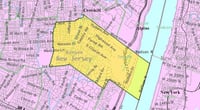
 Living in New Jersey blog |
 gentle |
 mygoddess blog |
  draxen |
  gallery |
  milkyotter |
  Zoom Zoom Zoom |
  Minnesota Lakes and Clouds |
  noraro |
  tervox95 |
  vale vale |
  yentra |
  Golden life |
  andrew park |
  Peter Pan Pet |
  Balan |
  Cali M Law Group |
  neroyo |
  Dreams Come True as Desired |
  Khan Film Blog Production |
  coloradoman |
  Living Economy Information Blog |
  rustley |