
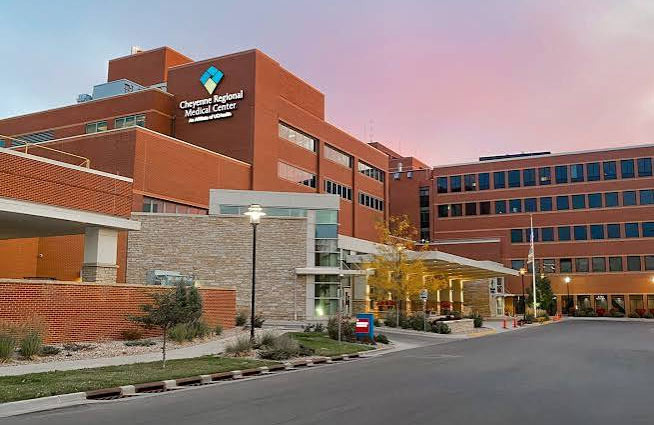
One of the most common things you hear while living in Wyoming is that the hospitals are far away. Well, that's true, but that's not the whole story.
When it comes to Cheyenne, the medical infrastructure is surprisingly robust. When I first came to Wyoming, I was most worried about healthcare, but after experiencing it firsthand, I thought, "This is actually pretty good." It's not an exaggeration. Since Cheyenne is the capital and the most populous city, the concentration of healthcare services is different from other cities in Wyoming. Now, I have come to trust the medical environment in this city quite a bit. Humorously speaking, I was overly worried, but the reality turned out to be much better than expected.
The centerpiece of Cheyenne's medical infrastructure is the Cheyenne Regional Medical Center. Established in 1867 and still in operation today, this hospital is a tertiary care facility with 222 beds. It operates a Level 2 trauma center, capable of responding to severe emergencies. Notably, it houses the Wyoming Heart and Vascular Institute and the Wyoming Cancer Institute, which means there's no need to travel all the way to Denver, Colorado for heart disease or cancer treatment. It has over 170 physicians, more than 2,000 staff members, and over 200 volunteers, covering southeastern Wyoming and western Nebraska. It provides a full continuum of care, including orthopedics, neurology, obstetrics, rehabilitation, and hospice. Having been around for nearly 160 years since 1867, this long history has built the hospital's trustworthiness.
The second facility is the Cheyenne VA Medical Center. Operating since 1934, this facility serves veterans and has 22 general beds, 10 rehabilitation beds, and 50 nursing home beds. It provides services to about 68,000 veterans across southeastern Wyoming, northeastern Colorado, and southwestern Nebraska. Given that the city is home to F.E. Warren Air Force Base, there is a significant population of military personnel and veterans, making the existence of this facility very important for them. There are also 9 outpatient clinics operating across the three states. In a community with many military families, the role of the VA Medical Center goes beyond just healthcare.
The third is the Cheyenne Regional Medical Group. One of the largest physician groups in Wyoming, it consists of about 70 healthcare providers. It operates as part of the Cheyenne Regional Healthcare System, offering comprehensive services from primary care to specialty care for residents of Cheyenne and the surrounding areas. This group significantly addresses the issue of finding primary care physicians in small towns. Due to its proximity to Denver, residents of Cheyenne also have access to large hospital networks like Banner Health in Colorado, providing them with more options.
In the broader context of Wyoming, Cheyenne is the city with the best medical infrastructure. Of course, if highly specialized surgeries or treatments are needed, one may have to go down to Denver. Still, for everyday medical needs, from cancer treatment to heart surgery, most can be handled within Cheyenne. This is why residents of Wyoming don't have to worry too much about healthcare. The surprisingly solid medical environment is one of the hidden advantages of this city. For those hesitant to move to Wyoming due to healthcare concerns, I can confidently say that at least Cheyenne alleviates many of those worries.





 Enjoyable American Life Diary |
 California Dreamer |
 Best Frozen Yogurt |
 Burbank Lee |
 ANSLO NEWS |
 cantsay |
 yenne |
 heeve |

 Oz's Wow Company |
  Wenda |
  Roman Pan |
  Nuchuhan Exploration BLOG |
  Who's watching? |
  Strawberry Pancake Warrior |
  What can make money? |
  Egg Steamed Pot |
  New Jersey News Local Stories |
  Study Abroad Life Know-How Tips |
  My Love DS |
  Leapfrog Move |
  US Regional Information Local News |
  Finding Superfoods |
  COLO COLO |
  morixa |
  nero kim |
  USA Hyundai Kia |
  OC Real Estate Business Information |
  My Town My Way Blog |